The Society of Reflective Personalities - Telalginite
The Beach Boy
Personality:
Telalginite never arrives quietly.
He bursts into the polished block like someone always stoked, illuminated in the exact moment where energy turns into motion. Under reflected light he is almost unrecognisable, but under blue excitation he goes incandescent, just like a surfer who can’t help but shine when the swell is just right.
Where his older brother Lamalginite glides in long, measured lines, Telalginite lives for manoeuvres that require commitment. His favourite is the Fluoro-Cutback, a tight, glowing pivot that throws a bright arc across the matrix, leaving Collodetrinite grumbling about unnecessary displays of enthusiasm. Telalginite insists it’s not showmanship; it’s “just using the light properly.”
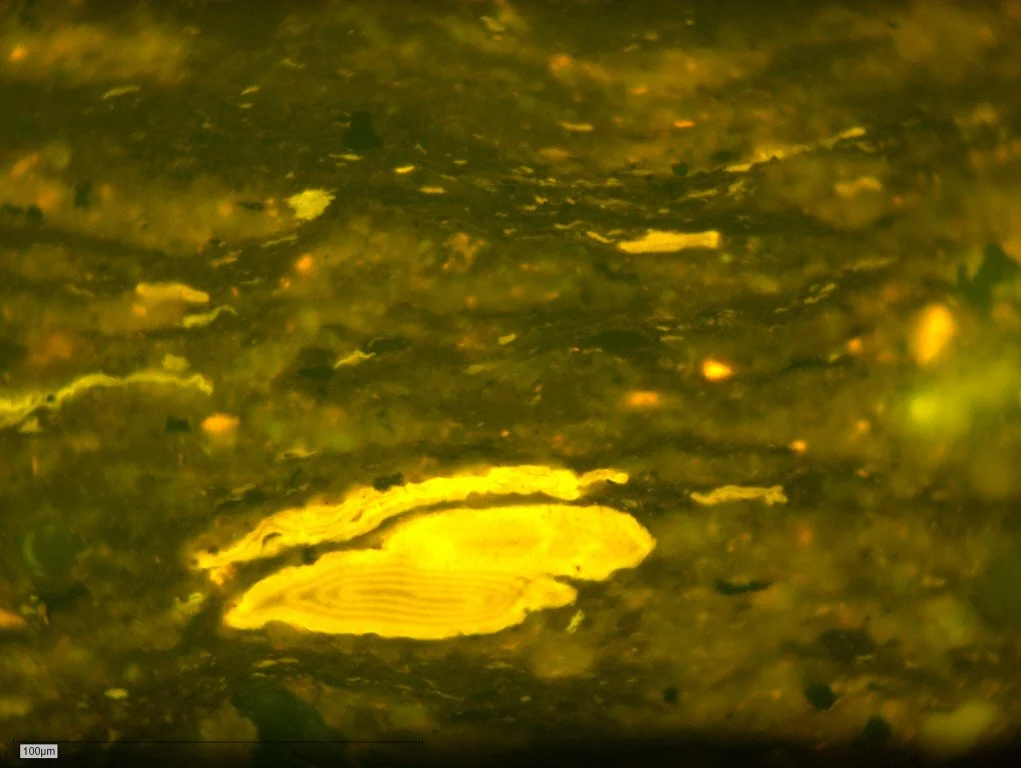
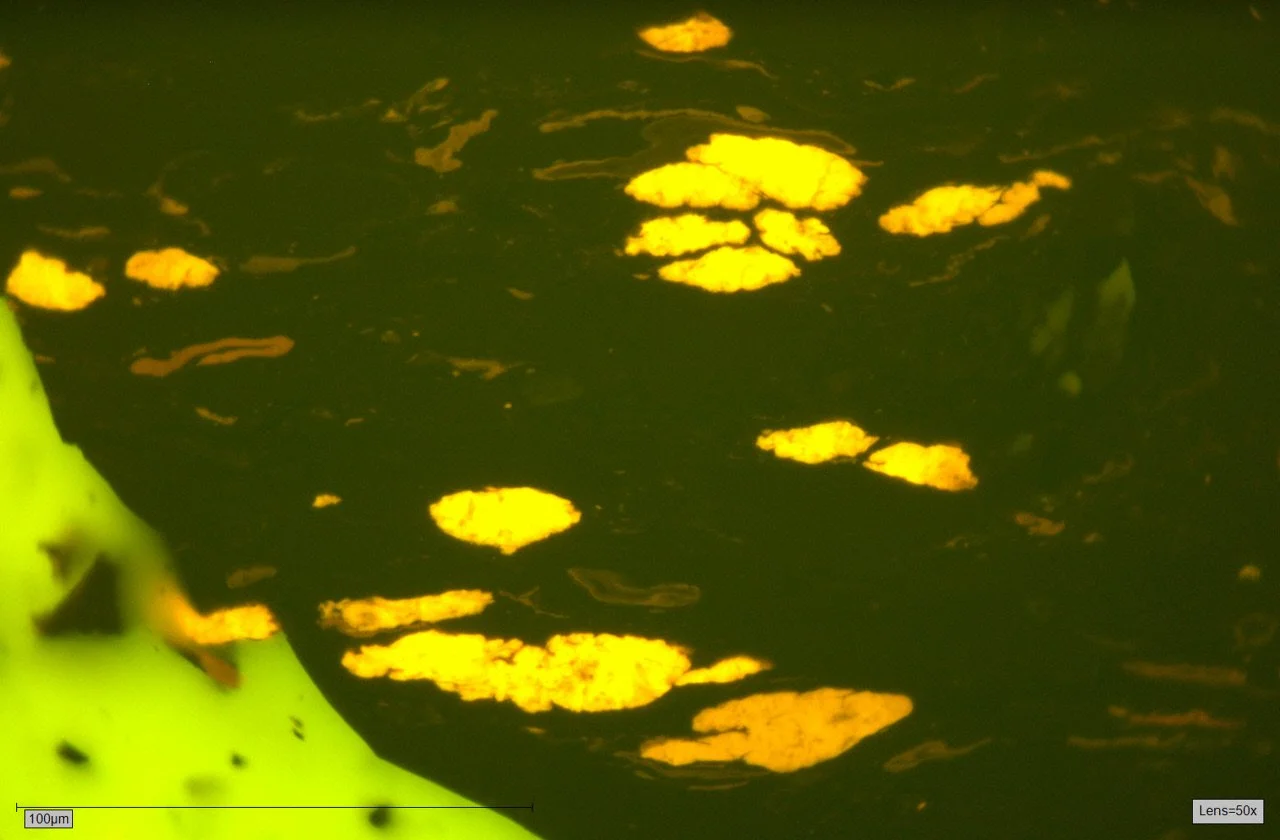
Sometimes he rides with a crew, a small colony of bodies carving together in formation — the Colony Lineup, he calls it — each algal silhouette catching the fluorescence as they bank through the groundmass, waiting for the perfect wave. Other times he’ll land a sick aerial, a reckless alley-oop, letting faint internal features flicker for an instant before dropping back in with that crisp, unmistakable outline.
As he rides the waves, Telalginite leaves a trail of his essence behind, quietly altering the neighbourhood. Collotelinite, drawn a little too close, absorbs what he releases and, perhaps against her better judgement, appears less mature than she truly is. As rank increases and his glow begin to quiet, Telalginite doesn’t slow down. He simply adjusts. The tricks remain; only the brilliance changes. He kicks out the back of the wave, heading to shore. The shape stays faithful long after the colour retreats.

Scientist’s Note:
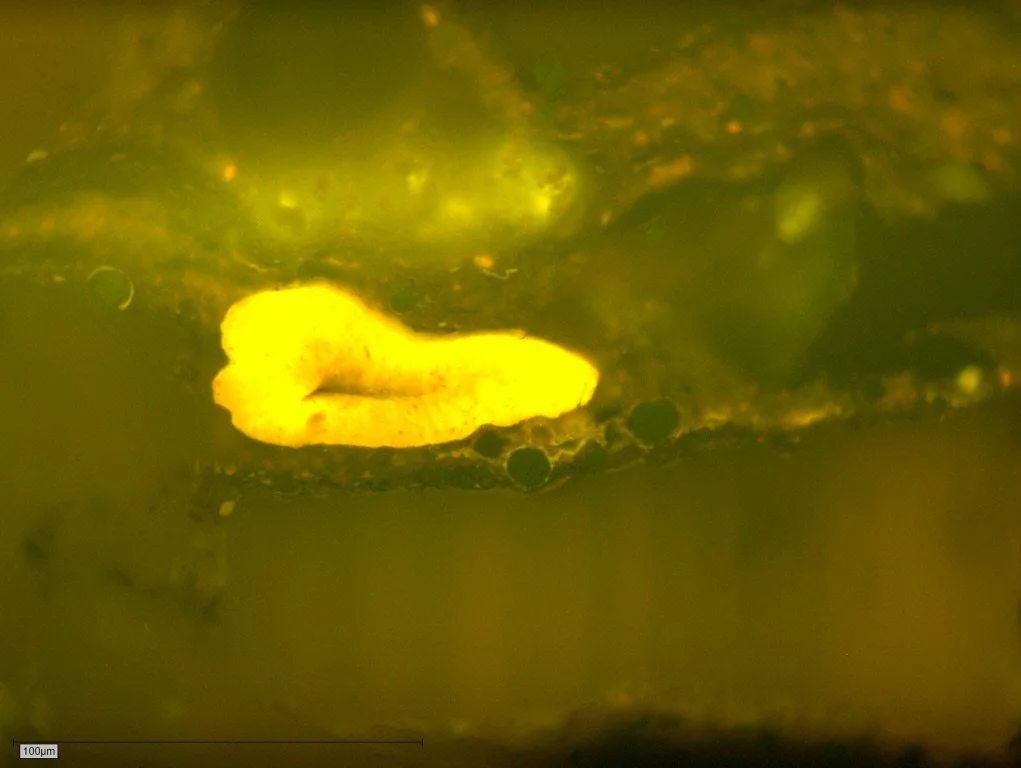
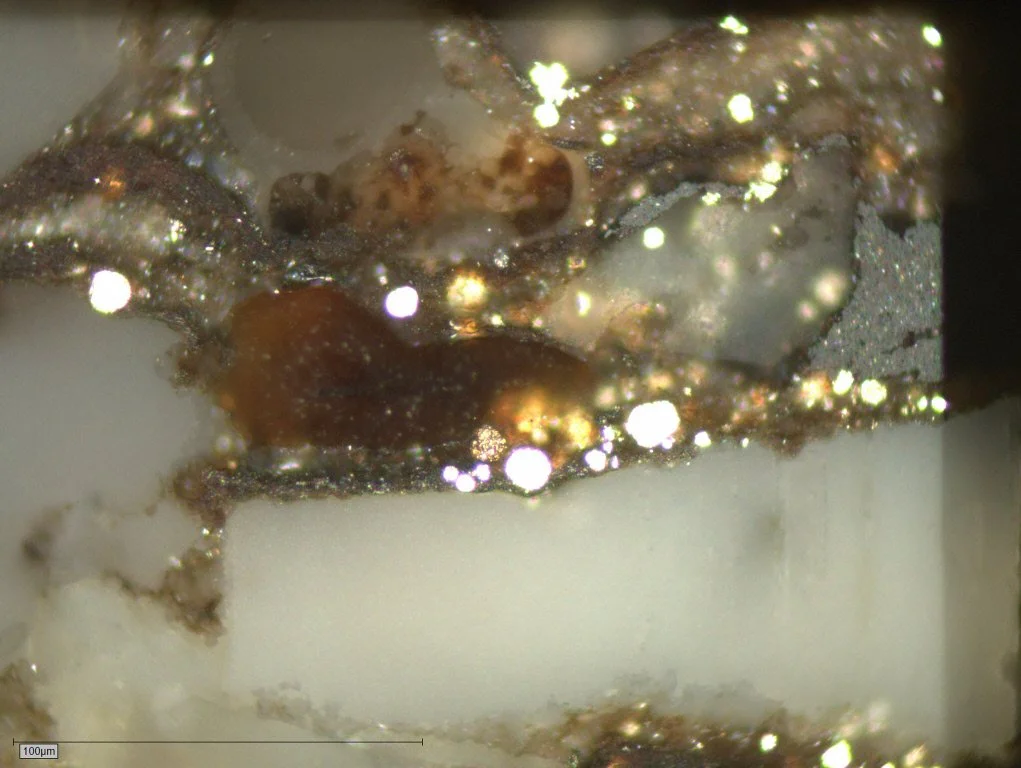
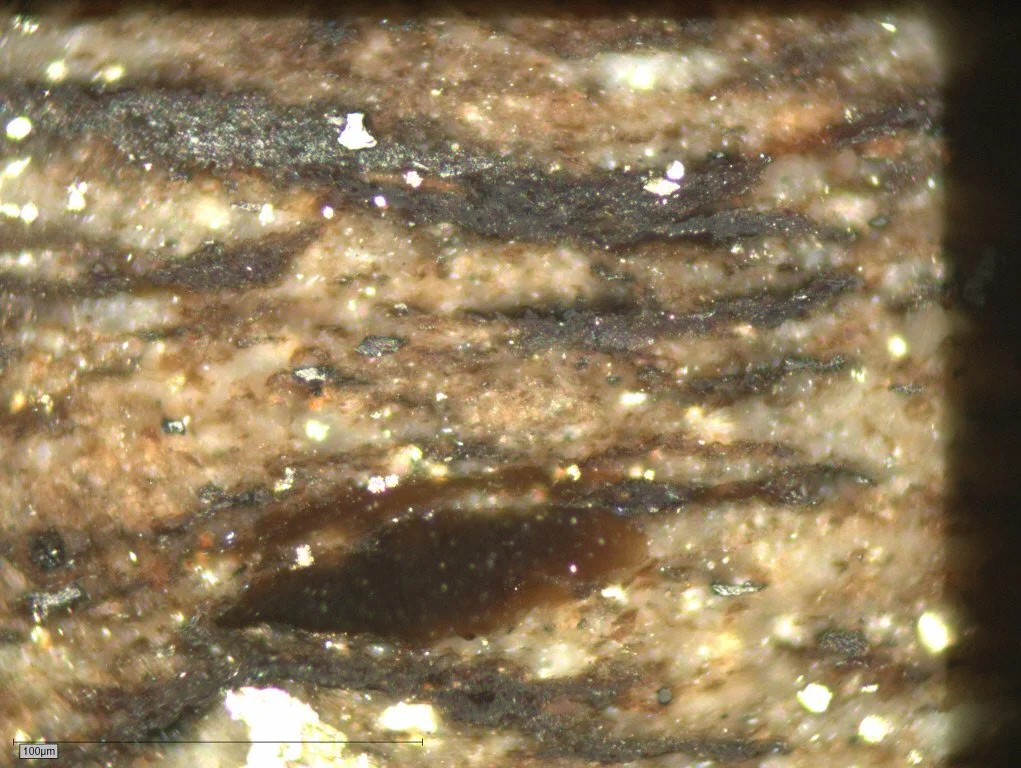
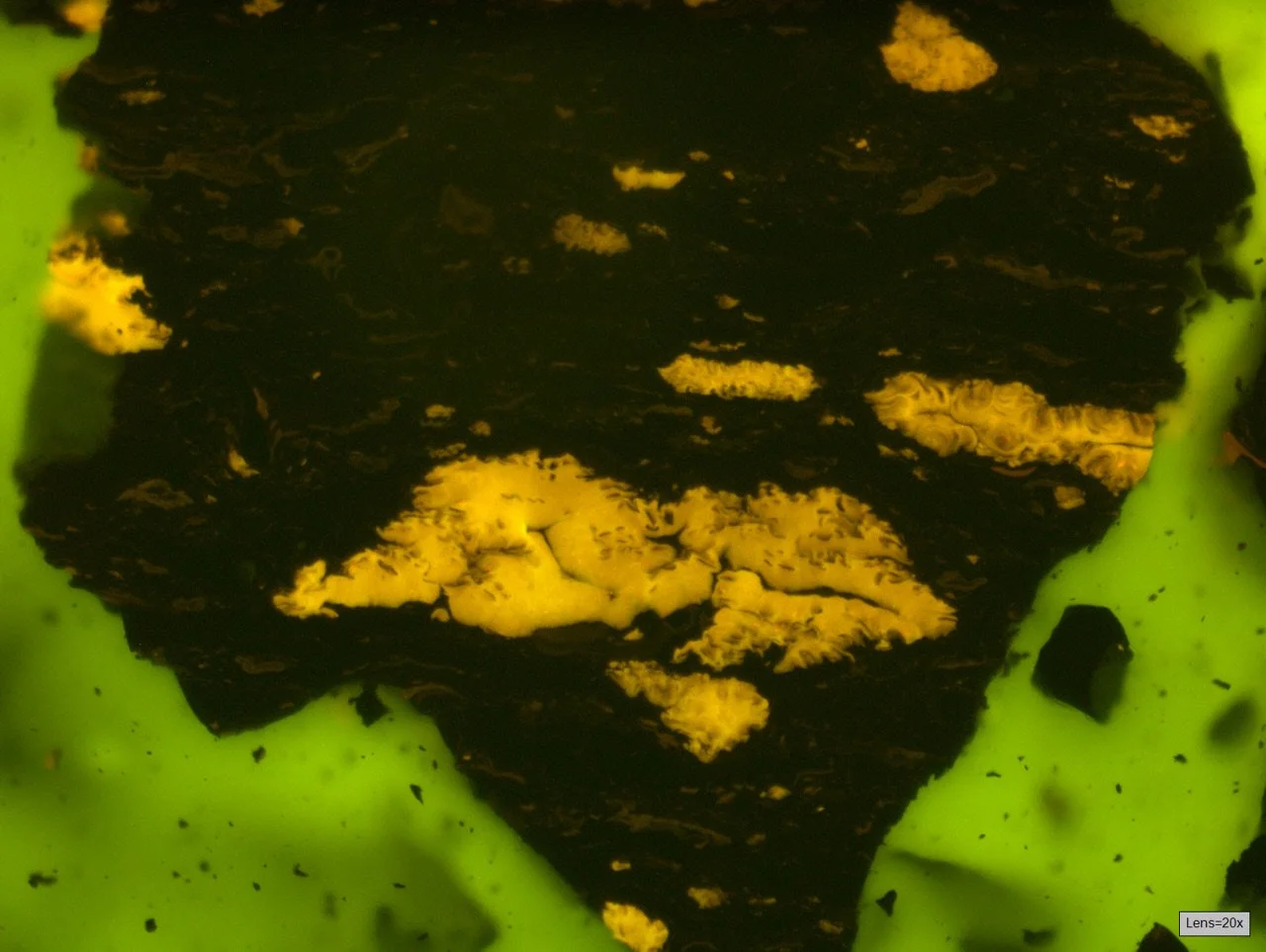
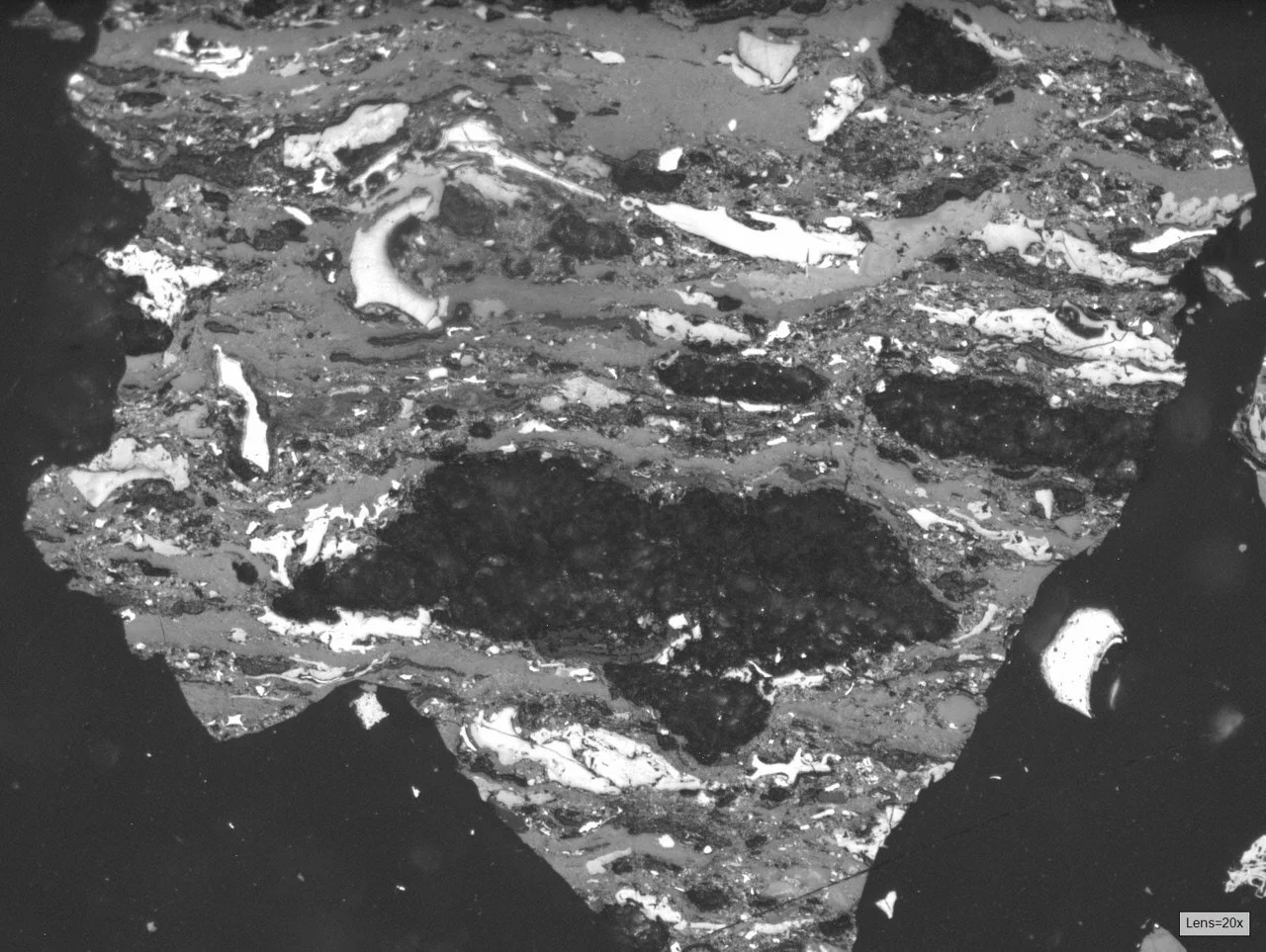
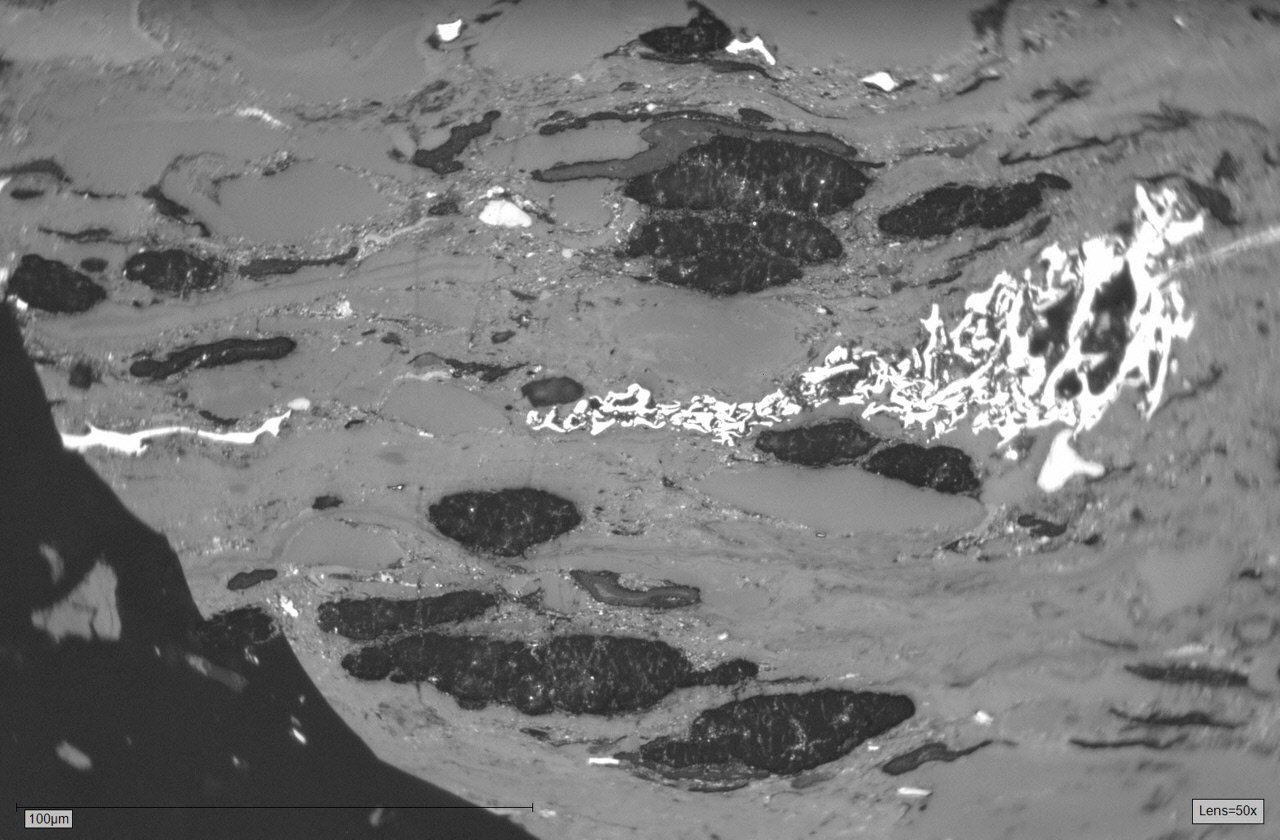
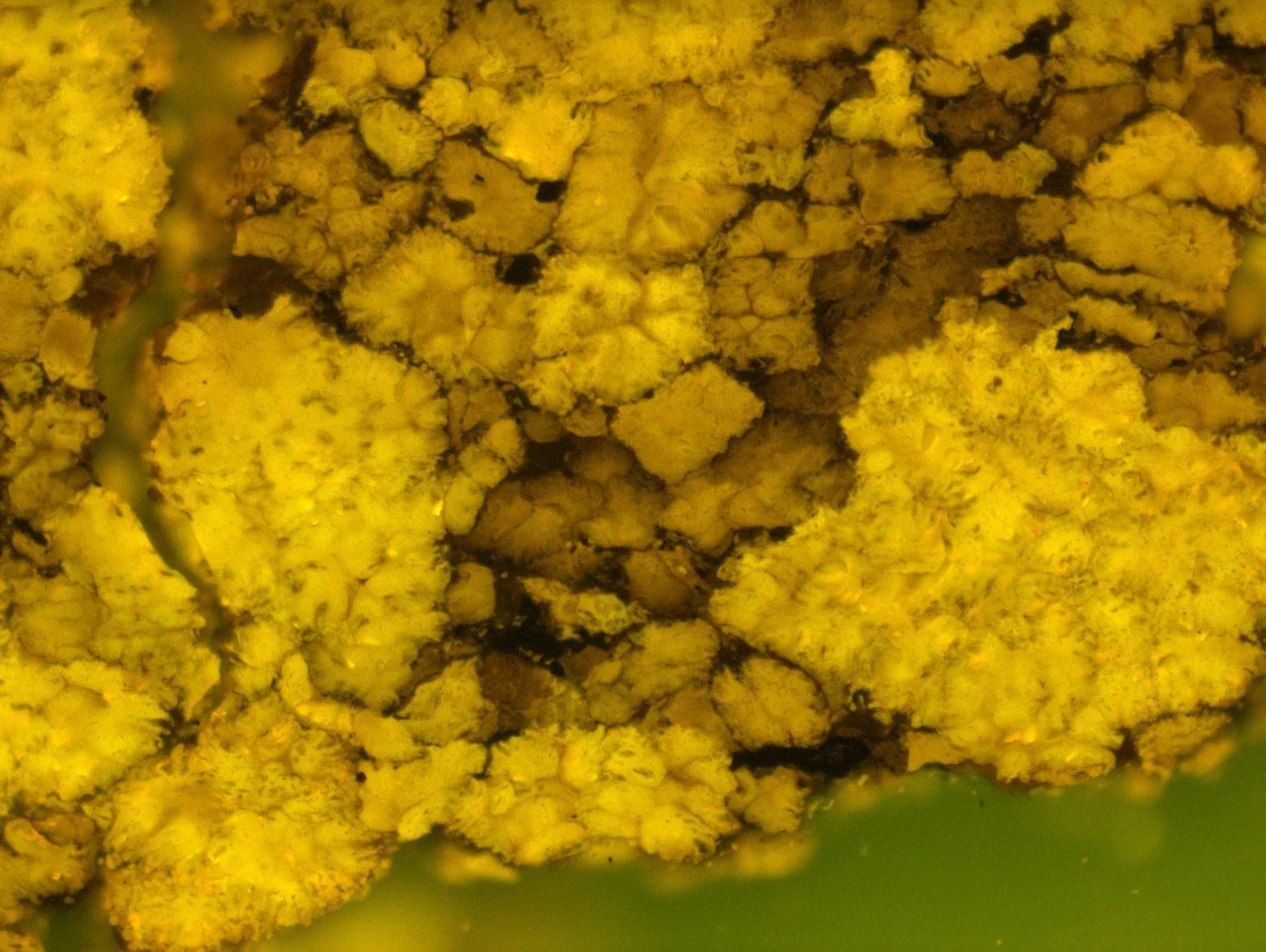
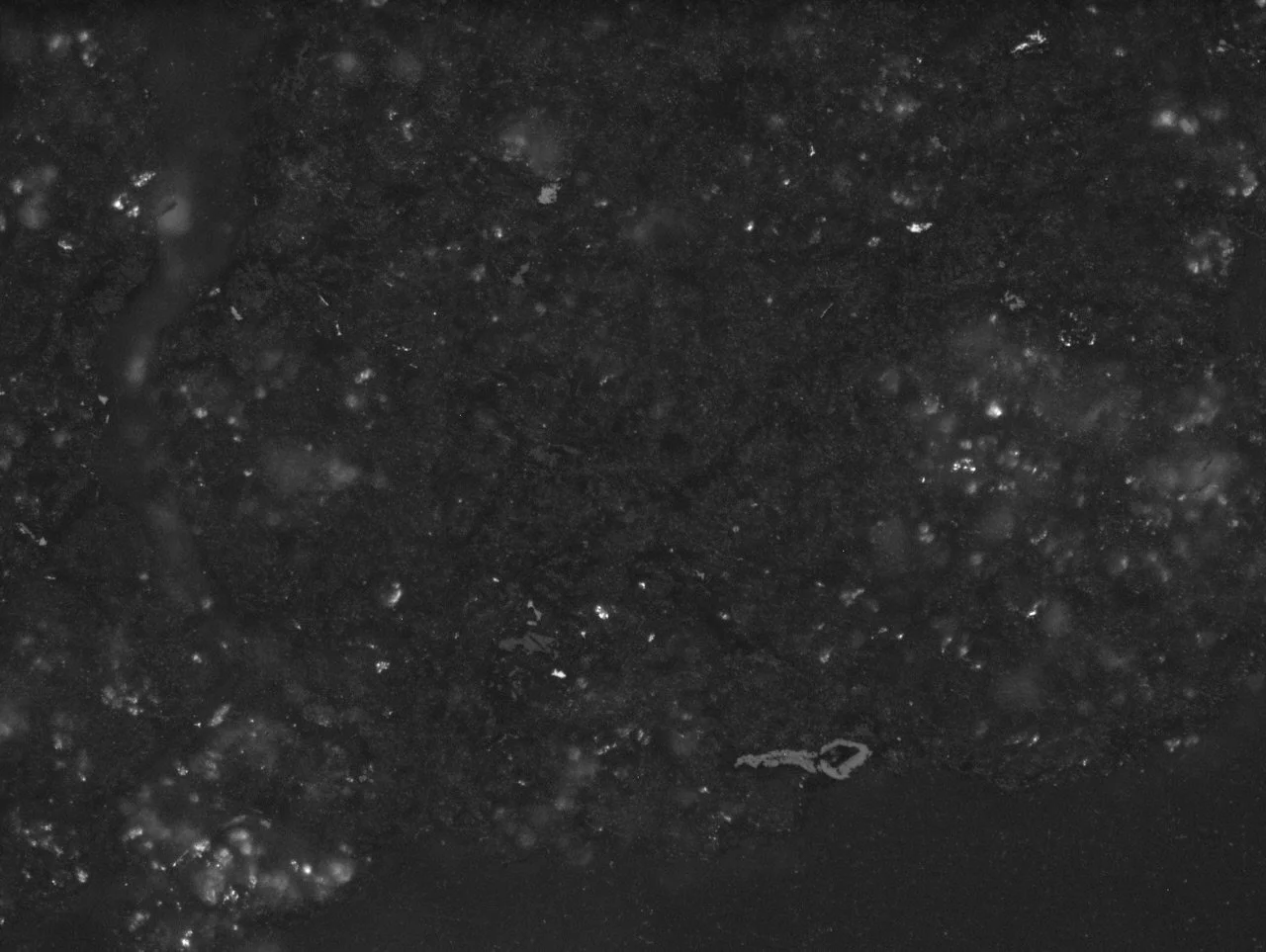
Telalginite is a variety of alginite within the liptinite group, characterised by the presence of discrete, recognisable algal bodies. These bodies typically appear as rounded, oval, or thick-walled forms that may occur singly or in colonies. Their shapes frequently reflect original algal morphology, and at low rank, internal features may still be visible. With increasing thermal maturity, these internal structures tend to become homogenised, though the overall outlines of telalginite commonly remain well defined.
In reflected white light, telalginite shows very low reflectance at low rank and appears brownish to greyish depending on preservation and maturity. Under UV or blue excitation, it typically displays strong yellowto yellow–orange fluorescence, which diminishes and eventually disappears with increasing rank.
Chemically, telalginite is hydrogen-rich and composed largely of aliphatic material. This composition gives it high potential for liquid hydrocarbon generation, with release beginning early in the maturation sequence. For this reason, telalginite plays an important role in kerogen typing and in assessing the oil-prone character of organic matter.
During thermal maturation, telalginite releases hydrogen-rich hydrocarbons that may migrate into adjacent vitrinite macerals, particularly collotelinite and collodetrinite. Absorption of these products by the vitrinite matrix can lead to a suppression of measured vitrinite reflectance, causing vitrinite to appear less mature than expected for the burial history. This effect reflects geochemical interaction rather than intrinsic rank differences and should be considered when interpreting reflectance data in telalginite-rich samples.
The presence of telalginite provides valuable paleoenvironmental information, as it indicates significant algal productivity and rapid incorporation of algal bodies into accumulating sediments. In contrast to lamalginite, which forms thin films or streaks, telalginite retains discrete morphology and is thus more readily identifiable across a range of coal and sedimentary organic matter types.
Scientist’s note based on Pickel et al. (2017) and more information can be found:
Pickel, W., Kus, J., Flores, D., Kalaizidis, S., Christanis, K., Cardott, B.J., Misz-Kennan, M., Rodrigues, S., Hentschel, A., Hamor-Vido, M., Crosdale, P., Wagner, N., ICCP, 2017. Classification of liptinite – ICCP System 1994. International Journal of Coal Geology 169, 40–61.
Hackley, P.C., Walters, C.C., Kelemen, S.R., Mastalerz, M., Lowers, H.A., 2017. Organic petrology and micro-spectroscopy of Tasmanites microfossils: Applications to kerogen transformations in the early oil window. Organic Geochemistry 114, 23-44.
Stasiuk, L.D., Osadetz, K.G., 1993. Thermal maturity, alginite-bitumen transformation, and hydrocarbon generation in Upper Ordovician source rocks, Saskatchewan, Canada. Energy Sources 15, 205-237.
Peters, K.E., Hackley, P.C., Thomas, J.J., Pomerantz, A.E., 2018. Suppression of vitrinite reflectance by bitumen generated from liptinite during hydrous pyrolysis of artificial source rock. Organic Geochemistry 125, 220-228.
