The Society of Reflective Personalities - Cutinite
The Pool Lifeguard
Personality:
Cutinite stretches herself thin along the surface of the matrix, where the light hits first. She sits like a lifeguard in midsummer: sunglasses on, whistle around her neck, perched just high enough to see everything. She claims she has the whole plant “under control,” even though she mostly watches the margins and occasionally forgets whatever is happening beneath the surface.
She was born to protect, to keep moisture in and the world out, but her approach is reactive, not strategic. She safeguards whatever looks exposed first, laying down defence where the surface calls for it.
UV? “Sunscreen and shade - we’ll be fine.”
Microbial invasion? “Nobody drowns on my watch.”
Sporinite’s chaos? “Kids run, splash, scream - as long as they don’t swallow the pool, they’re fine.”
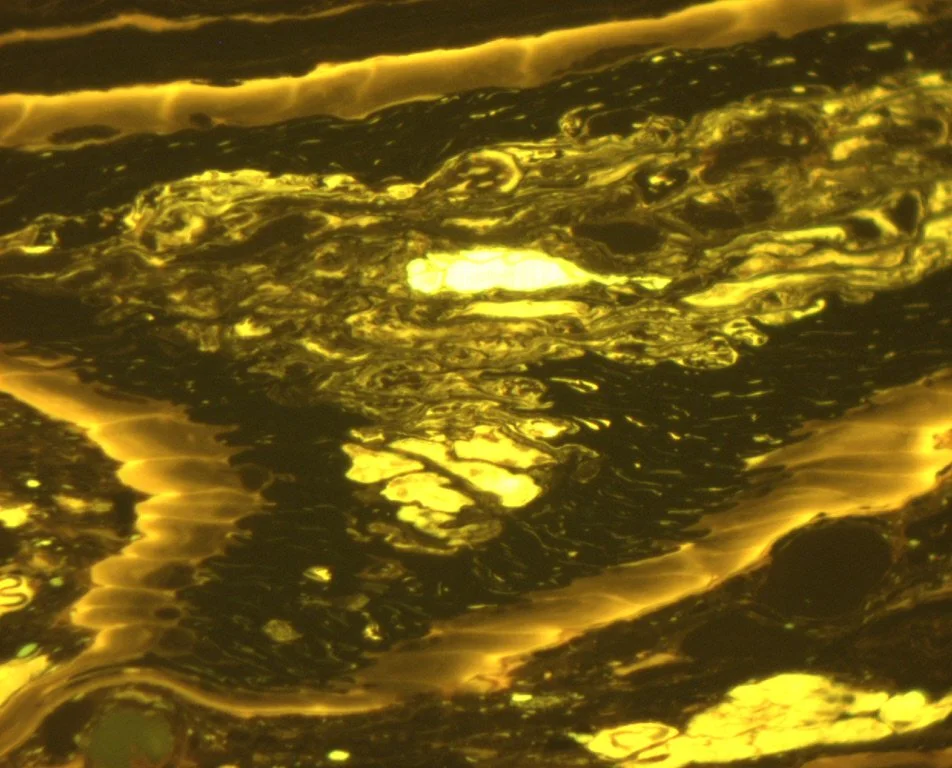
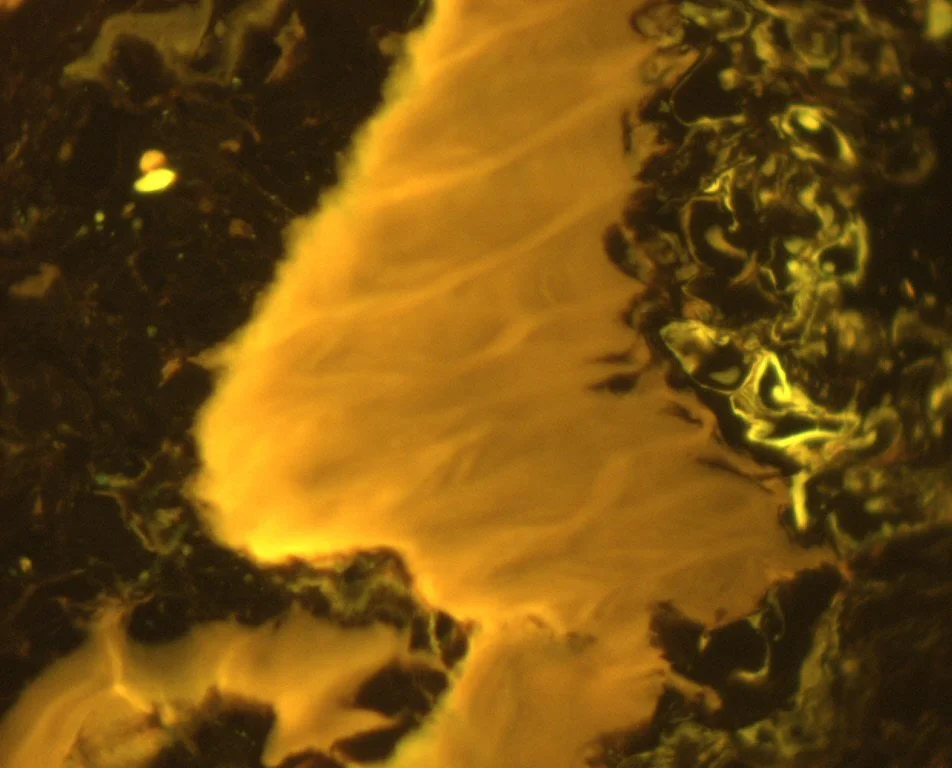
Under blue light she lights up like a fluorescent rescue vest, not because she wants attention, but because it’s part of her nature. Her serrated edges make her recognizable in the crowded pool. She is one of a kind.
She isn’t intimidating like Fusinite, lounging by the deep end like someone who survived a fire and no longer cares about splashes.
She isn’t serene like Resinite, who materializes with aloe and essential oils whenever someone burns.
She isn’t elegant like Collotelinite, who keeps trying to run safety drills:
“Watch the pool rules. Align. Stay even. Maintain continuity.”
Cutinite nods, blows the whistle, and then does whatever works in the moment.
She isn’t an elite guardian or a dramatic rescuer.
She is the thin barrier no one notices until it fails.
The membrane between sun and desiccation.
She’s the maceral equivalent of the lifeguard who looks relaxed until someone slips, and then she’s already in the water, hauling them out, sunscreen streaked across her nose, muttering over her shoulder:
“Stay hydrated, and stop running.”
She isn’t flashy about it, but don’t forget this: without her, the colonization of terrestrial ecosystems wouldn’t have been possible.

Scientist’s Note:
Cutinite is a liptinite maceral formed from the cuticles of leaves and stems. In life, these cuticles acted as external protective layers secreted by epidermal cells, composed primarily of cutin — a hydrophobic polyester of long-chain aliphatics. This adaptive tissue sealed moisture in, blocked ultraviolet radiation, and served as a key innovation enabling terrestrial plants to occupy dry air–light environments.
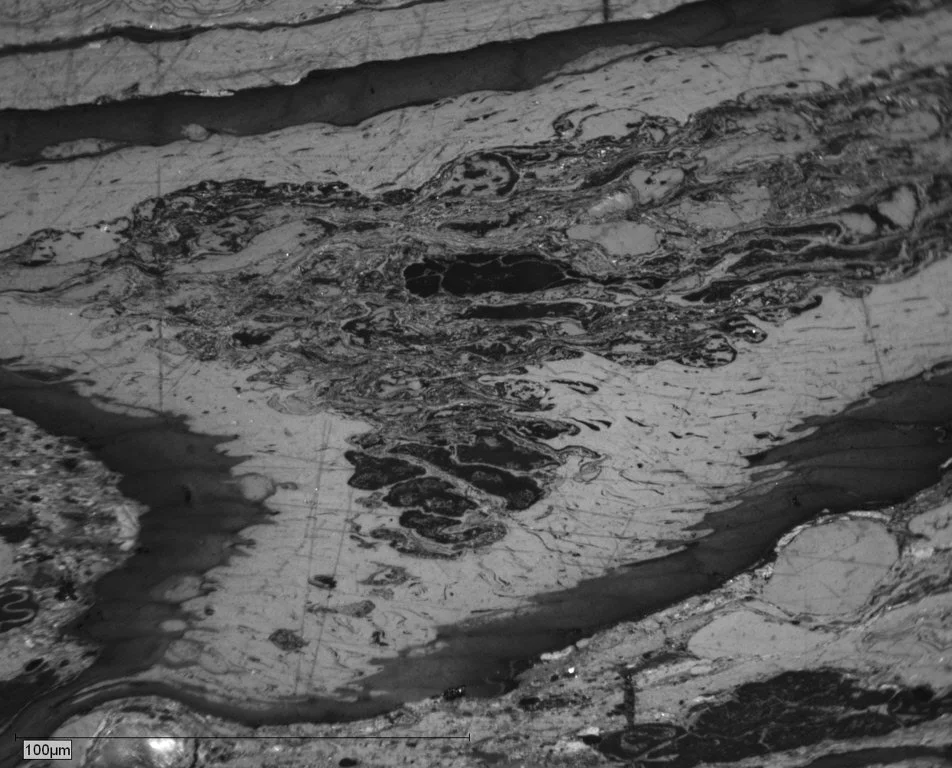
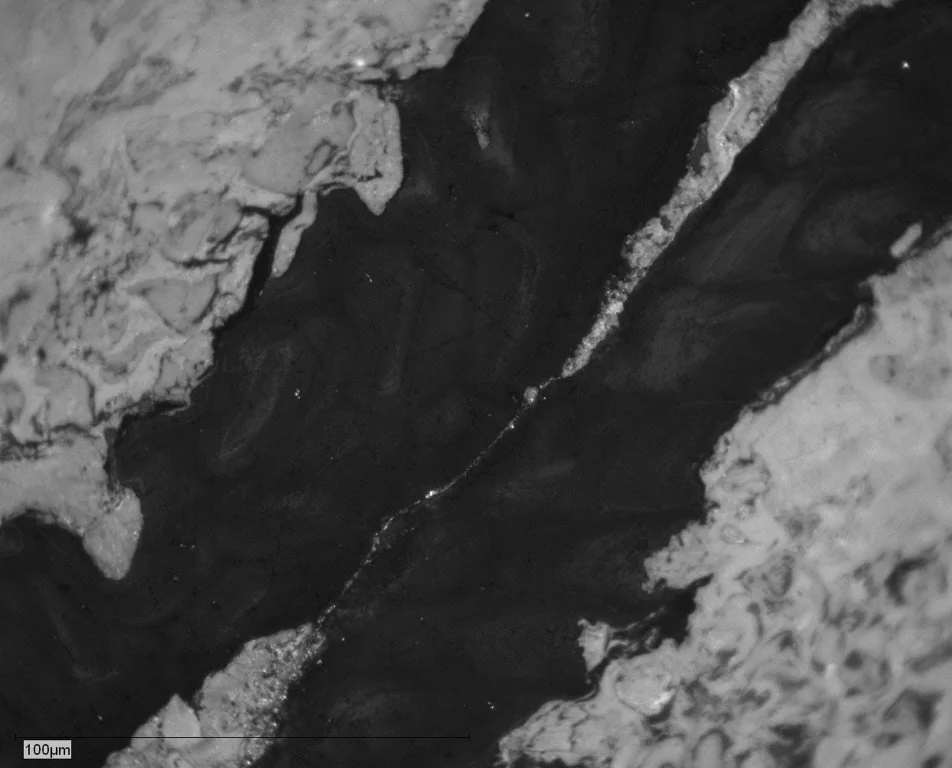
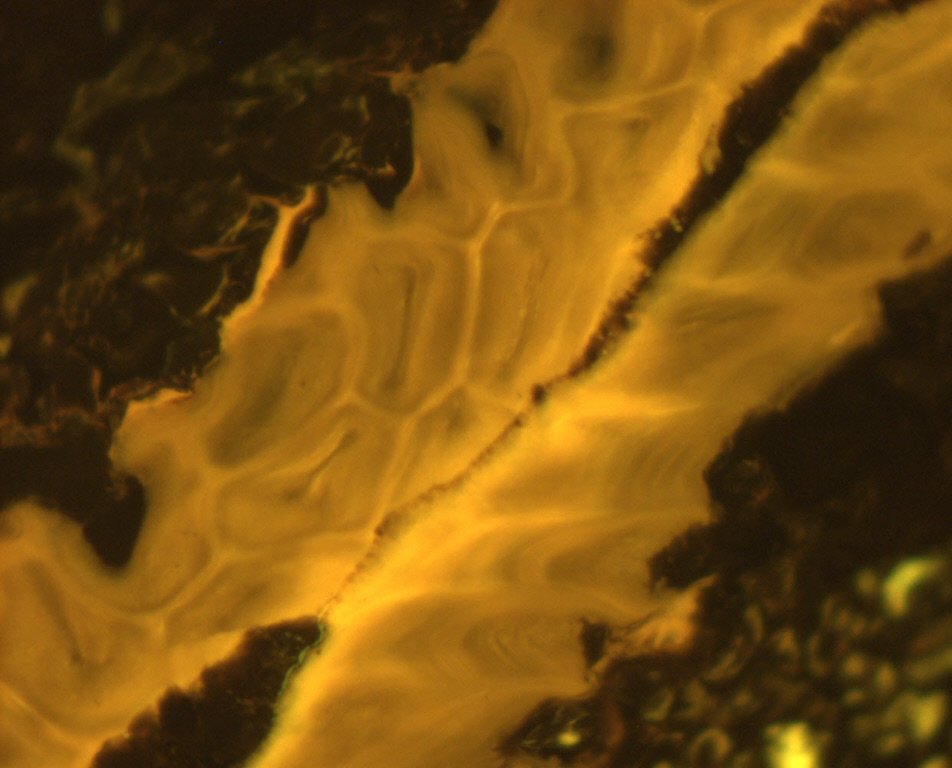
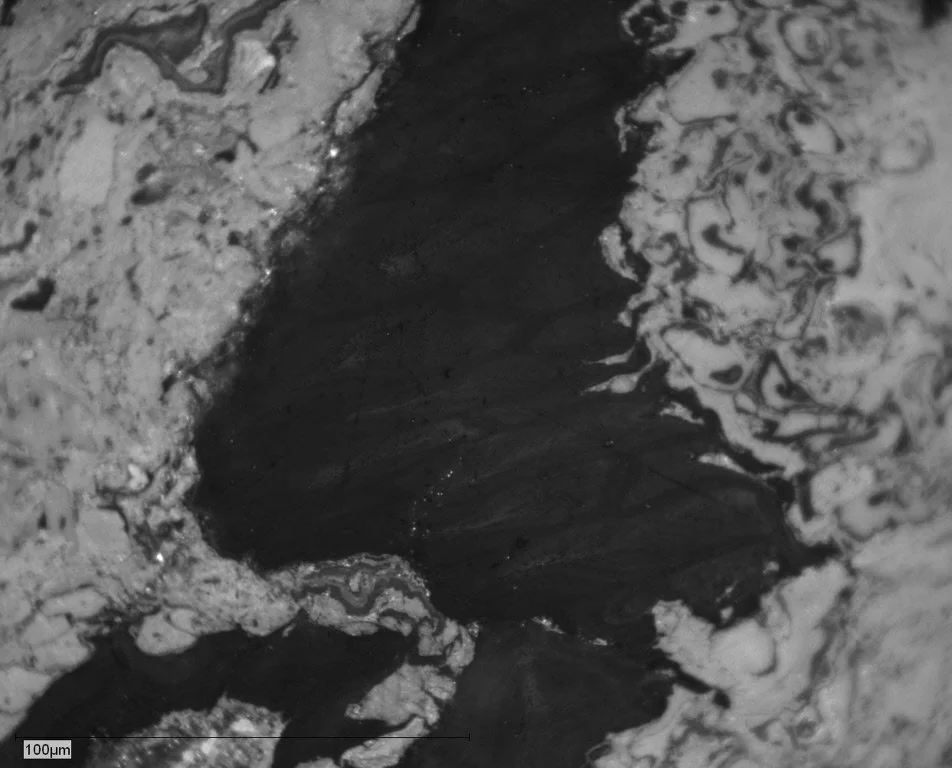
Perpendicular to bedding, cutinite commonly appears as narrow bands, often with a single serrated edge. This serration reflects the inner surface of the original epidermis rather than the external plant surface. In oblique sections, the band appears broader and more jagged; in horizontal sections, vestiges of epidermal cell patterning may still be observed. This geometry—smooth exterior, serrated interior—is one of the most reliable microscopic identifiers of cutinite.
Under reflected white light at low rank, cutinite is dark grey to black, sometimes with a reddish tint or orange internal reflections. Under blue or UV excitation, cutinite fluoresces strongly, ranging from greenish-yellow (low rank) to orange hues with increasing thermal maturity. Fluorescence intensity decreases with rank and eventually disappears as its optical properties converge toward vitrinite.
Cutinite is usually present in small proportions in most coals, often together with sporinite. However, it can reach high concentrations in specific deposits or plant-litter-rich facies. Because of its morphology and botanical fidelity, cutinite has long been used in facies interpretation, seam correlation, and reconstruction of paleomire vegetation.
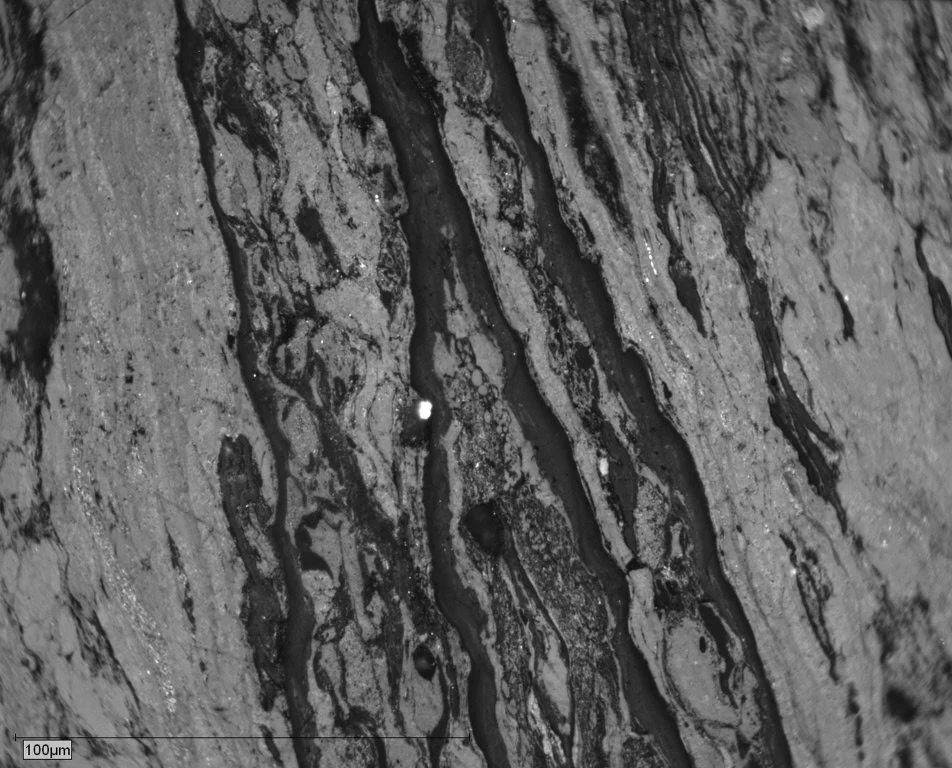
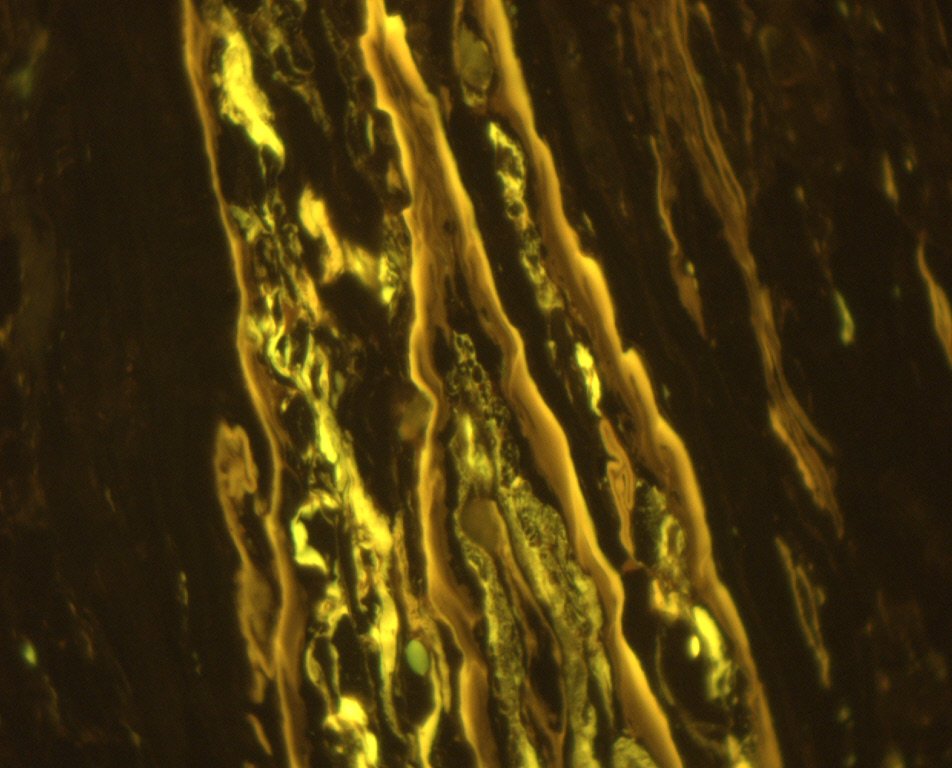
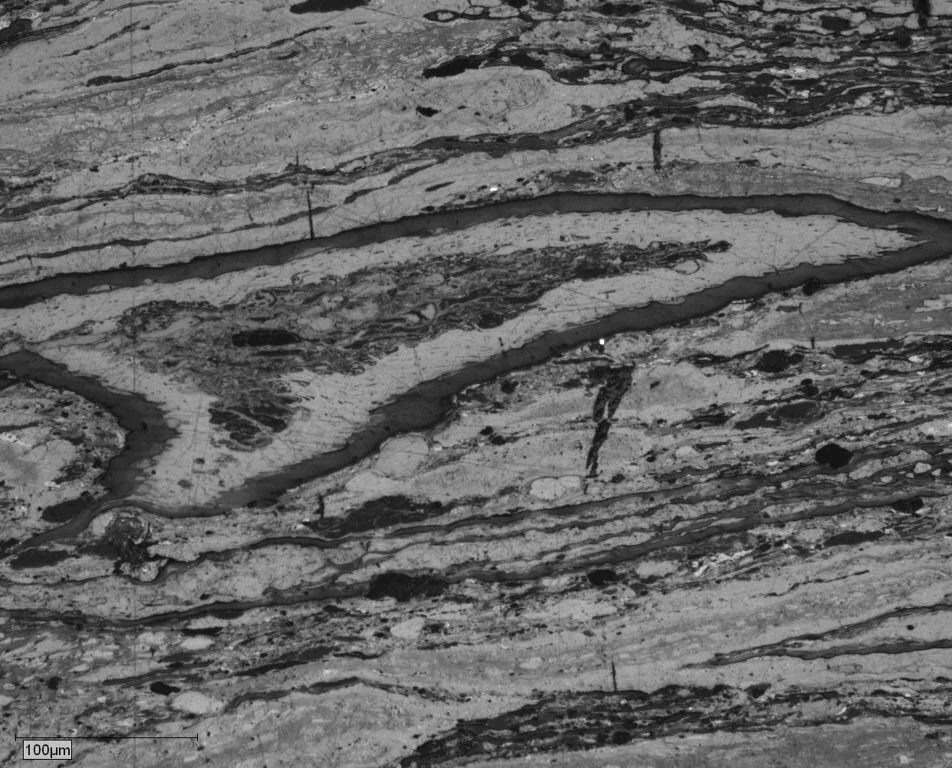
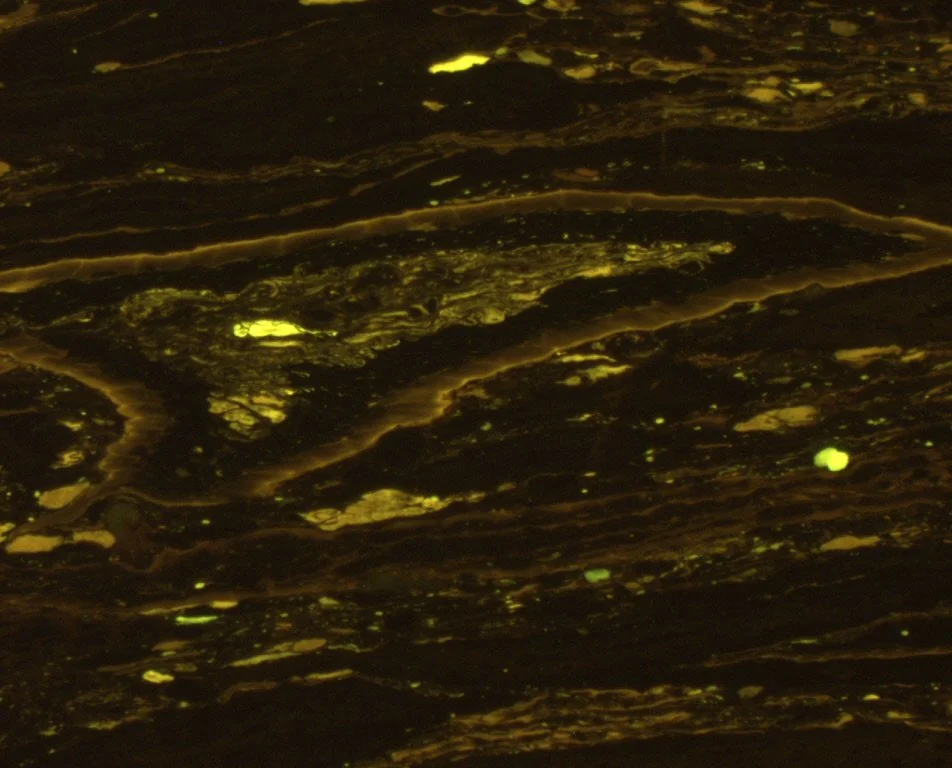
Scientist’s note based on Pickel et al. (2017) and more information can be found:
Pickel, W., Kus, J., Flores, D., Kalaizidis, S., Christanis, K., Cardott, B.J., Misz-Kennan, M., Rodrigues, S., Hentschel, A., Hamor-Vido, M., Crosdale, P., Wagner, N., ICCP, 2017. Classification of liptinite – ICCP System 1994. International Journal of Coal Geology 169, 40–61.
Mousa, D. A., Makled, W. A., Gentzis, T., Gad, N.S., Samaan, J., 2022. Discovery of an extraordinary Carboniferous cutinite-rich coal seam from Wadi Abu Thora, southern Sinai, Egypt: Organic petrographic and geochemical characterization. International Journal of Coal Geology 250, 103908.
Mastalerz, M., Hower, J.C., Taulbee, D.N., 2013. Variations in chemistry of macerals as reflected by micro-scale analysis of a Spanish coal. Geologica Acta 11, 483-493.
If you want to know more about cuticles:
Gonzalez-Valenzuela, L., Renard, J., Depege-Fargeix, N., Ingram, G., 2023. The plant cuticle. Current Biology 33, R203-R218.
