The Society of Reflective Personalities - Lamalginite
The Longboarder
Personality:
Lamalginite doesn’t chase the wave; he glides it.
While Telalginite explodes into the polished block in sick aerials, Lamalginite enters as a slow, steady glow, a soft band of light stretched parallel to the matrix, moving with the kind of confidence that doesn’t need to draw attention to itself. He’s the older brother who has already lived through enough tides to know that style isn’t speed; it’s continuity.
He rides a longboard not because it’s fashionable, but because it mirrors him: broad, balanced, and built for long, unbroken lines.
When the illumination hits, he settles into a Driftline Glide, a smooth passage that traces the length of the sample, barely disturbing anyone around him. It’s the opposite of Telalginite’s aerial manoeuvres: graceful instead of sharp, luminous instead of acrobatic.
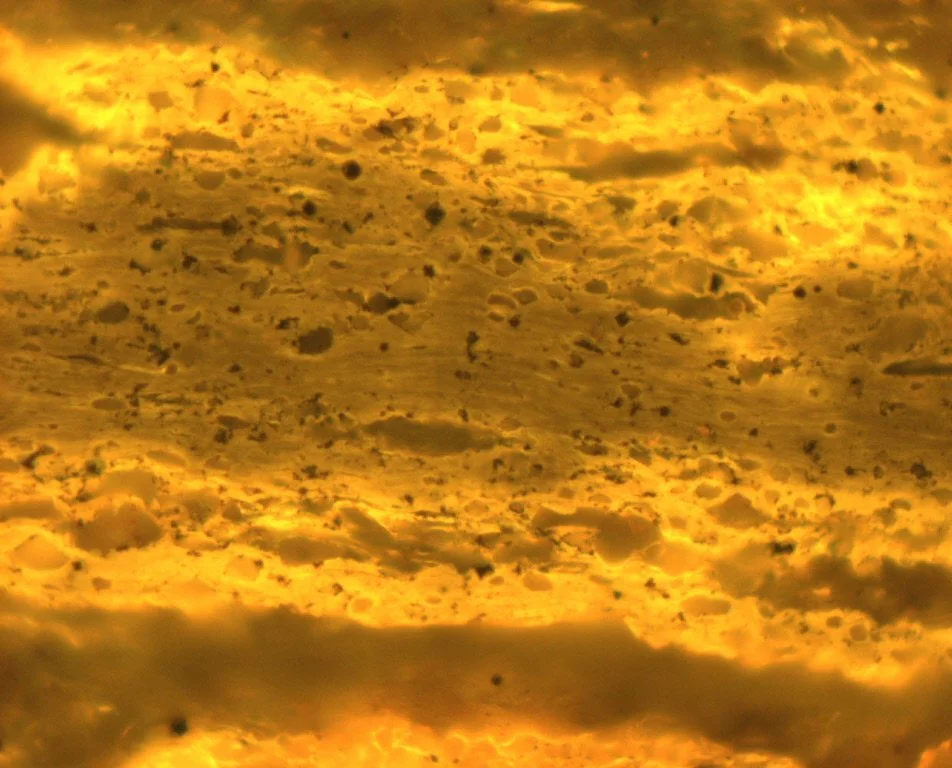
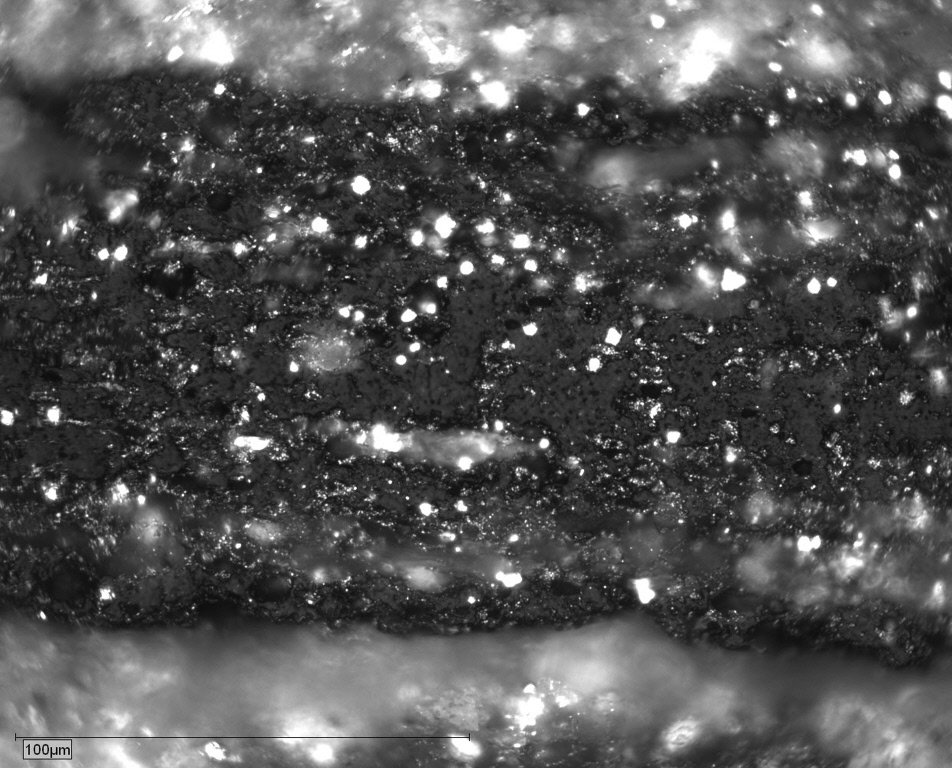
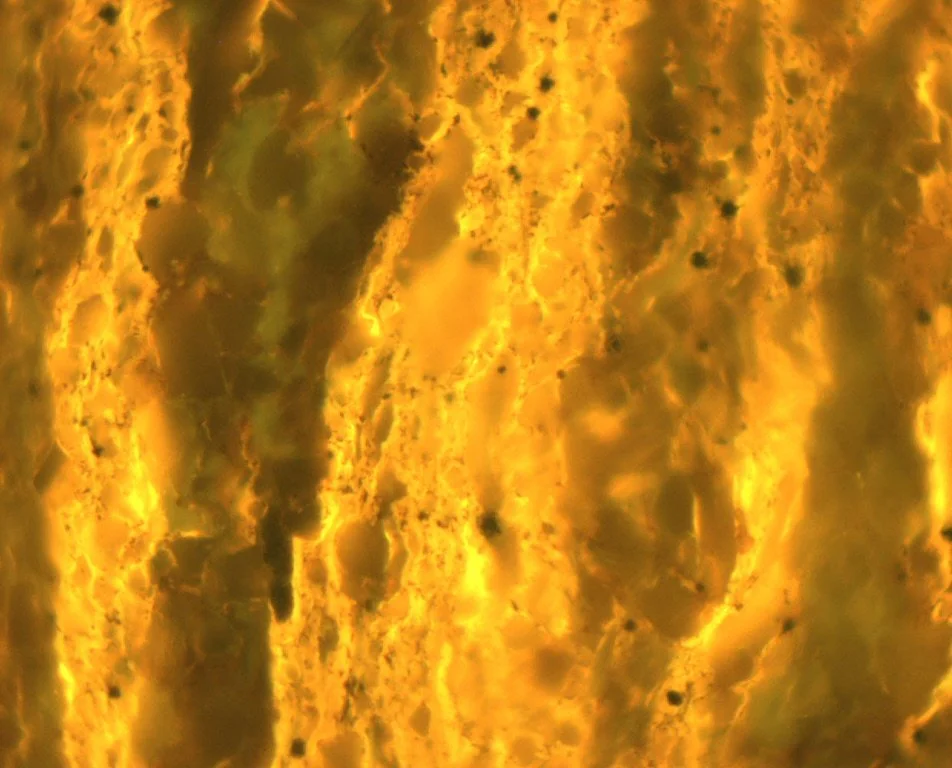
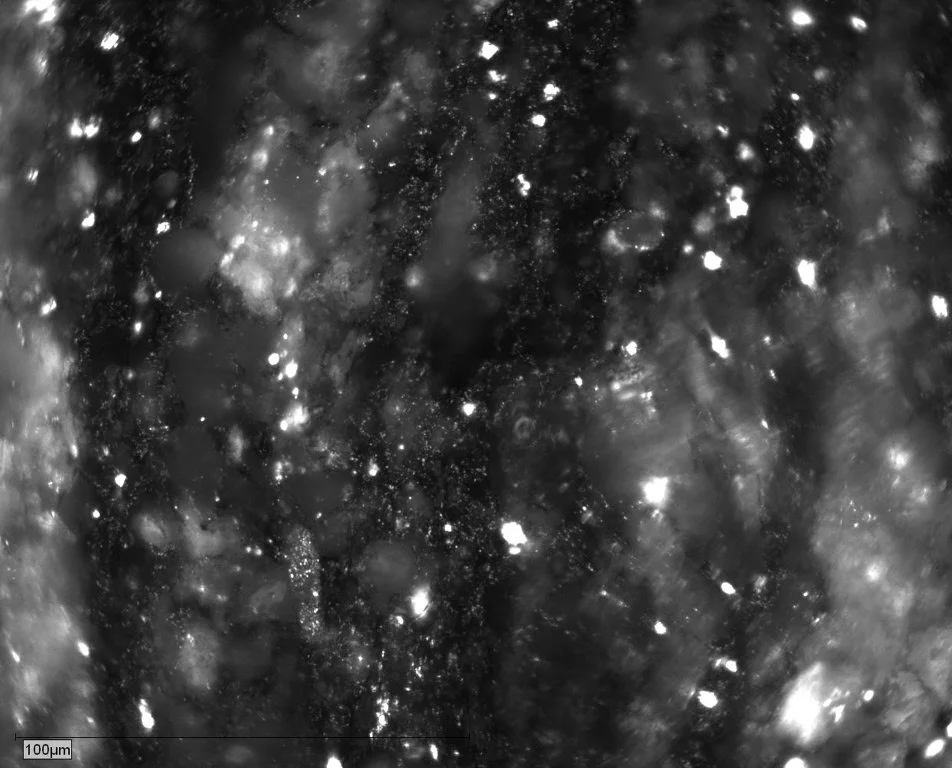
Lamalginite appears in films and streaks that cling to the bedding planes stretched thin over sandy beaches. He doesn’t have Telalginite’s crisp edges or perform his sick tricks; instead, he carries the calm assurance of someone who knows the entire wave face belongs to him. Under blue light he emits a warm, even fluorescence, a shoreline glow at dusk rather than a midday flash.
When the sample is young in rank, he glows softly.
As maturity rises, he transitions without complaint, letting the fluorescence fade while his quiet geometry remains. He’s the kind of maceral who adapts without losing himself, evolving into something else.
He watches out for his younger brother with a half-smile, the kind that says:
“I was doing this long before you learned to stand on your board.”
Lamalginite doesn’t need to show off.
He doesn’t need a named trick for every manoeuvre.
Just the Longboard Line, that steady ride across the matrix, a single, fluent gesture that holds the sample together the way old currents once held him.

Scientist’s Note:
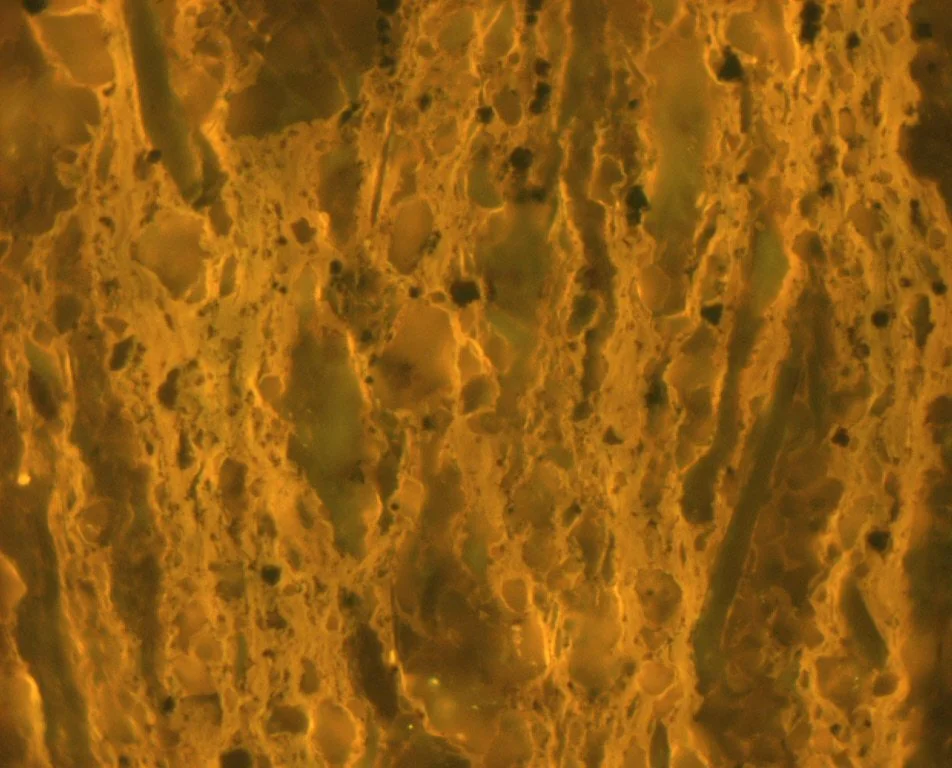
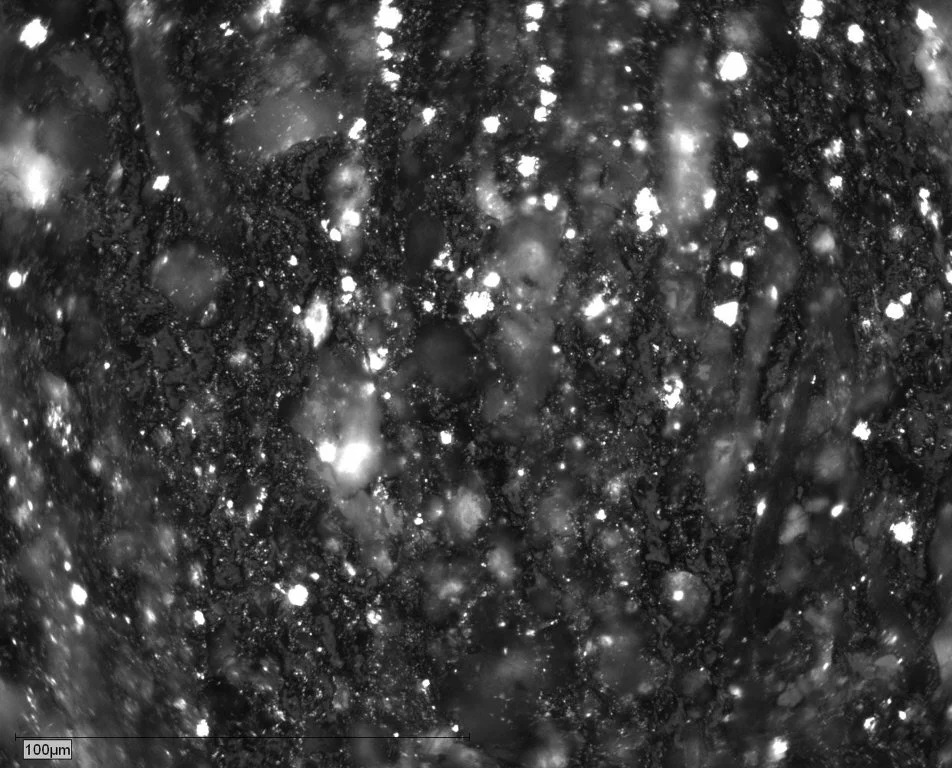
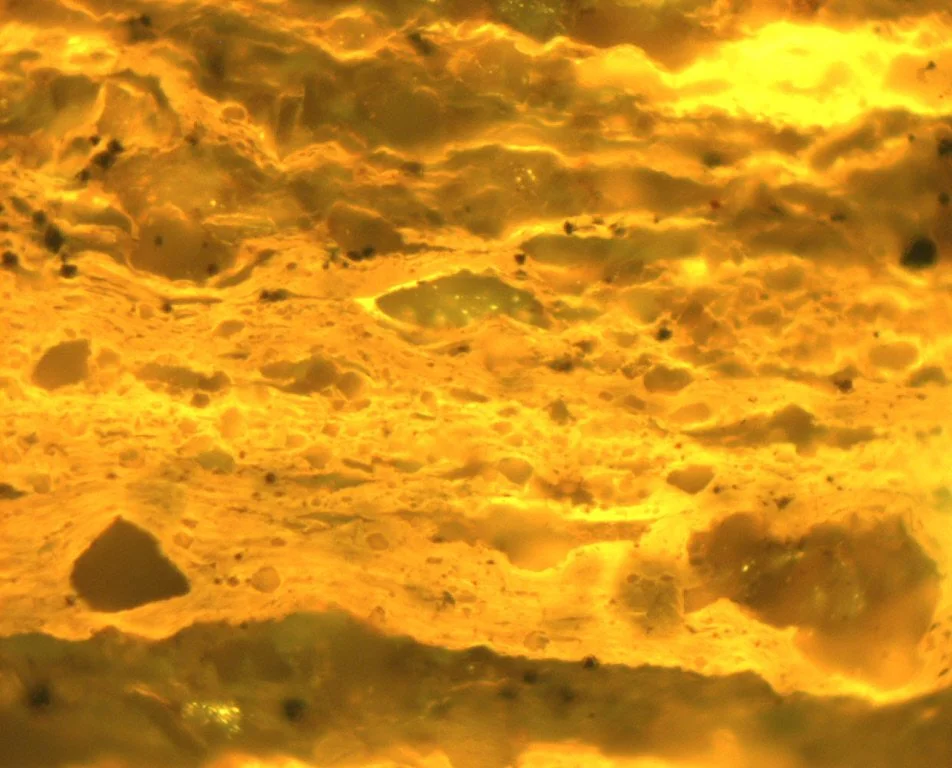
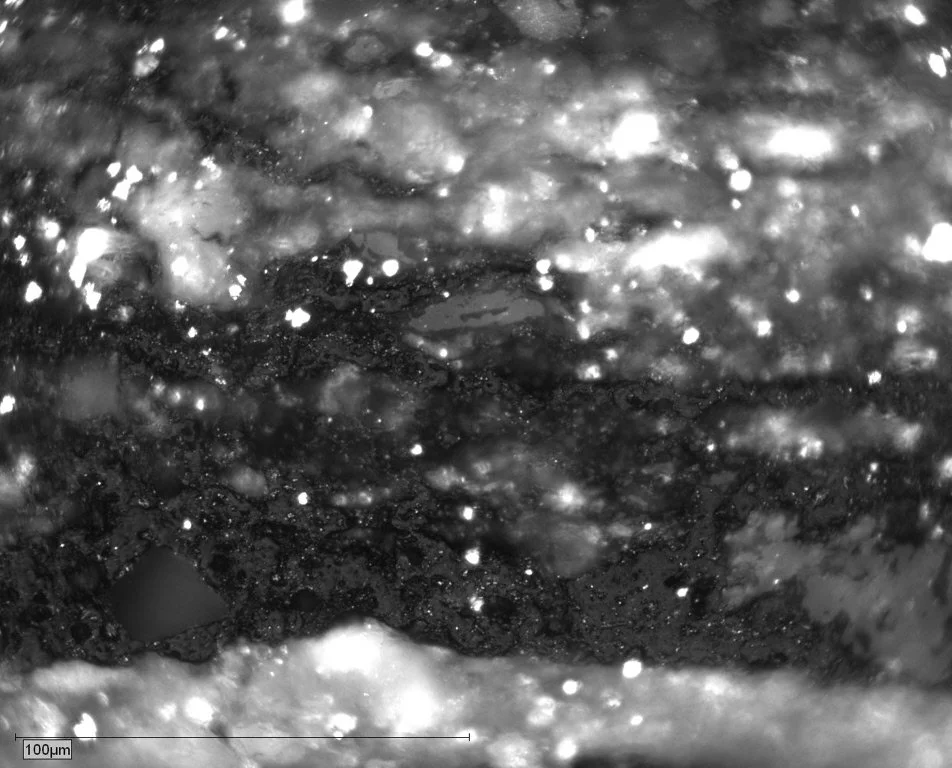
Lamalginite is a variety of alginite within the liptinite group, characterised by its thin, film-like to lamellar morphology and the absence of discrete, recognisable algal bodies. It typically occurs as continuous or discontinuous bands, streaks, or lamellae, commonly oriented parallel to bedding. In contrast to telalginite, lamalginite lacks preserved biological outlines, reflecting a higher degree of degradation of the original algal material. It is commonly associated with aquatic depositional environments, particularly lacustrine, paralic and marine settings.
Under reflected white light at low rank, lamalginite exhibits very lowreflectance and appears dark brown to grey. Under blue or UV excitation, it commonly shows yellow to yellow–orange fluorescence, which decreases in intensity with increasing thermal maturity and ultimately disappears as its optical properties converge toward those of vitrinite.
Chemically, lamalginite is hydrogen-rich and dominated by aliphatic components, giving it high hydrocarbon-generation potential and contributing to early oil generation during maturation. Because lamalginite commonly occurs as thin films intimately associated with the surrounding mineral matrix, hydrocarbons generated during maturation may readily interact with adjacent macerals.
Identification of lamalginite relies primarily on morphology and spatial arrangement, rather than preserved biological structure. However, as highlighted by Kus et al. (2017), lamalginite can be difficult to distinguish from bituminite, particularly where lamellae coalesce, boundaries become diffuse, or fluorescence intensity is weak. In such cases, lamalginite and bituminite may form a textural and genetic continuum, and differentiation based solely on reflected-light microscopy may be ambiguous.
Accordingly, lamalginite should be identified with caution where its morphology overlaps with that of bituminite, and its recognition may require consideration of context, association with telalginite, and overall organic facies, rather than reliance on a single diagnostic feature.
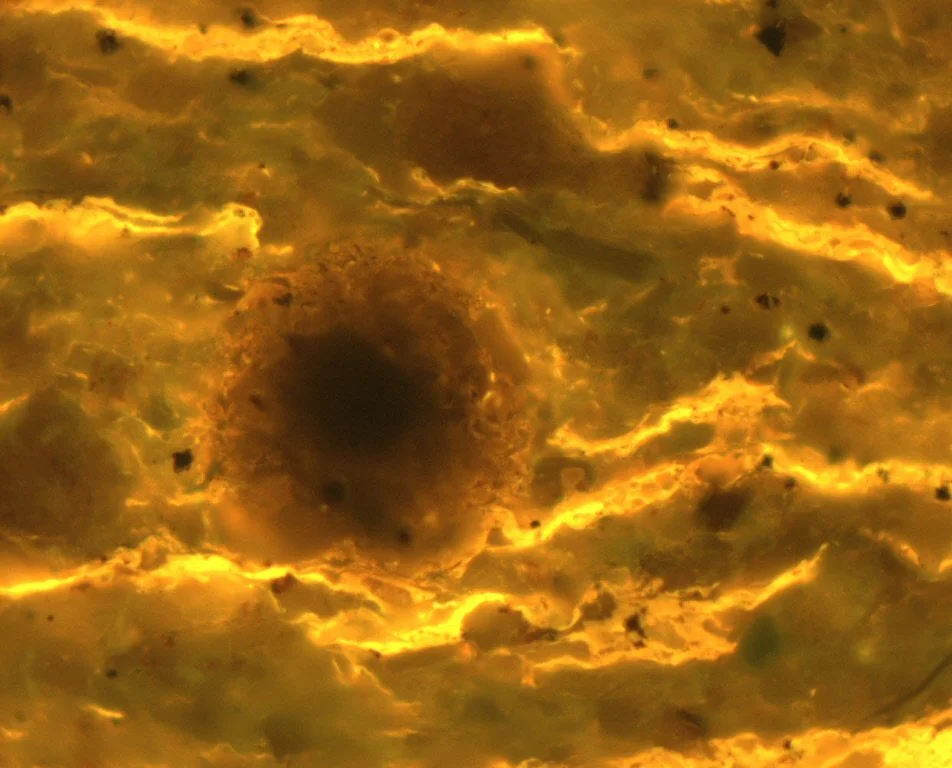
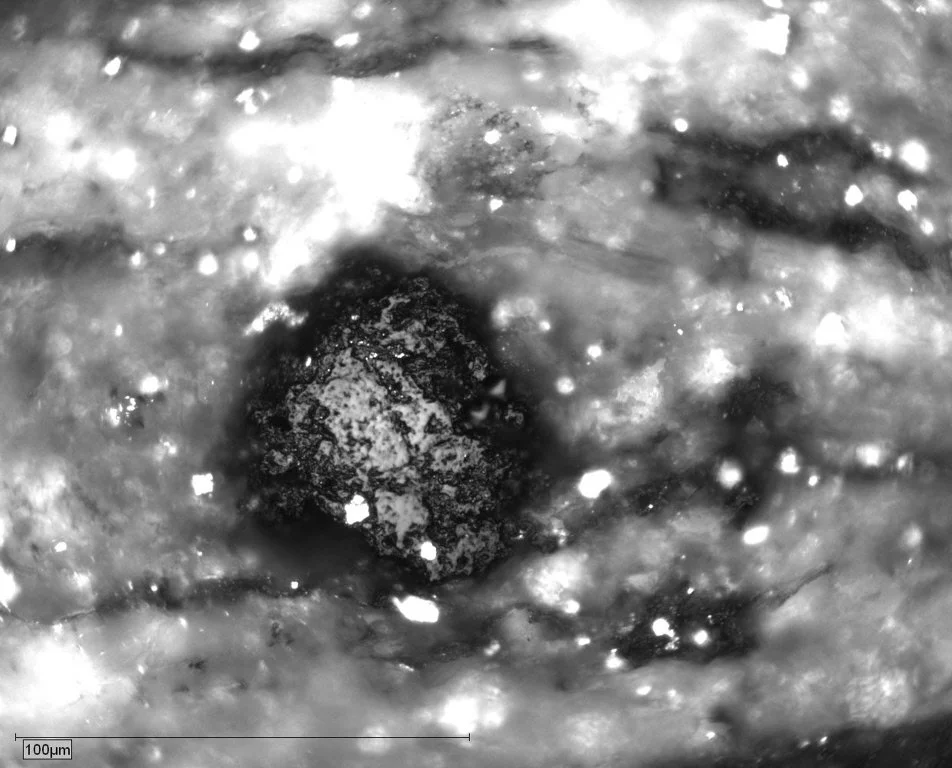
Scientist’s note based on Pickel et al. (2017) and Kus et al. (2017) and more information can be found:
Pickel, W., Kus, J., Flores, D., Kalaizidis, S., Christanis, K., Cardott, B.J., Misz-Kennan, M., Rodrigues, S., Hentschel, A., Hamor-Vido, M., Crosdale, P., Wagner, N., ICCP, 2017. Classification of liptinite – ICCP System 1994. International Journal of Coal Geology 169, 40–61.
Kus, J., Araujo, C. V., Borrego, A. G., Flores, D., Hackley, P. C., Hámor-Vidó, M., Kalaitzidis, S., Kommeren, C. J., Kwiecińska, B., Mastalerz, M., Mendonça Filho, J. G., Menezes, T. R., Misz-Kennan, M., Nowak, G. J., Petersen, H. I., & Rallakis, D., 2017. Identification of alginite and bituminite in rocks other than coal: 2006, 2009 and 2011 round robin exercises of the ICCP Identification of Dispersed Organic Matter Working Group. International Journal of Coal Geology, 178, 26–38.
Hackley, P.C., Valentine, B.J., Hatcherian, J.J., 2018. On the petrographic distinction of bituminite from solid bitumen in immature to early mature source rocks. International Journal of Coal Geology 196, 232-245.
Crick, I.H., 1992. Petrological and maturation characteristics of organic matter from the Middle Proterozoic McArthur Basin. Australian Journal of Earth Sciences 39, 501-519.
