The Society of Reflective Personalities - Secretinite
The Woman with Too Many Names
Personality:
Secretinite has attended enough classification meetings to know that certainty is usually temporary.
She has been called a rodlet, placed with sclerotinite, nudged towards macrinite, and discussed at sufficient length that, by the time the fourth committee had finished with her morphology, origin and nomenclature, Secretinite had developed a system.
She waits.
Usually, the person speaking becomes uncertain on their own.
It helps that she is highly reflective. People assume that means she enjoys attention. She simply has the unfortunate habit of being conspicuous while everyone argues about what she is.
Her origin is in secretory ducts. What exactly filled them is another matter. Fortunately, classification has never allowed uncertainty to interfere with terminology.
Relations within the Society are not always smooth.
Resinite still tries to be friendly.
“We may have something in common,” she once said warmly.
Secretinite looked at her.
“An anatomical location is not a family tree.”
They have not discussed it since.
Funginite avoids the subject entirely. Their history is complicated, mostly because generations of petrographers kept putting them in the same bag. Funginite has cells. Secretinite does not. This should have settled the matter earlier than it did.
It did not.
Macrinite is worse. He keeps appearing whenever Secretinite becomes angular, fractured, or inconveniently difficult to place.
“You’re looking a bit like me,” he says.
“I am damaged,” she replies. “Do not make this about yourself.”
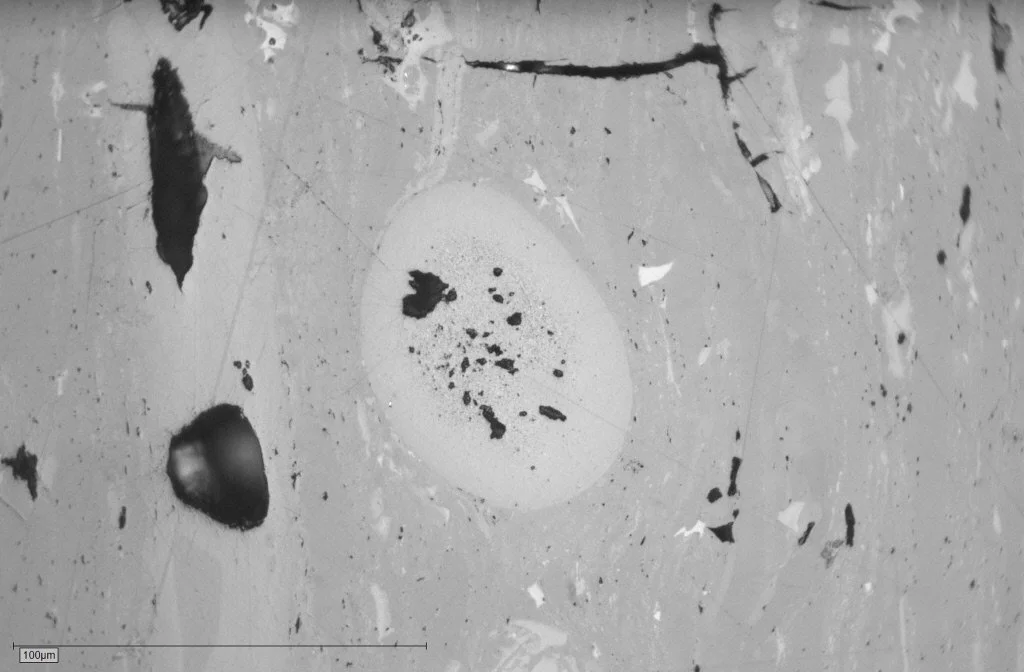
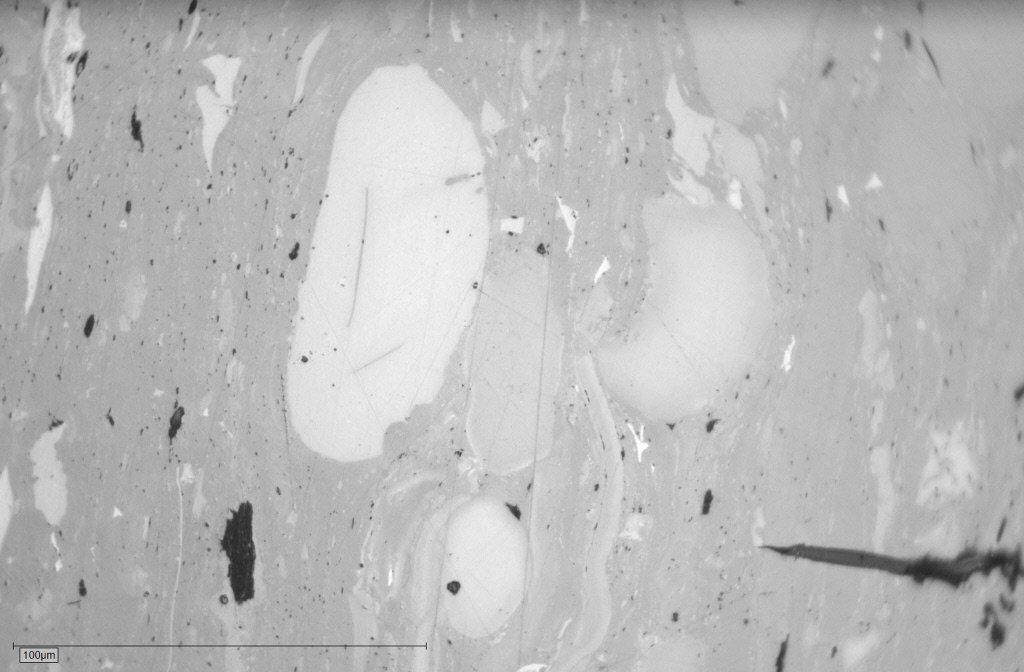
Her polished-section appearance changes with orientation. Sometimes rounded. Sometimes oval. Sometimes elongate. Occasionally vesicled enough to look cellular, which starts the whole argument again.
Secretinite has learned not to take it personally.
After all, everyone is entitled to an interpretation.

Scientist’s Note:
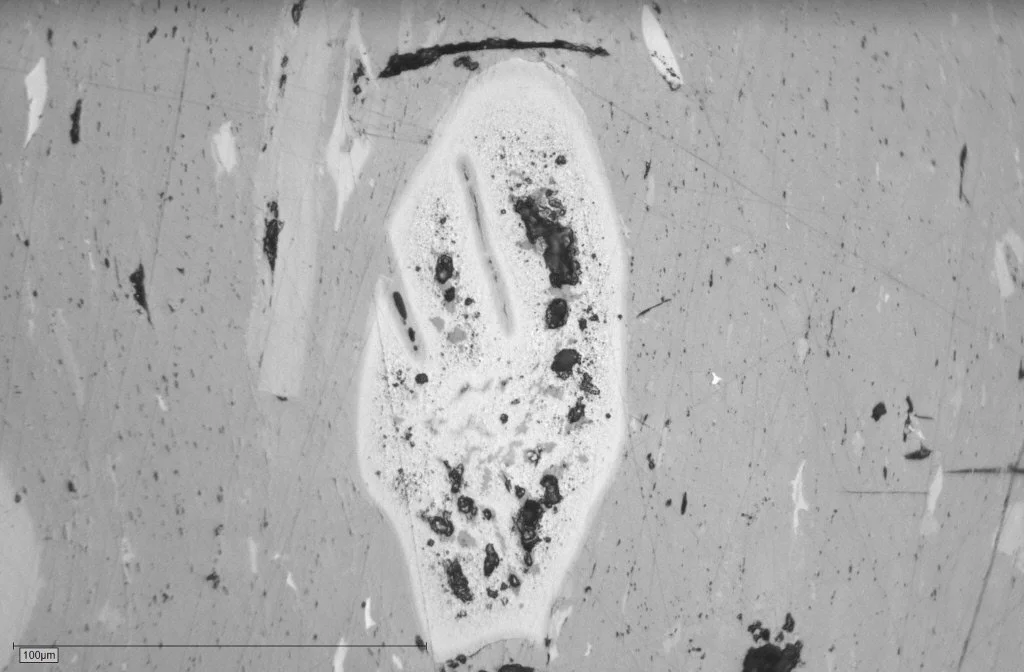
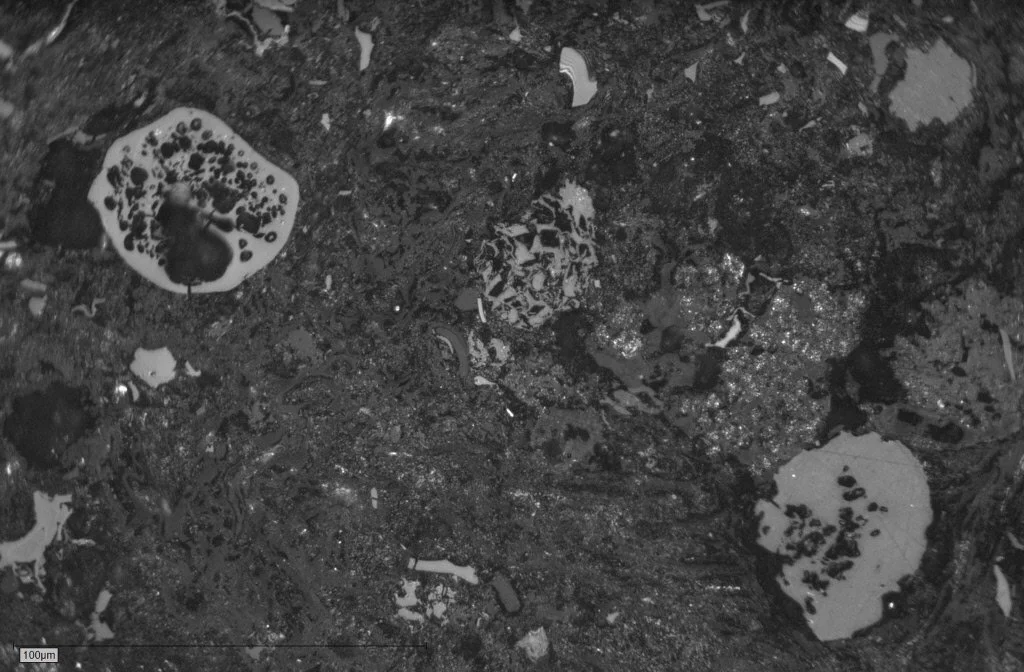
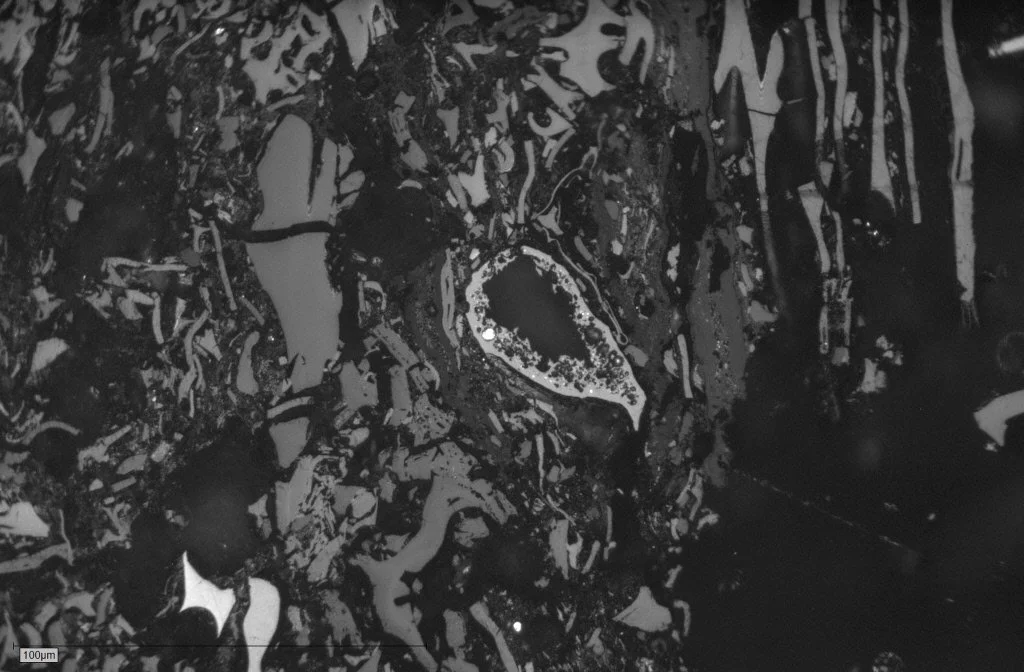
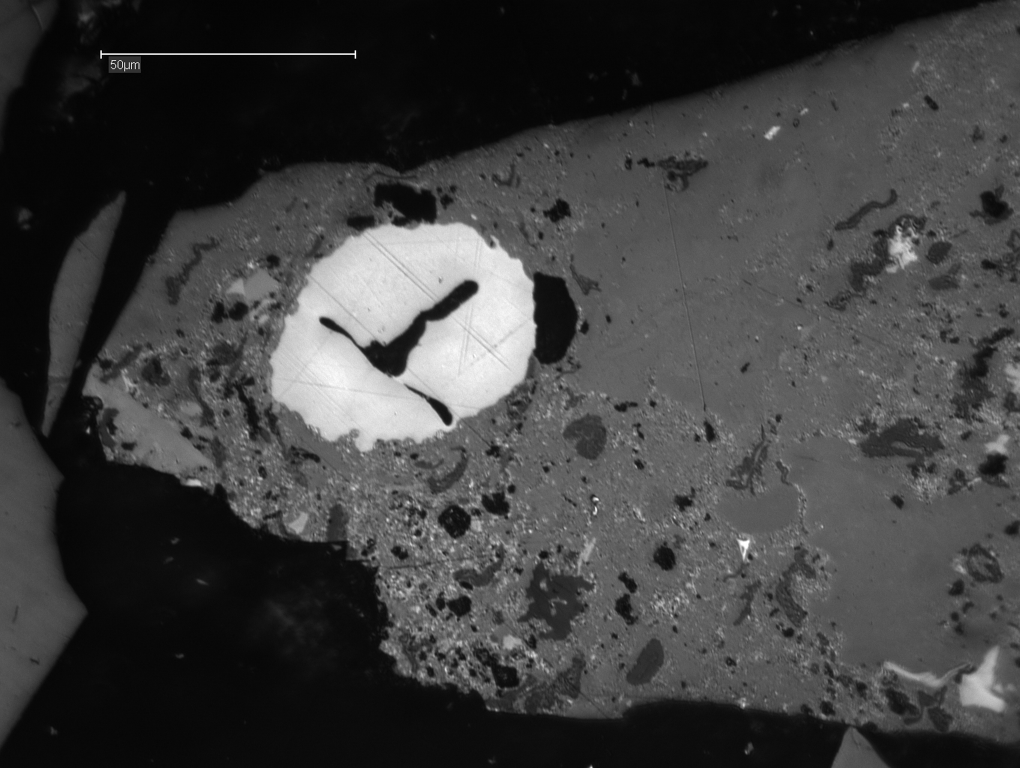
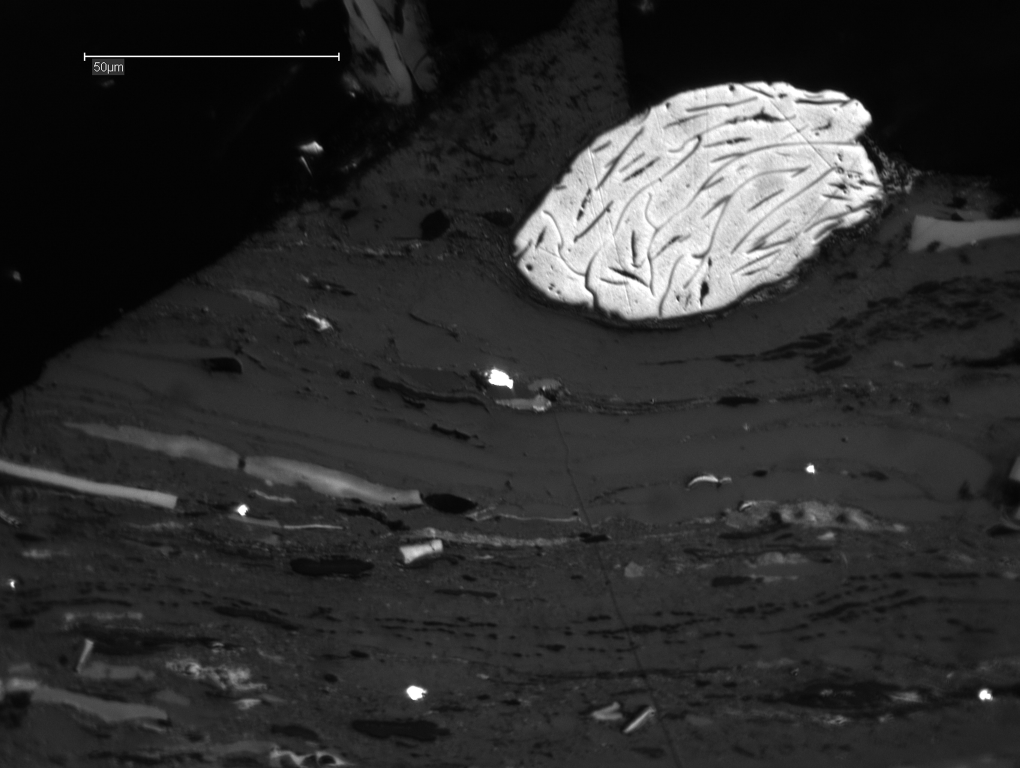
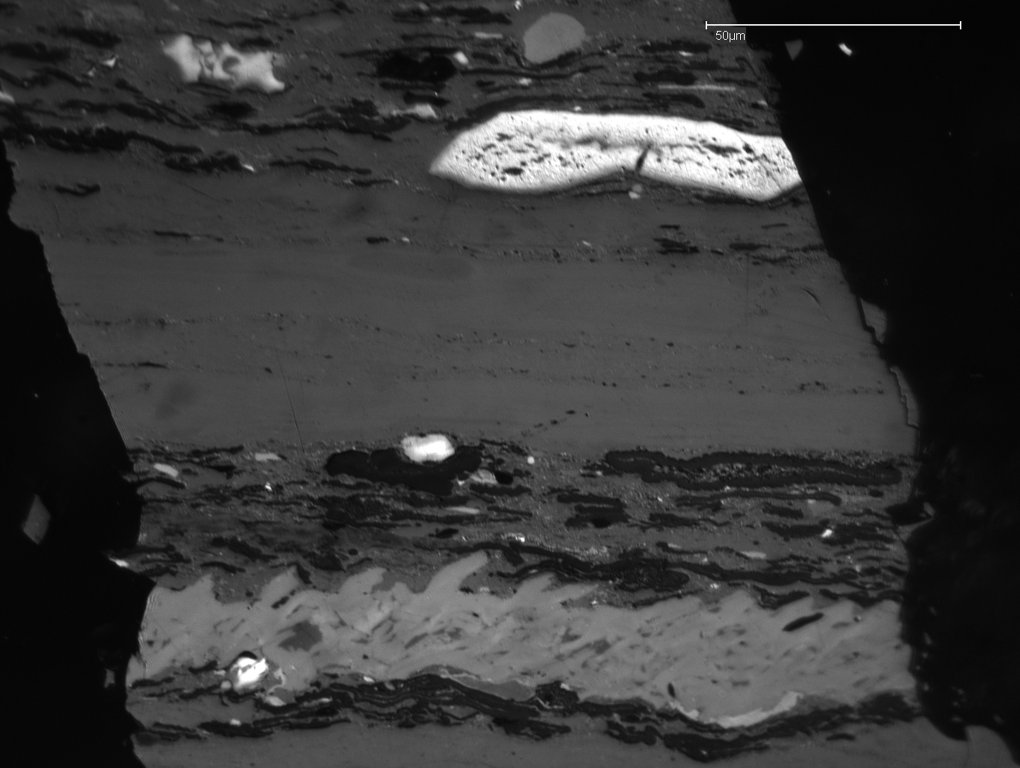
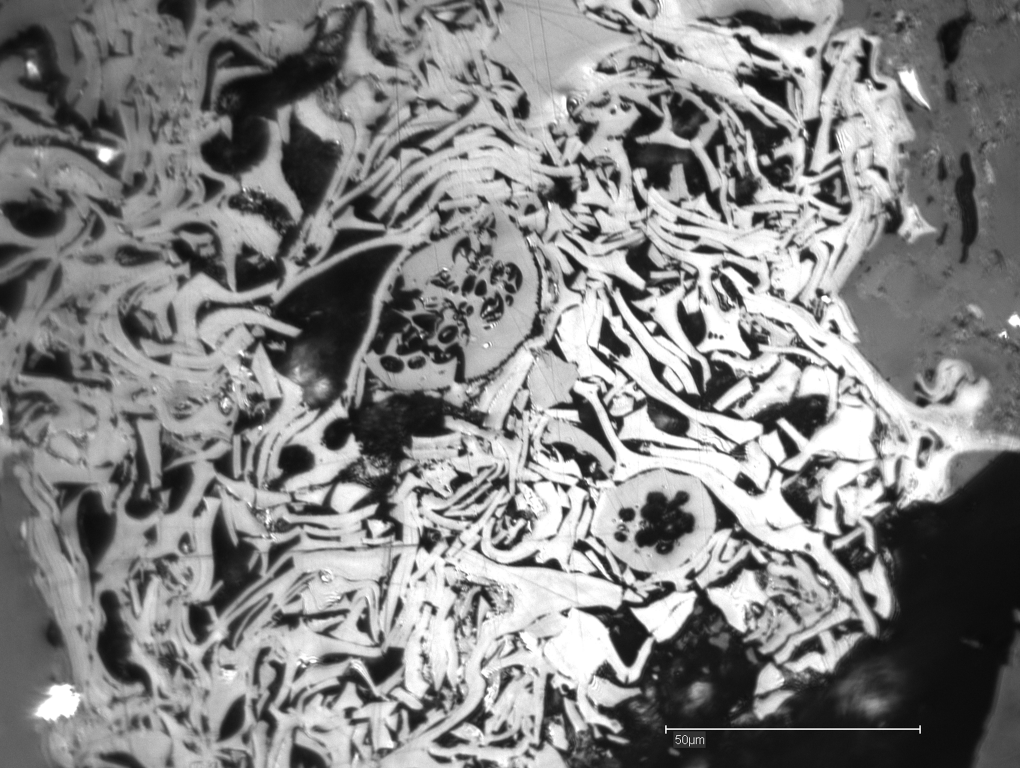
Secretinite is a maceral of the inertinite group, characterised by non-cellular bodies that commonly range from rounded and equant to oval, crescent-shaped, polygonal or elongate forms. They may be solid or vesicled and can contain characteristic fractures, internal notches, and rims or halos of contrasting reflectance. In some cases, highly reflecting shells may be partly filled with mineral matter. The apparent morphology depends strongly on section orientation: bodies that appear oval in polished section may represent oblique cuts through much longer rodlet- or needle-like forms.
Under reflected white light, secretinite ranges from pale grey to yellowish white. Its reflectance is variable, from only slightly above that of associated vitrinite to values exceeding those of fusinite in the same coal.
The origin of secretinite remains incompletely resolved. Lyons et al. (1986) linked at least some occurrences to organic material preserved within secretory ducts or sacs, particularly those of medullosan seed ferns. Importantly, secretory origin does not demonstrate a specifically resinous precursor: the duct-filling material may have included altered primary secretions, secondary humic matter, or mixtures produced through interaction between them. The ICCP later retained this uncertainty, noting possible derivation from oxidised resinous material, humic gels formed in secretory ducts, or related altered organic matter in seed ferns and other vascular plants.
Secretinite also has a complicated classification history. Non-cellular secretinite bodies were formerly grouped with fungal remains under sclerotinite and were variously described as sclerotioid grains, resin rodlets, secretion sclerotinite and related terms. Recognition of secretinite as distinct from funginite formalised a fundamental separation: funginite is cellular and fungal in origin, whereas secretinite is non-cellular and associated with vascular-plant secretory structures. This distinction became part of the revised ICCP inertinite classification.
Scientist’s note based on:
ICCP, 2001. The new inertinite classification (ICCP System 1994). Fuel 80, 459-471.
Lyons, P.C., Hatcher, P.G., Brown, F.W., 1986. Secretinite: a proposed new maceral of the inertinite maceral group. Fuel 65, 1094–1098.
Lyons, P.C., 2000. Funginite and secretinite — two new macerals of the inertinite maceral group. International Journal of Coal Geology 44, 95–98.
