The Society of Reflective Personalities - Macrinite
The Archivist
Personality:
Macrinite is the Archivist in the Society. He manages, preserves, and provides access to records and artefacts. You simply need to know how to look.
He is a custodian of memory. Not of beginnings, but of what accumulated. Others arrive with clean outlines and recognisable origins. He works with what followed: the revisions, the annotations, the marginal notes left by time.
His coat appears uniform until you study it closely. Then the fragments emerge, subtle insertions, quiet interruptions, a record layered rather than written in a single hand. Nothing is accidental. Everything has been retained.
He provides access to the record and trusts the reader to draw conclusions. “If you examine the sequence carefully,” he says, “the material will speak for itself.”
Once, he was placed in a general drawer. Miscellaneous. Indeterminate. He keeps that label filed under institutional history. Not as grievance — as documentation.
He understands that memory is rarely linear. That events overlap. That processes leave traces in unexpected places. His role is to ensure they are not lost.
When others argue over origins, he adjusts the record slightly and slides it across the table.
“You are describing the first entry,” he says evenly. “I maintain the full archive.”
What passed through the system — alteration, reworking, consolidation — is retained under his care.
He is the Archivist of the Society. Under his watch, history gets to be told. Or at least part of it….

Scientist’s Note:
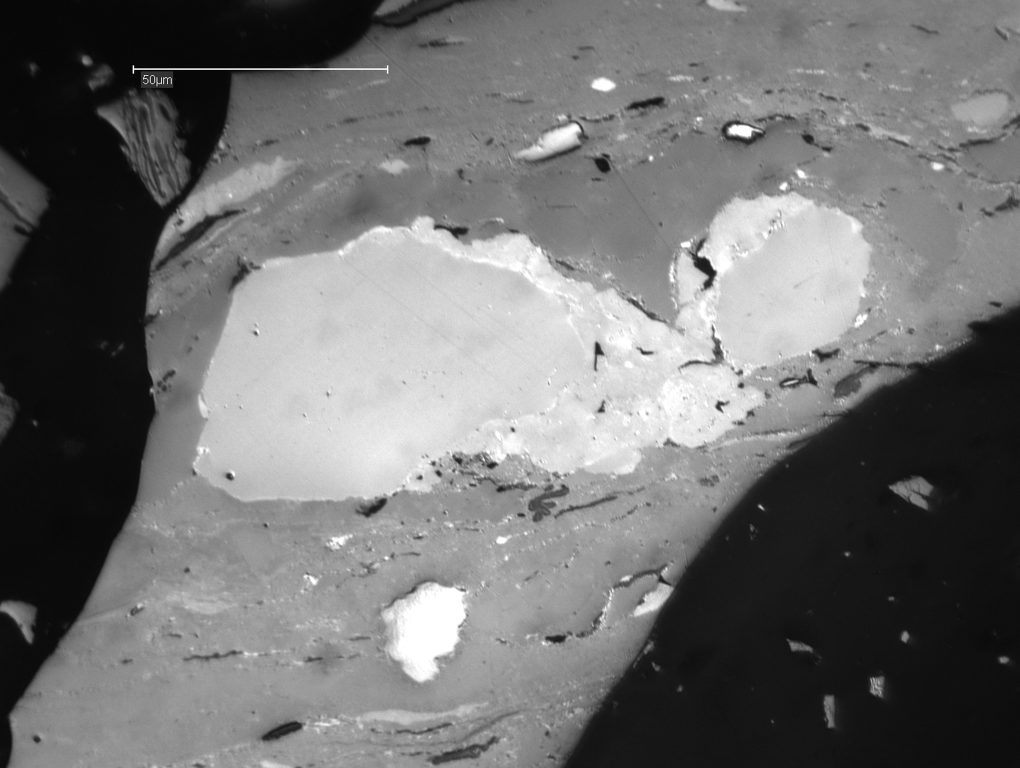
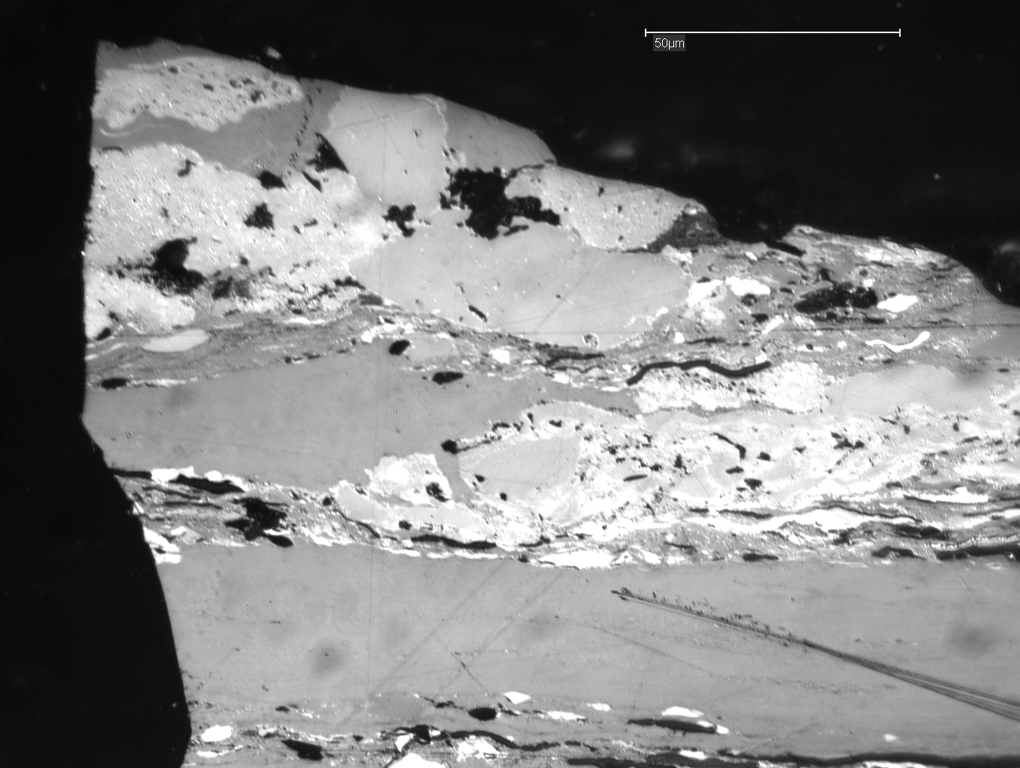
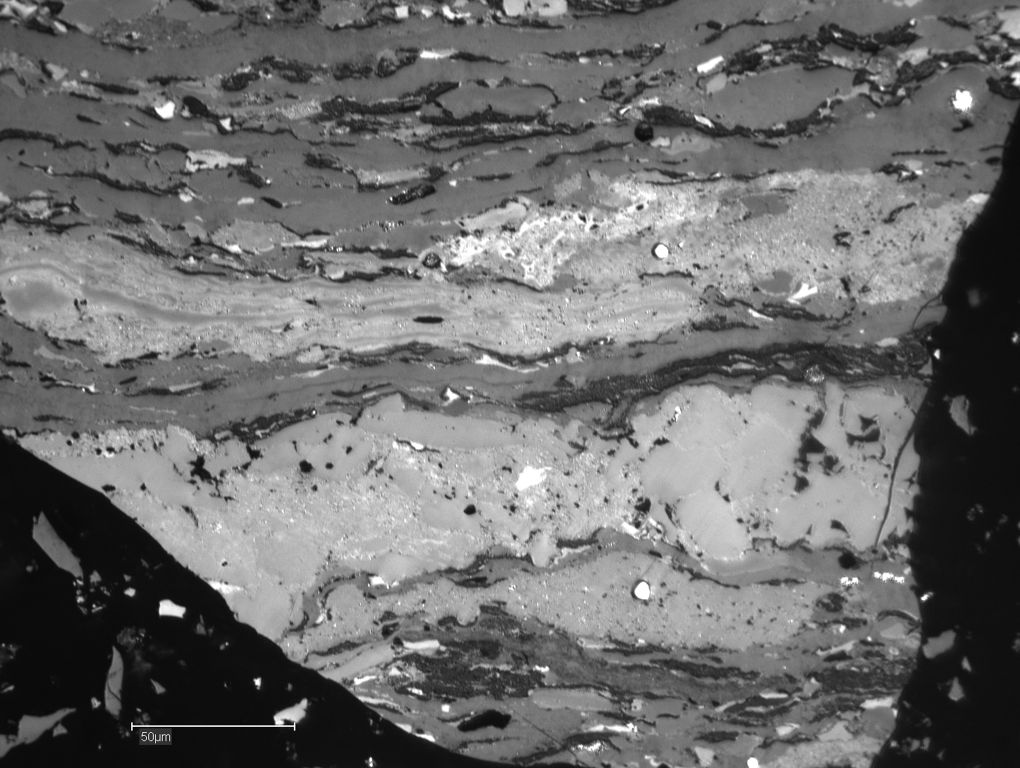
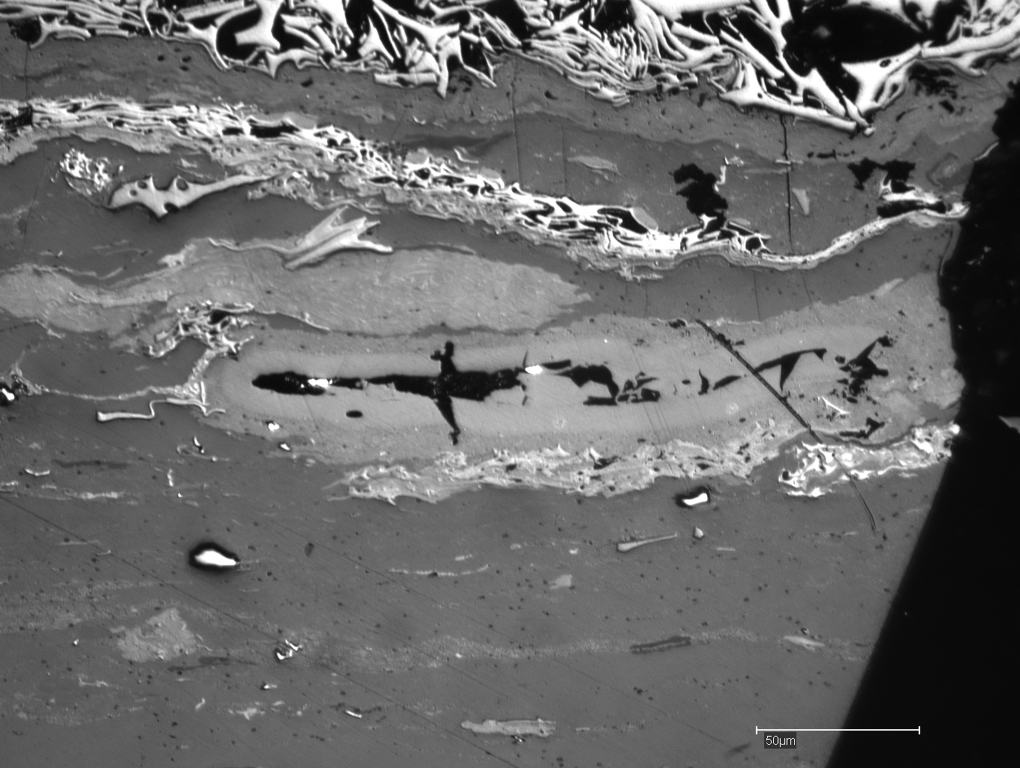
Macrinite is a maceral of the inertinite group, characterised by a massive, granular, or mosaic-like appearance, absence of preserved cellular structure, and reflectance higher than that of associated vitrinite. Under reflected white light, macrinite commonly shows heterogeneous internal reflectance, irregular particle boundaries, no fluorescence, and relatively high polishing hardness. Macrinite may have different origins. It may form through oxidative alteration of humic substances, through metabolic activity of fungi and bacteria, or as biologically reworked material, including coprolitic aggregates. Fire origin can occur for macrinite in low rank samples (ICCP, 2001).
Through detailed petrographic observations across coals of different ages and ranks, Hower et al. (2009, 2011, 2013a and b) documented macrinite forms that contain abundant inclusions of other macerals and mineral matter, and described textures consistent with biological reworking, including coprolitic aggregates. Hower et al. (2013) demonstrate that macrinite commonly occurs in close association with funginite and strongly degraded vitrinite, highlighting the role of fungal, microbial, and invertebrate processes during peat accumulation and early diagenesis. By foregrounding these textural relationships and recurring patterns, Hower’s studies shifted macrinite from a residual or ambiguous category to a maceral that records specific pathways of biological processing and reworking, and thus treats macrinite as a meaningful indicator of peat-system dynamics.
Organic-geochemical studies by Dai et al. (2017) further showed that macrinite is chemically heterogeneous, commonly enriched in oxygen-bearing functional groups relative to vitrinite, and may incorporate detrital mineral matter. These characteristics are consistent with metabolic processing and biological packing, rather than preservation of primary plant tissue.
Overall, macrinite records conditions and processes—oxidation, biological alteration, and reworking—rather than a single genetic mechanism. Its identification relies on textural context, reflectance variability, and maceral associations.
Scientist’s note based on:
ICCP, 2001. The new inertinite classification (ICCP System 1994). Fuel 80, 459-471.
Hower, J.C., Misz-Kennan, M., O’Keefe, J.M.K., Mastalerz, M., Eble, C.F., Garrison, T.M., Johnston, M.N., Stucker, J.D., 2013a. Macrinite forms in Pennsylvanian coals. International Journal of Coal Geology 116-117, 172-181.
Hower, J.C., Hoffman, G.K., Garrison, T.M., 2013b. Macrinite and funginite forms in Cretaceous Menefee Formation anthracite, Cerrillos coalfield, New Mexico. International Journal of Coal Geology 114, 54-59.
Hower, J.C., O'Keefe, J.M.K., Eble, C.F., Raymond, A., Valentim, B., Volk, T.J., Richardson, A.R., Satterwhite, A.B., Hatch, R.S., Stucker, J.D., Watt, M.A., 2011. Notes on the origin of inertinite macerals in coal: evidence for fungal and arthropod transformations of degraded macerals. International Journal of Coal Geology 86, 231–240.
Hower, J.C., O'Keefe, J.M.K., Watt, M.A., Pratt, T.J., Eble, C.F., Stucker, J.D., Richardson, A.R., Kostova, I.J., 2009. Notes on the origin of inertinite macerals in coals: observations on the importance of fungi in the origin of macrinite. International Journal of Coal Geology 80, 135–143.
Dai, S., Bartley, R., Bartley, S., Valentim, B., Guedes, A., O’Keefe, M.K., Kus, J., Mastalerz, M., Hower, J.C., 2017. Organic geochemistry of funginite (Miocene, Eel River, Mendocino County, California, USA) and macrinite (Cretaceous, Inner Mongolia, China). International Journal of Coal Geology 179, 60-71.
