The Society of Reflective Personalities - Bituminite
The Uncle with the Surf Shop
Personality:
Bituminite is the uncle who runs the slightly dubious surf shop near the break.
He didn’t start there. He came from the same waters as Telalginite and Lamalginite, but life caught up with him.
He doesn’t surf anymore. He leans against the counter, sells boards and leashes, and watches the sets roll through without rushing. He still likes having his relatives around. They remind him of who he used to be. He tells stories from back then, when everything was cleaner, brighter, more defined.
Now he blends in.
Wisps in the air. Streaks along the sand.
Nothing sharp, nothing fully outlined.
Spend enough time around him and you realise he’s changing—quietly, steadily—whether he talks about it or not.
Solid Bitumen stops by sometimes. They nod, exchange a few words, nothing dramatic. There’s respect there, maybe familiarity. They don’t explain themselves to each other.
Bituminite never rushes.
He knows the shop will still be there tomorrow. The tide will come and go. And whatever he’s becoming will arrive in its own time.

Scientist’s Note:
Bituminite is a maceral of the liptinite group characterised by its amorphous appearance and lack of recognisable biological morphology under reflected light microscopy. The term was originally introduced to describe dispersed organic matter in petroleum source rocks that lacks discrete form, and it was later adopted by the ICCP for use in both coals and sedimentary rocks other than coal.
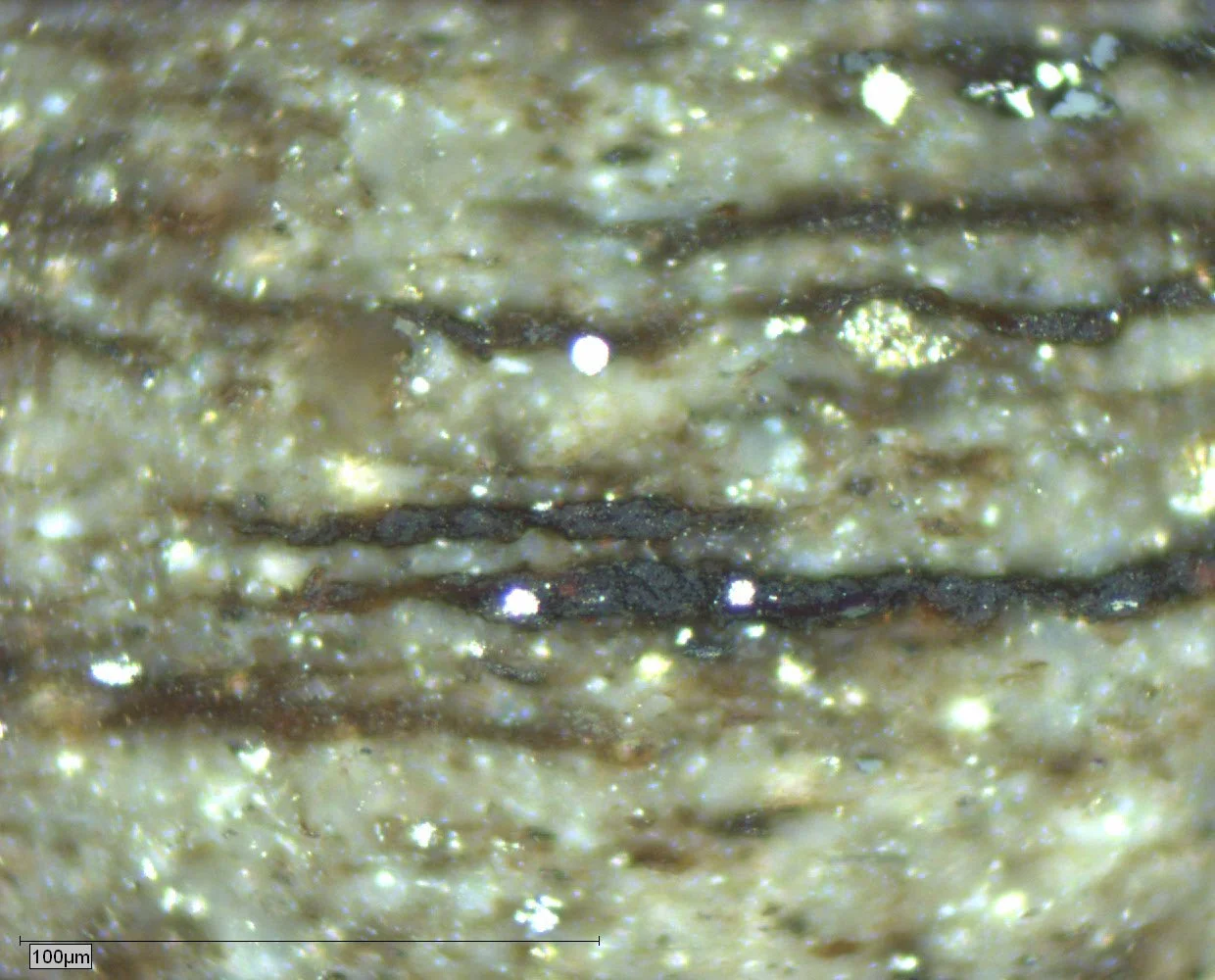
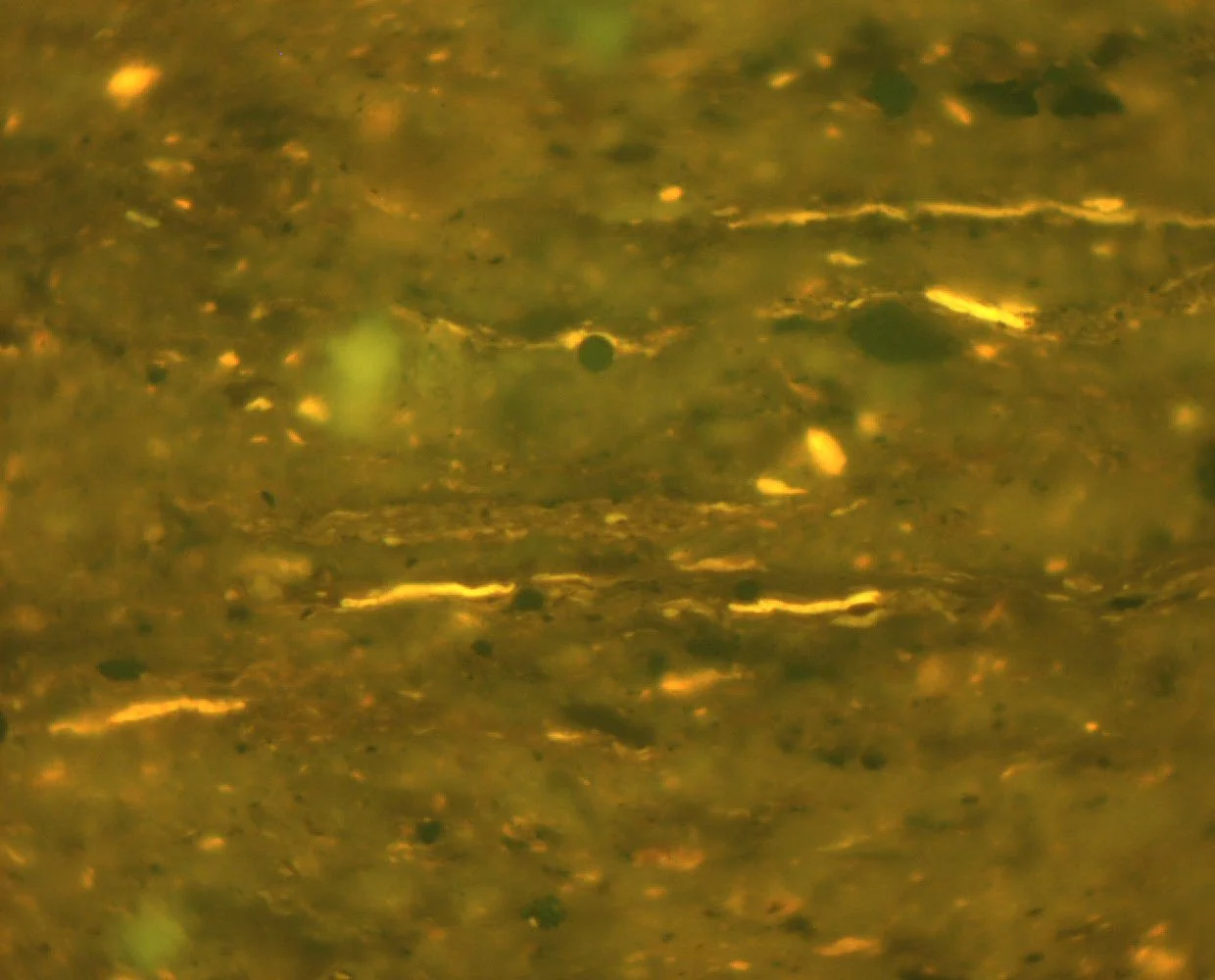
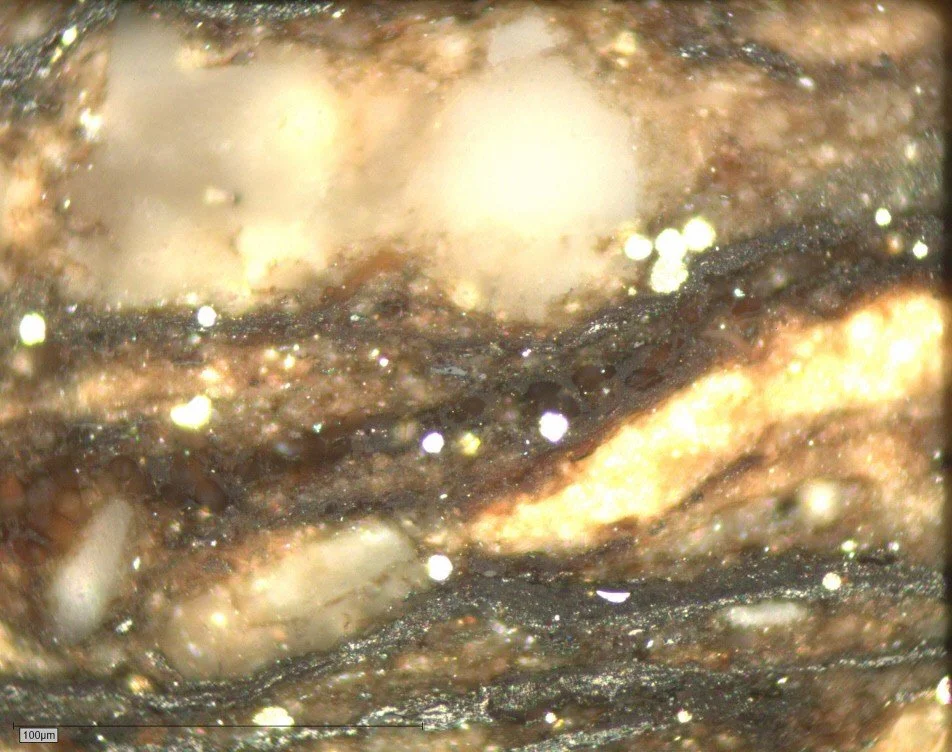
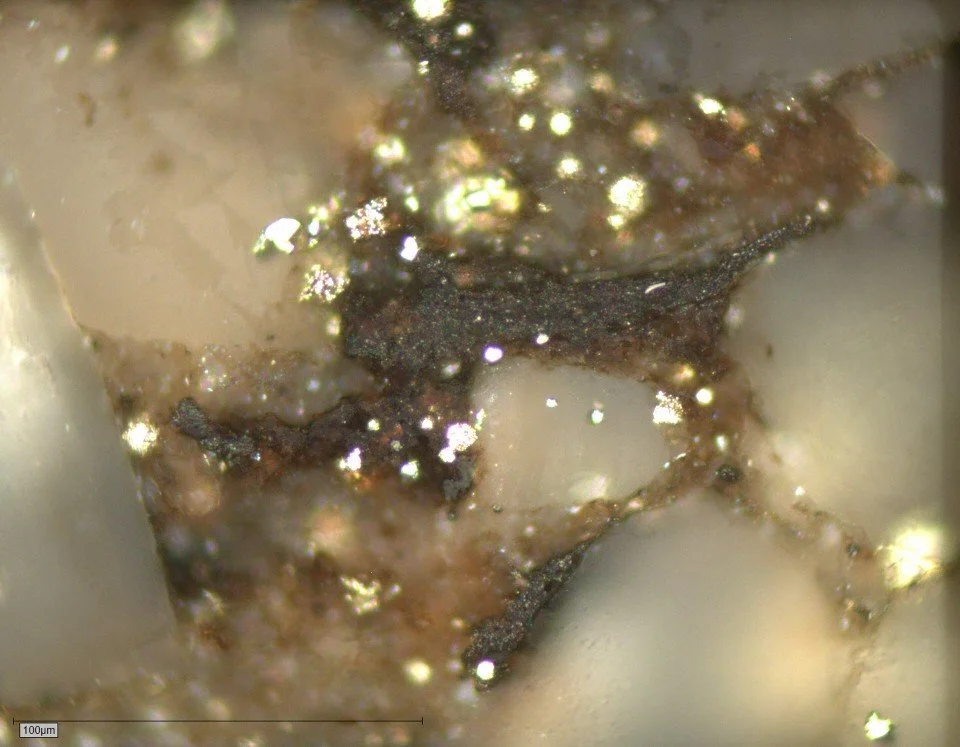
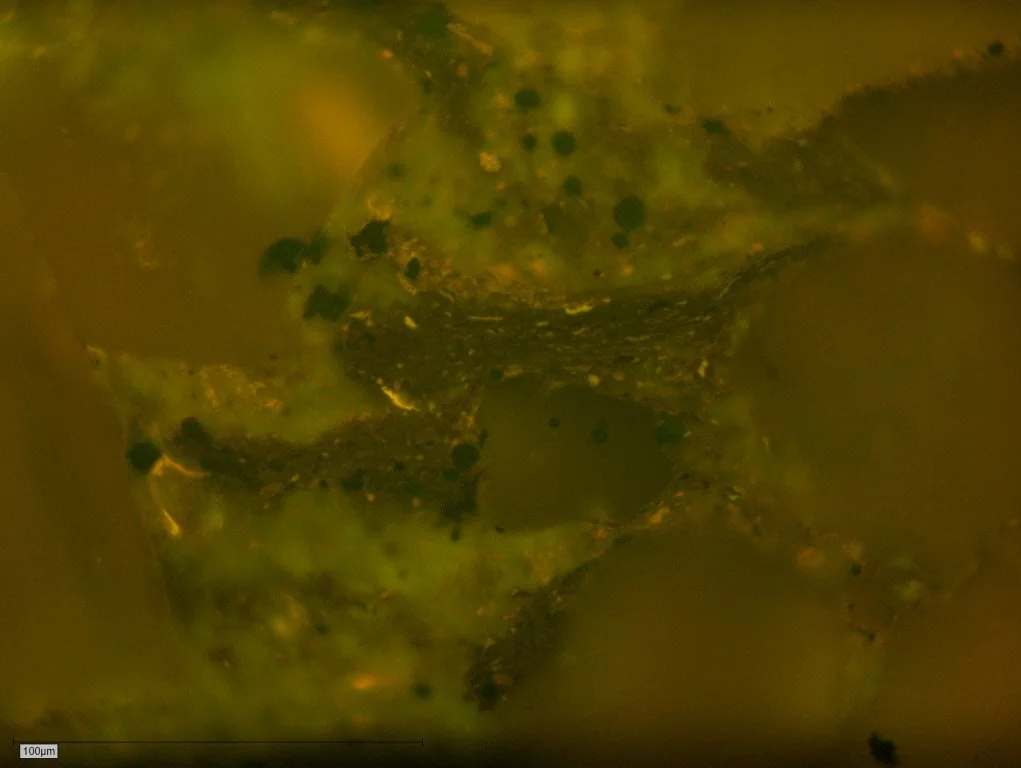
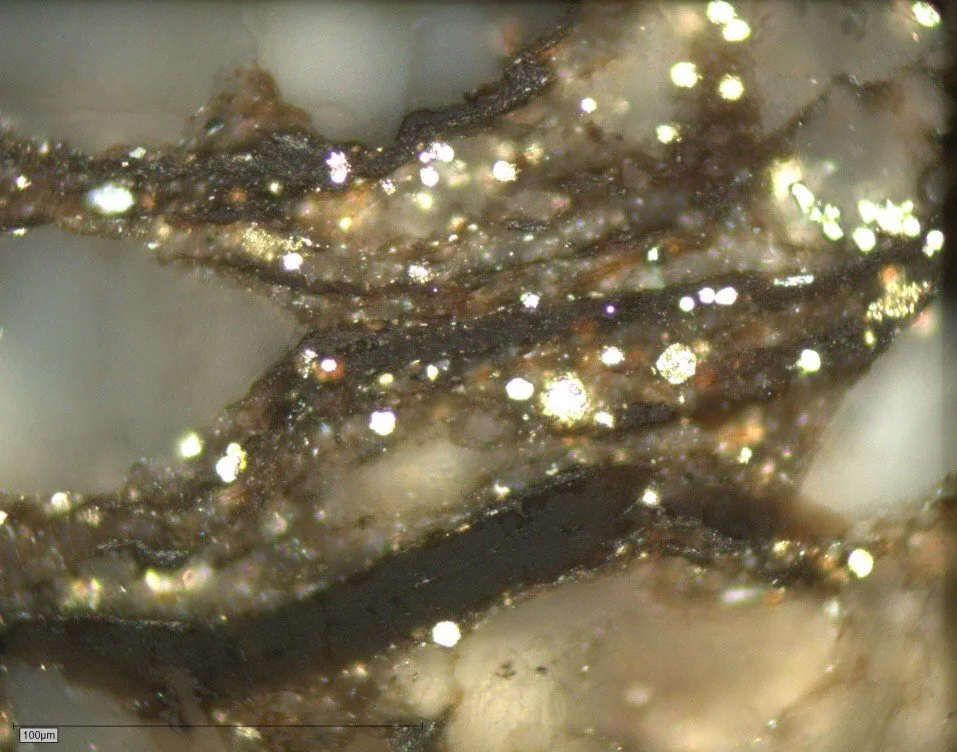
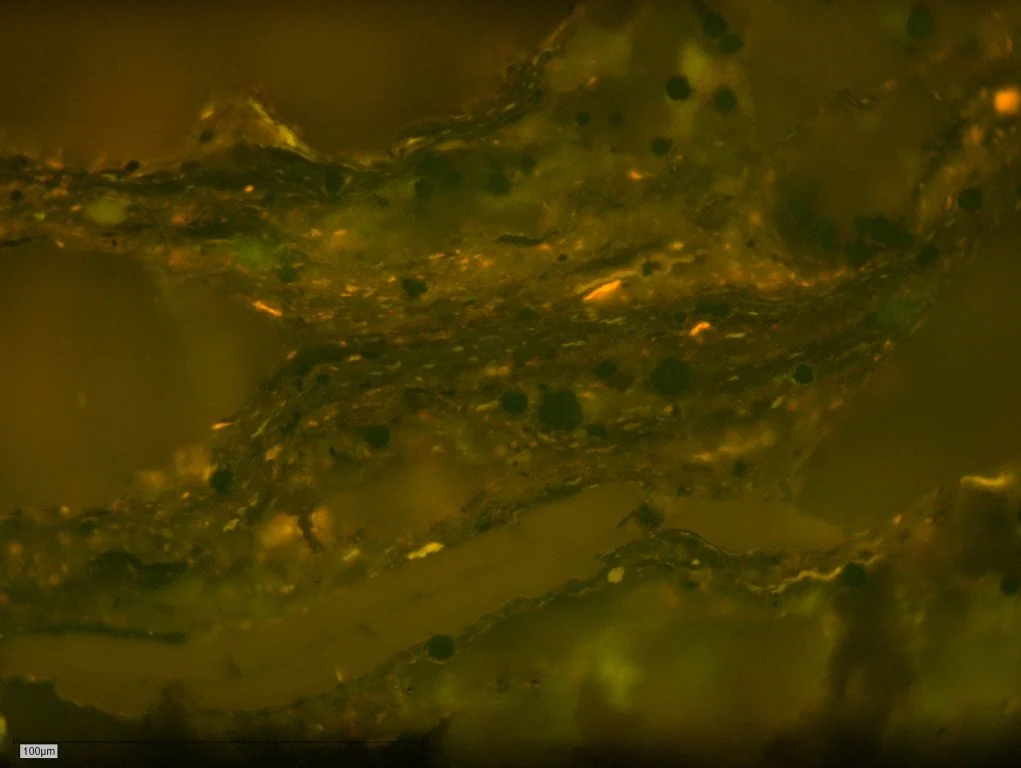
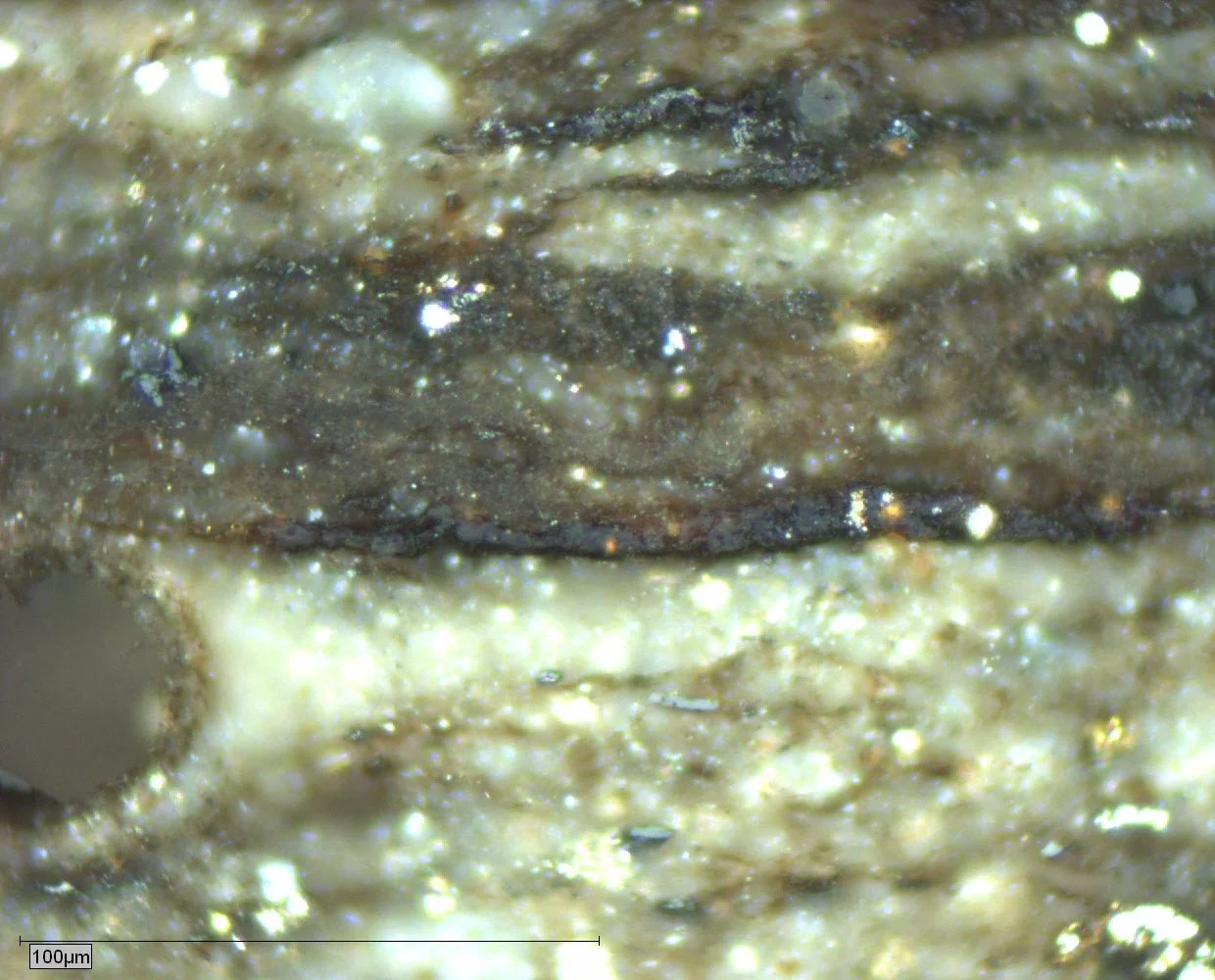
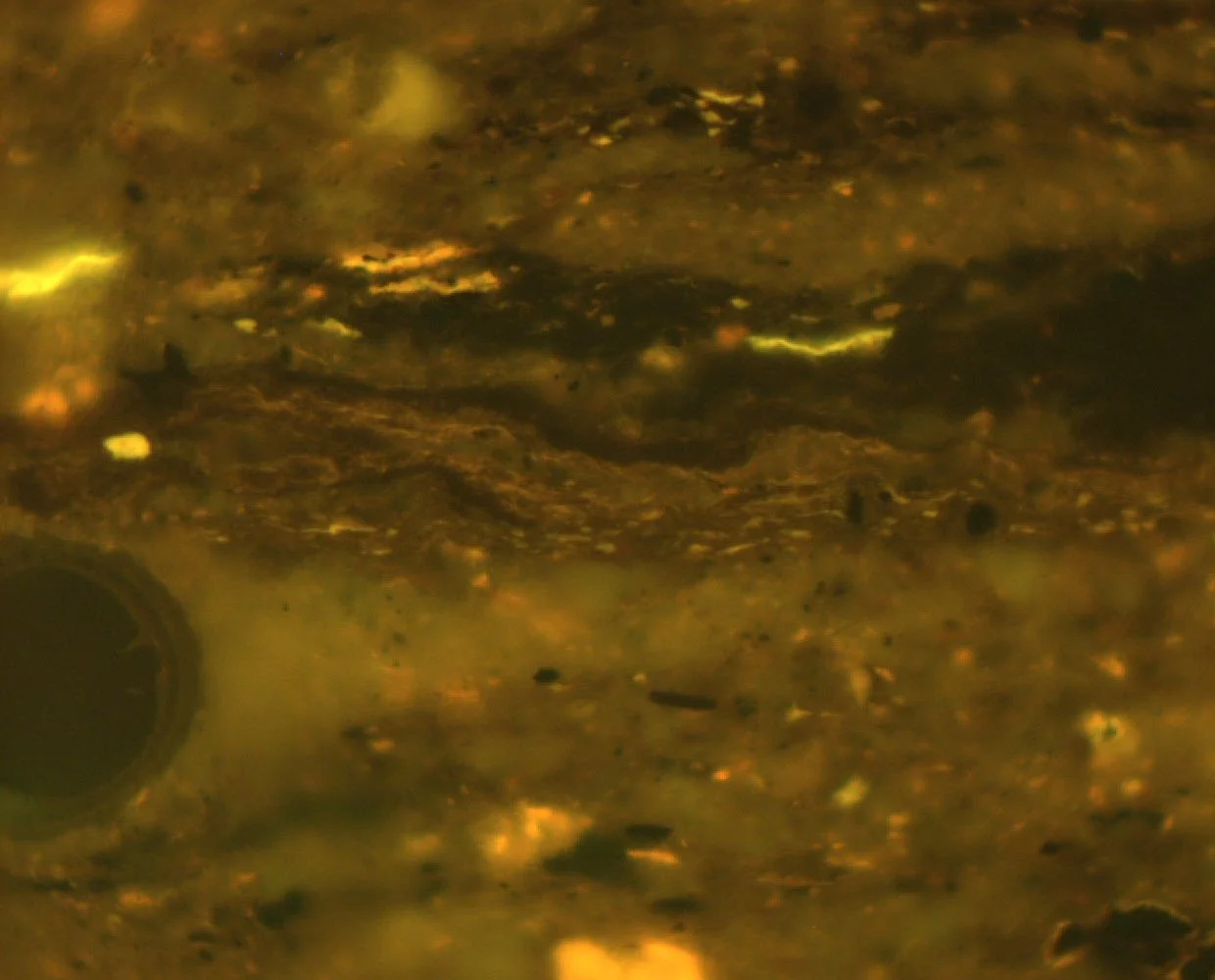
In polished sections, bituminite occurs as irregular streaks, lenses, schlieren, lamellar masses, flocculent aggregates, granular patches, or as a diffuse groundmass intimately mixed with mineral matter. Its morphology may appear elongated in sections perpendicular to bedding and more equidimensional in sections parallel to bedding. Although commonly described as “structureless,” bituminite often displays internal textures such as granular or fluidal arrangements, and the term “structureless” is therefore not strictly correct.
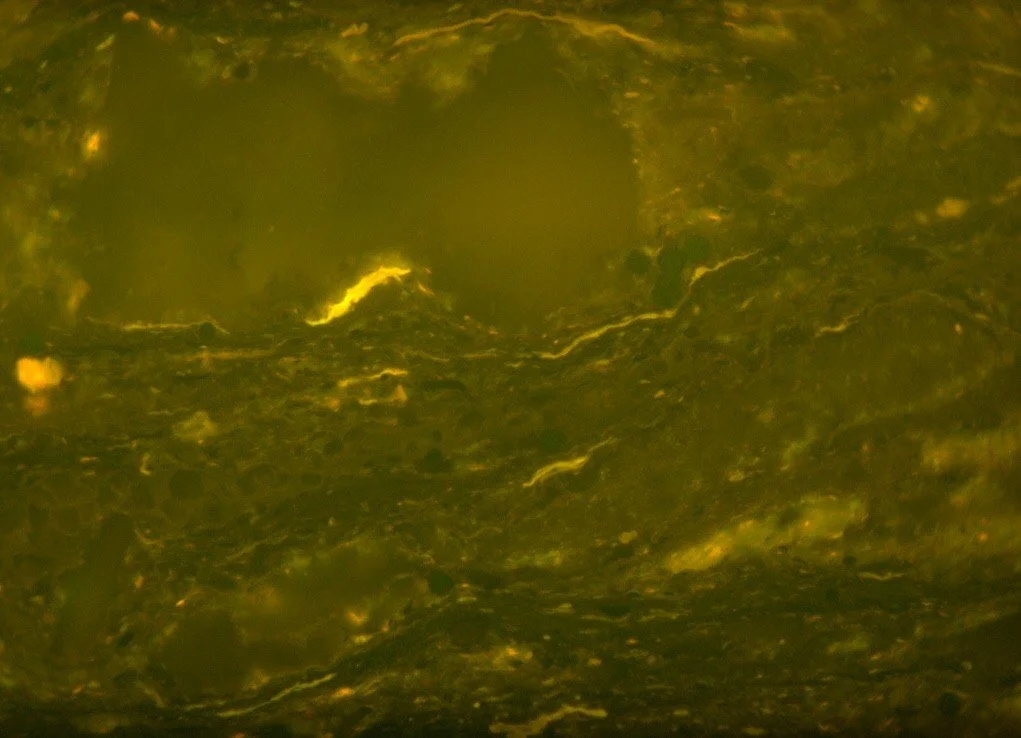
Optically, bituminite shows very low reflectance at low thermal maturity. Under blue or UV excitation, it typically fluoresces weakly to moderately in yellow, orange, or brown tones, depending on composition and maturity. One diagnostic feature emphasised by Kus et al. (2017) is fluorescence alteration during prolonged irradiation at low maturity: bituminite may exhibit a marked increase in fluorescence intensity and colour change during extended blue-light exposure. This behaviour is restricted to low-maturity stages (generally below ~0.7 % VRr) and disappears with increasing thermal maturity.
With progressive maturation, bituminite undergoes substantial changes in optical properties. Fluorescence weakens and eventually disappears, reflectance increases, and the maceral becomes increasingly difficult to distinguish from mineral-rich groundmass or solid bitumen. At higher maturity levels, reliable identification using optical microscopy alone becomes problematic.
The origin of bituminite is not uniquely defined. According to ICCP-based interpretations summarised by Pickel et al. (2017), bituminite is generally regarded as a degradation product formed from a mixture of organic precursors subjected to biological and physico-chemical alteration. In marine and lacustrine environments, these precursors may include algae, planktonic organisms, bacterial biomass, and other aquatic organic matter; in terrestrial settings, degraded humic material may also contribute. The observed heterogeneity of bituminite reflects variations in precursor material, depositional environment, and post-depositional alteration rather than terminological inconsistency.
Interlaboratory round-robin exercises conducted by the ICCP Identification of Dispersed Organic Matter Working Group demonstrated that bituminite is the most inconsistently identified maceral within the liptinite group. Kus et al. (2017) showed that the greatest discrepancies arise from difficulties in distinguishing bituminite from fluorescent groundmass, lamalginite, and mineral-rich organic aggregates. These results highlight the limitations of existing descriptive criteria and underscore the need for cautious, context-dependent identification.
As demonstrated by Hackley et al. (2018), bituminite and solid bitumen may coexist within a single microscopic field and grade imperceptibly into one another, reflecting progressive kerogen conversion rather than discrete maceral boundaries. Because of its compositional variability, wide morphological range, and strong maturity dependence, bituminite should be identified using a combination of reflected-light appearance, fluorescence behaviour (including alteration under prolonged irradiation at low maturity), textural context, and association with other macerals. Its presence carries important implications for source-rock evaluation, but its identification remains one of the most challenging tasks in organic petrology.
Scientist’s note based on:
Pickel, W., Kus, J., Flores, D., Kalaizidis, S., Christanis, K., Cardott, B.J., Misz-Kennan, M., Rodrigues, S., Hentschel, A., Hamor-Vido, M., Crosdale, P., Wagner, N., ICCP, 2017. Classification of liptinite – ICCP System 1994. International Journal of Coal Geology 169, 40–61.
Kus, J., Araujo, C. V., Borrego, A. G., Flores, D., Hackley, P. C., Hámor-Vidó, M., Kalaitzidis, S., Kommeren, C. J., Kwiecińska, B., Mastalerz, M., Mendonça Filho, J. G., Menezes, T. R., Misz-Kennan, M., Nowak, G. J., Petersen, H. I., & Rallakis, D., 2017. Identification of alginite and bituminite in rocks other than coal: 2006, 2009 and 2011 round robin exercises of the ICCP Identification of Dispersed Organic Matter Working Group. International Journal of Coal Geology, 178, 26–38.
Hackley, P.C., Valentine, B.J., Hatcherian, J.J., 2018. On the petrographic distinction of bituminite from solid bitumen in immature to early mature source rocks. International Journal of Coal Geology 196, 232-245.
