Petrographic characterization of the Toolebuc Formation, Eromanga Basin: organic components and nanometer-scale pore types
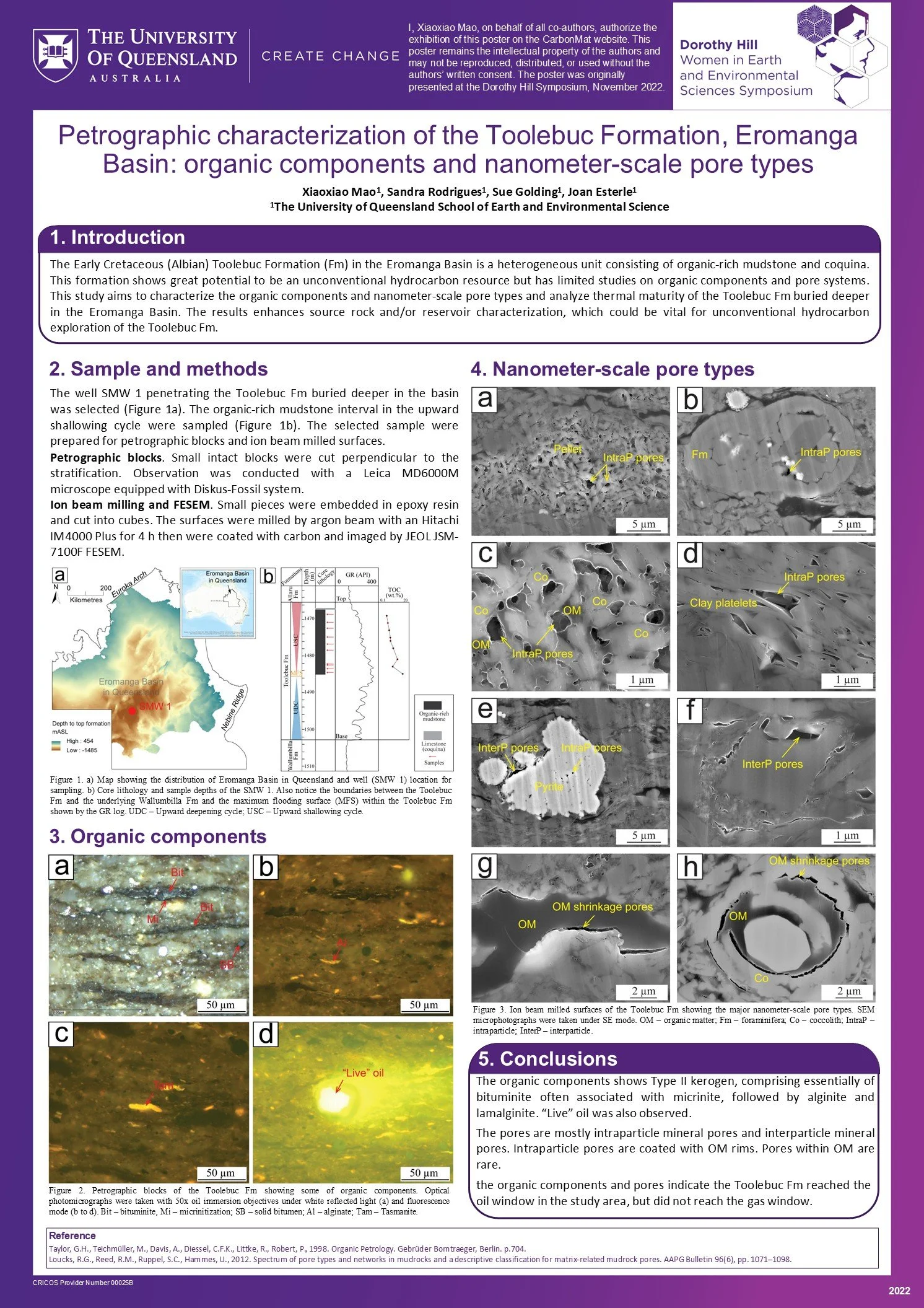
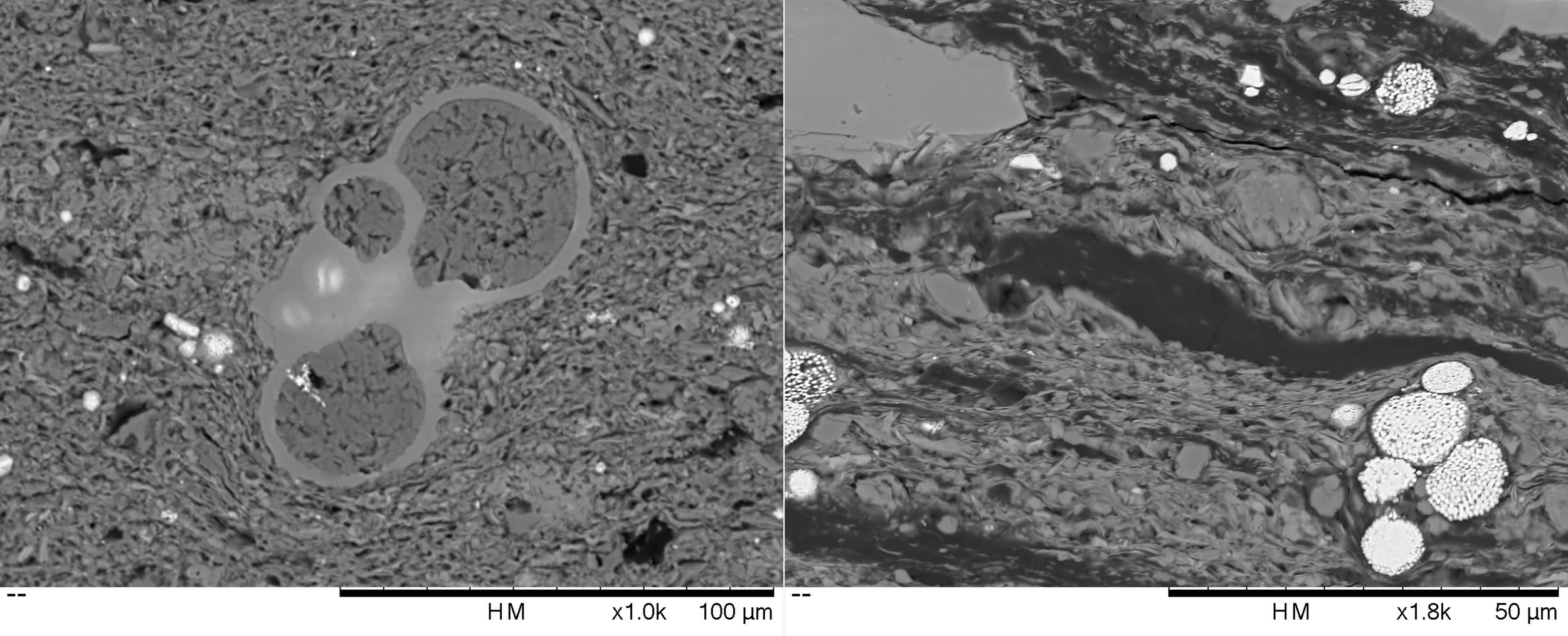
This study investigates the organic components, nanometer-scale pore types, and thermal maturity of the Early Cretaceous Toolebuc Formation in the Eromanga Basin, focusing on samples from the SMW-1 well where the unit is buried deeper in the basin. The Toolebuc Formation comprises organic-rich mudstone and coquina and is considered a promising unconventional hydrocarbon resource, though detailed characterization of its organic matter and pore systems remains limited. Petrographic analysis of polished blocks shows that the organic assemblage is dominated by Type II kerogen, consisting primarily of bituminite commonly associated with micrinite, along with alginite and lamalginite. “Live” oil is observed locally within the samples. Ion-beam-milled surfaces examined under FESEM reveal that pore systems are chiefly intraparticle and interparticle mineral pores, with intraparticle pores typically coated by organic-matter rims. Pores within organic matter itself are rare. These petrographic characteristics, combined with the observed pore textures, indicate that the Toolebuc Formation has reached the oil window at this location but has not attained gas-window maturity. The results improve understanding of the formation’s source-rock and reservoir qualities and contribute to ongoing assessments of its unconventional hydrocarbon potential.
Read more here:
Mao et al., 2023. Reservoir lithofacies study of the Toolebuc Formation, Eromanga Basin, Australia as a potential unconventional target. https://doi.org/10.1016/j.coal.2022.104163
Mao et al., 2024. Origin and nature of pores in the Toolebuc Formation, a potential unconventional target in Australia. https://doi.org/10.1016/j.coal.2024.104497