Origin of Ethane in the Bowen Basin Coals
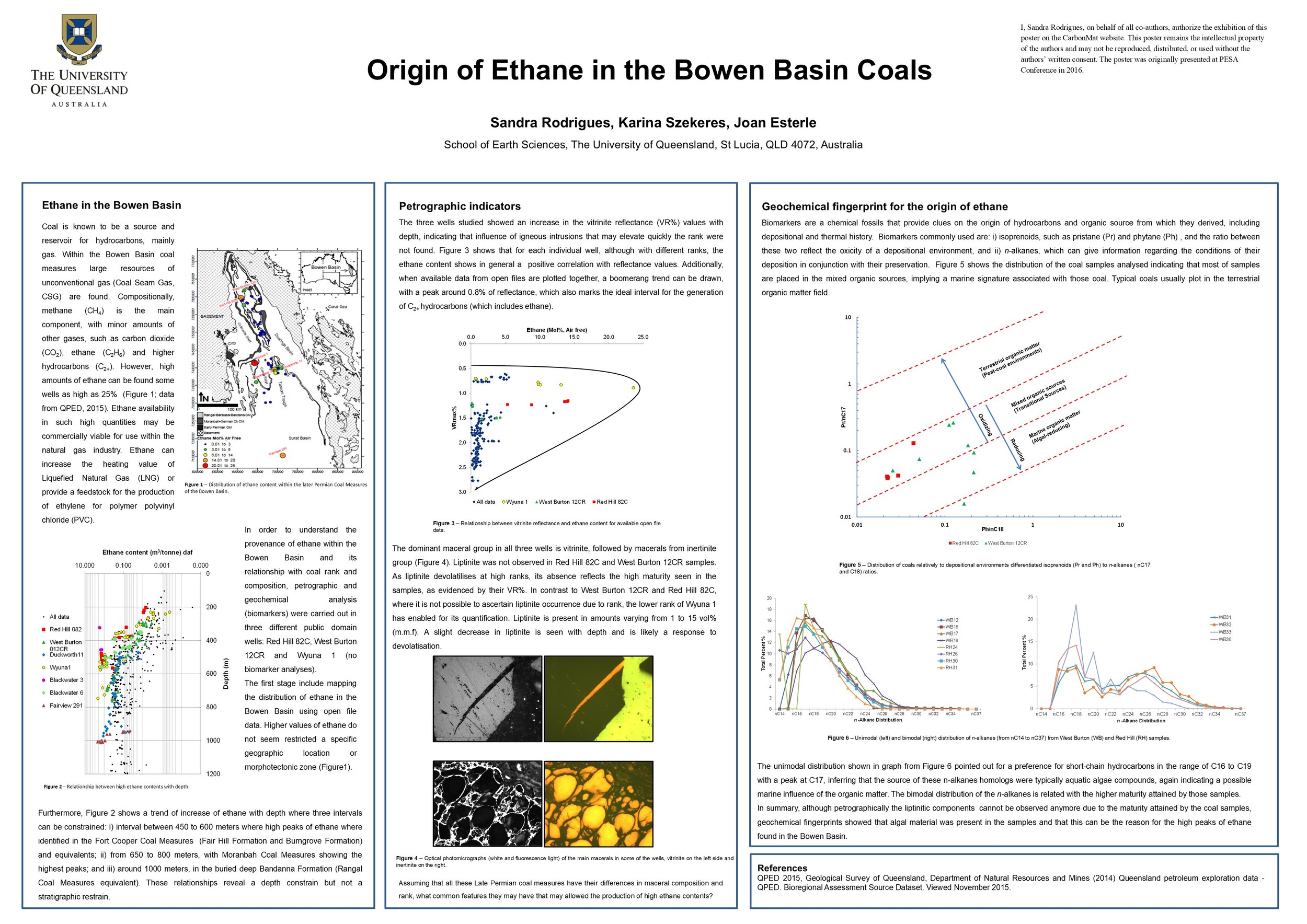
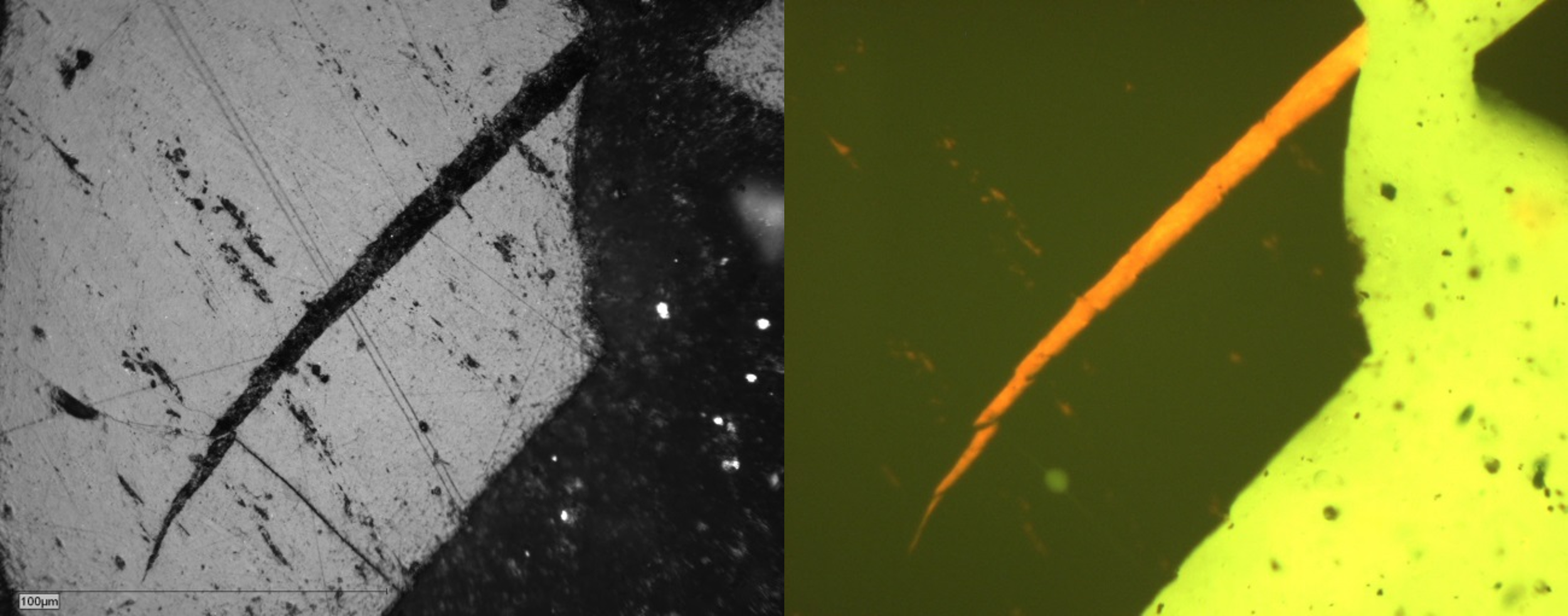
This study investigates the origin of unusually high ethane (C₂H₆) contents in Coal Seam Gas (CSG) from the Bowen Basin, where ethane concentrations can reach up to 25%, significantly above typical values. Mapping of open-file gas data shows that elevated ethane is not confined to a specific geographic or morphotectonic zone, although depth-related patterns are evident. Three depth intervals display distinct ethane peaks: 450–600 m within the Fort Cooper Coal Measures (Fair Hill and Burngrove formations), 650–800 m within the Moranbah Coal Measures, and around 1000 m in the deeply buried Bandanna Formation (Rangal equivalent). Petrographic measurements across three wells (Red Hill 82C, West Burton 12CR, Wyuna 1) reveal an overall increase in vitrinite reflectance with depth, without evidence for rank elevation associated with igneous intrusions. Ethane content generally correlates positively with VR%, and a combined dataset defines a boomerang-shaped trend peaking near ~0.8% VR, coinciding with optimal C₂+ hydrocarbon generation. The coal maceral composition is dominated by vitrinite and inertinite, with liptinite preserved only in the lower-rank Wyuna 1 samples. Biomarker analyses indicate mixed organic sources with a strong marine signature, supported by unimodal n-alkane distributions characteristic of algal input. Collectively, these results suggest that algal-derived organic matter may contribute to the high ethane yields in Bowen Basin coals.
Read more here:
Karina Szekeres, 2016. The use of source rock geochemistry to unravel the origins of high levels of ethane within the Bowen Basin. Honours Thesis. The University of Queensland.