The storytelling of the organic matter in petroleum systems
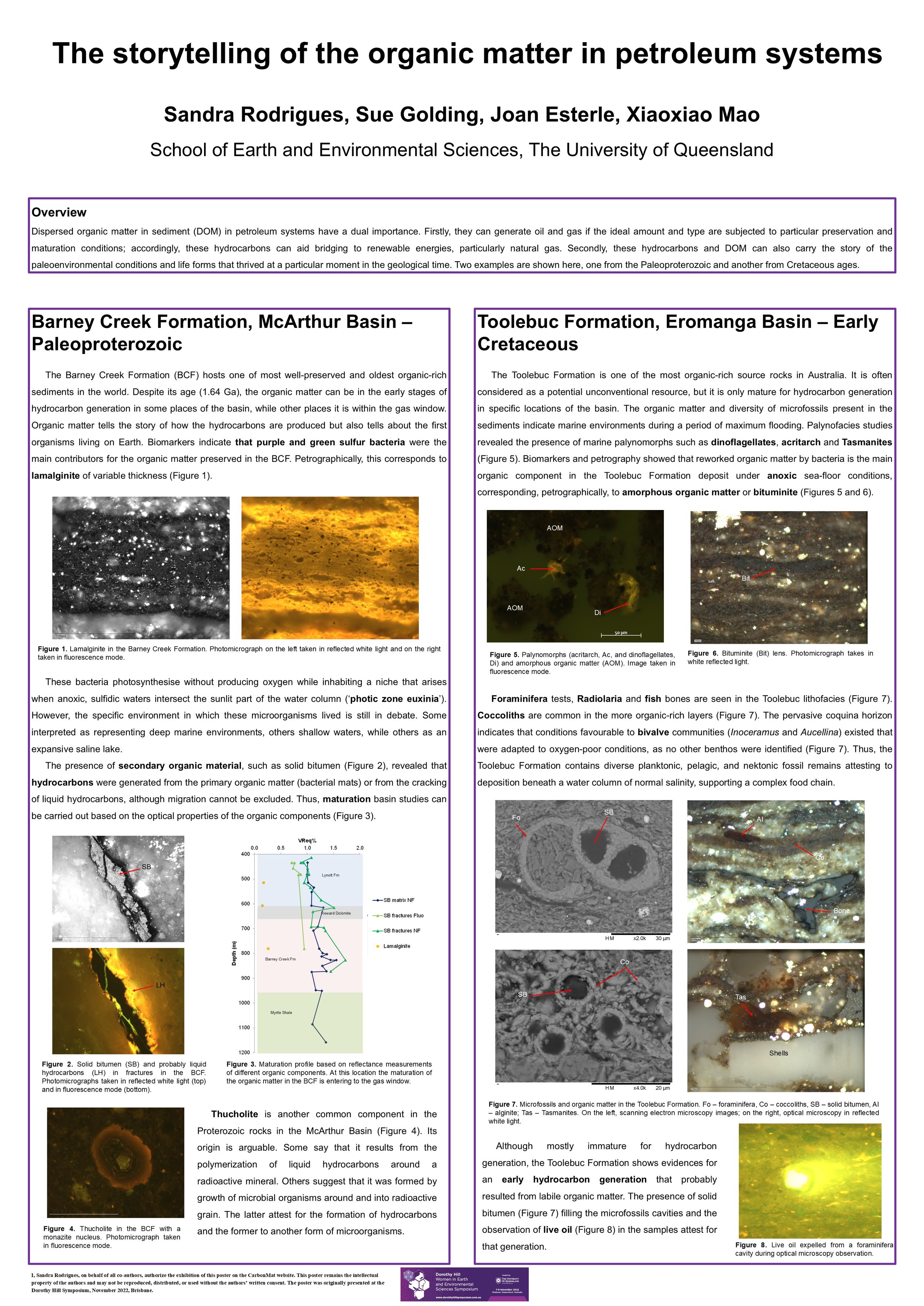
This poster highlights how dispersed organic matter (DOM) in petroleum systems records both hydrocarbon generation potential and paleoenvironmental narratives. Two case studies illustrate these dual roles. In the Paleoproterozoic Barney Creek Formation (McArthur Basin), exceptionally preserved organic-rich sediments contain lamalginite derived from purple and green sulfur bacteria. These organisms thrived under photic-zone euxinic conditions, producing primary organic matter without oxygen. Petrographic observations reveal variable thermal maturity, from early hydrocarbon generation to the gas window, enabling basin-scale maturation studies using optical properties. Solid bitumen and liquid hydrocarbon remnants indicate either migration or cracking of previously generated fluids, while thucholite occurrences, commonly associated with radioactive minerals, suggest complex interactions between hydrocarbons and microbial or mineral processes.
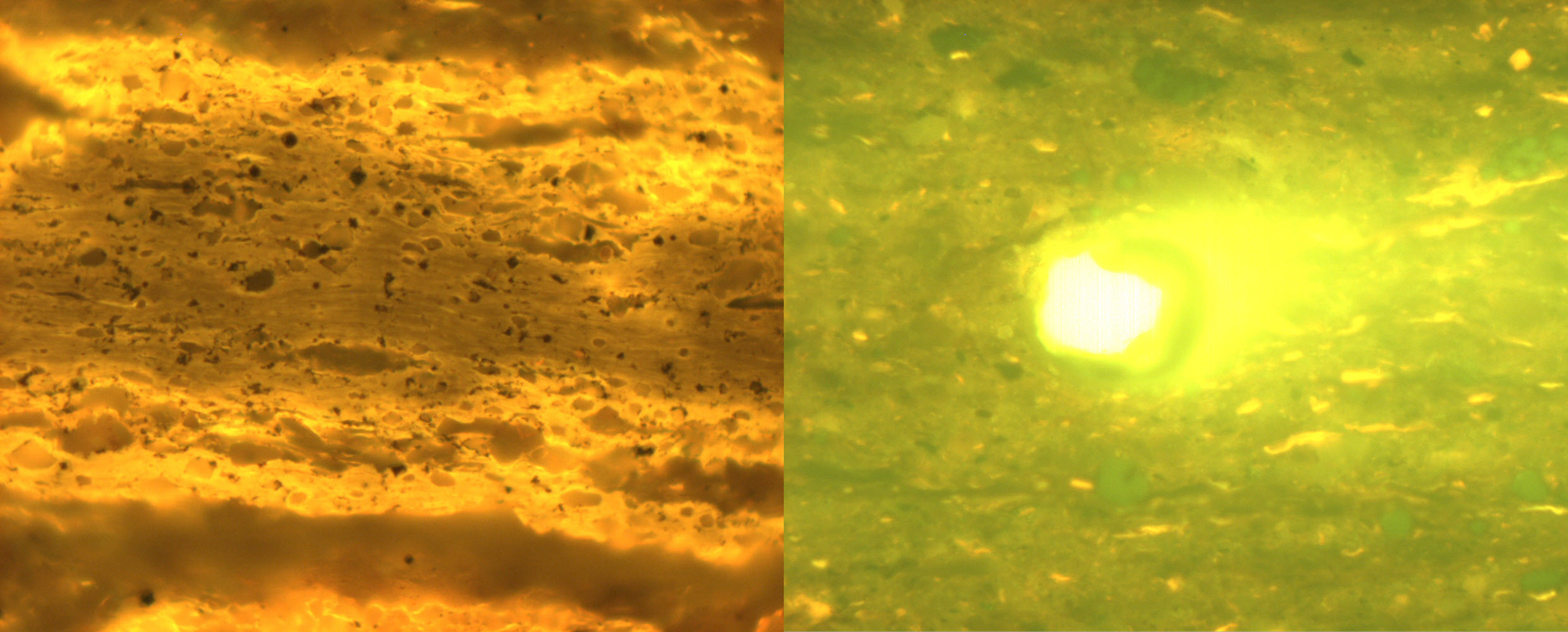
The Early Cretaceous Toolebuc Formation (Eromanga Basin) presents a contrasting marine deposition under maximum flooding. Palynofacies and petrography show dominance of amorphous organic matter/bituminite resulting from bacterial reworking under anoxic conditions. A diverse microfossil assemblage, including dinoflagellates, acritarchs, foraminifera, radiolaria, fish remains, and coccoliths, supports a planktonic–pelagic ecosystem. Evidence of early hydrocarbon generation is captured by solid bitumen infilling fossil cavities and occurrences of live oil during petrographic analysis. Together, these examples demonstrate how DOM captures both the history of life and the processes leading to hydrocarbon formation.
Dr Sandra Rodrigues profile: https://www.carbonmat.com.au/about-the-founder
Professor Sue Golding profile: https://about.uq.edu.au/experts/140
Professor Joan Esterle profile: https://about.uq.edu.au/experts/1347