Guest Series - 05 - Reflections on the culture of coal petrology by Jim Hower
When I started my PhD program at Penn State in early 1976, coal was a hot topic. This was the time between the oil crises of the 1970’s; high gasoline prices and cold classrooms in the winter months were a recent memory and coal held the promise, just as it had many times in the past, of providing an alternative to petroleum-based fuels. For a kid who grew up playing, and later working, in limestone quarries and was familiar with the anthracite mining history of my home county, the prospect of entering a field in which I could be immersed in the geology of a resource AND its mining and utilization was too good to pass up.
Fifty years later, in many quarters, coal is a pariah fuel. Mines are closing, power plants are switching to gas, and the economy of many former mining regions has been devastated. My colleagues in industry and academia are vanishing from the scene and the time is approaching when I will join them.
More than most geology disciplines, coal geology is intertwined with the history and culture of the people in the mining region. In visiting the mines, we hear the stories of the mines and the towns. The history of the coalfields, both tragic and colorful, will remain. Memories of the culture will remain, but the continued evolution of the coalfield culture is in jeopardy of being lost. Much is already lost . . . but some of what is lost is for the good because a culture based on company towns and, even earlier, slave and indentured labor, should not endure outside of its historical context and certainly not as a current event. The economic exploitation based in those earlier times never truly goes away, though, when companies can pull up stakes and leave their employees with no pay for the work they have done.[1] Aspects of the culture live on, such as in the music[2] and literature[3] and in the natural comradery of the people from the region, whether they are still in the Appalachian coalfields or were displaced along the “roads to the north” in the search for jobs in the rust-belt cities of Ohio and Michigan.
What about our culture, not just as a discipline within geology, but as a unique discipline that interacts with botanical interests at one end and engineering fundamentals at the other? As the North American and western European coal industries fade (granted, the projected 2025 US coal production of more than 500 Mt is still a big number, but it is less than half of what it was barely a 15 years ago; Kentucky, once the leader in US production at about 190 Mt/year, produced about 25 MY in 2025), so do the opportunities for coal geologists, petrographers, and chemists in those regions.
So far, though, the industry is holding on in China, India, and Indonesia, among a few other places. Therefore, our academic culture will lose its western European and US/Canadian accents in exchange for the accents of the newer generation. As with my generation, the current and future generations of coal scientists will not be re-inventing an entire science from the ground up. Each new decade of research and publications is the best and most advanced; that was just as true for someone working in the 1970’s when I started as it is for someone starting their career in the 2020’s and, we can only hope, that it will be true for someone starting in the 2070’s. Individuals come and go, but the knowledge that they generated lives on in the scientific literature; in the students, now professionals, that they helped to educate; and in the generations of students that will be mentored by the upcoming generations. In that sense, then, the accent is just a small, secondary aspect of our culture; the fundamental knowledge of the discipline, both as it exists now and as it will continue to grow through the coming years, is what really matters.
In the late 1980’s and early 1990’s, a Lexington writer wrote a weekly column titled Waiting for the apocalypse. Although she did not continue the column long enough to see 2020; between catastrophic fires in Australia and California, plagues of locusts in Africa, a record hurricane season in North America, near misses by asteroids, and a global pandemic, perhaps she would have considered the wait to be over. In our small and secluded part of the world, do we consider the fate of coal mining and coal research to be another apocalypse? Or is this the beginning of research on new materials from coal; the extraction of critical elements from coal, coal-mining wastes, and coal-combustion products; or something else we cannot imagine at this time?
This contribution originally appeared as “First Draft: Reflections on the culture of organic petrology” in The Society for Organic Petrology Newsletter (2020, volume 37, issue number 4). It is modified here with the permission of TSOP. https://www.tsop.org/newsletters/37_4.pdf
“. . . the geography of coal corporations no longer matches the geography of coal communities. The workers who blocked a train at Sand Hill Bottom Road in Cumberland understood Blackjewel as a local employer. The decisions that shaped their jobs, their wages, and the fate of the mines they worked were being made instead in financial institutions and federal courtrooms far from Harlan County [Kentucky].”
[2] Among many versions of the song, https://www.youtube.com/watch?v=Af926HzO6-4 is a good version of Billy Edd Wheeler’s Coal Tattoo.
[3] William H. Turner’s The Harlan Renaissance (https://wvupressonline.com/node/887) is a personal history of a coal company town.
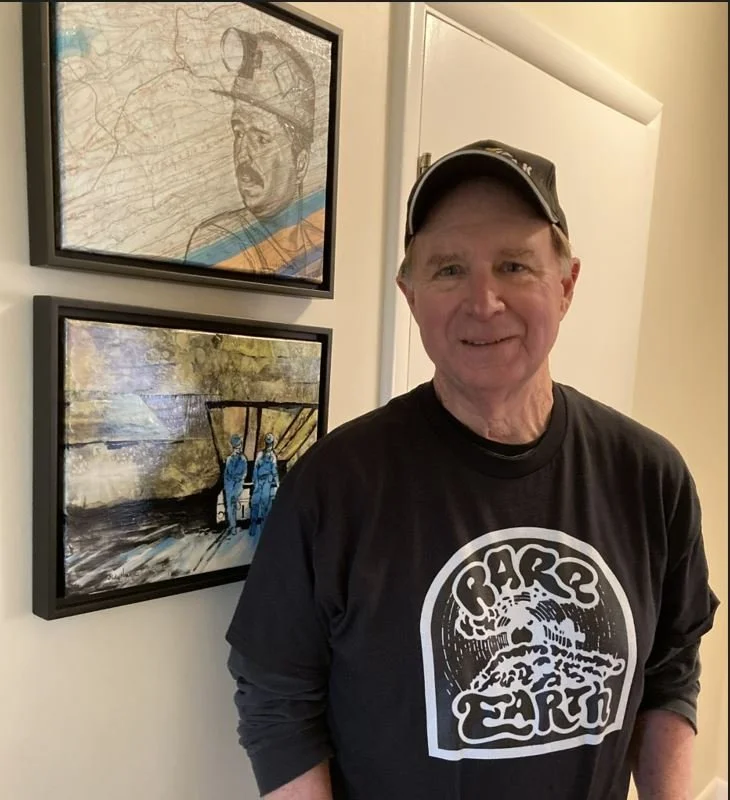
About the Author
Jim Hower received his BA, MS, and PhD degrees in geology from Millersville University, Ohio State, and Penn State, respectively. He has been a scientist at the University of Kentucky’s Center for Applied Energy Research (CAER) since 1978 and has been an adjunct professor and, later, a Research Professor in the University of Kentucky Department of Earth & Environmental Sciences since 1981 with a research focus on a broad range of topics within coal and fly ash petrology and chemistry. As of mid-2021, Jim retired from the university, but, finding that retirement is a speedbump and not a wall, he remains active at the CAER and elsewhere. He has authored more than 575 papers in more than 140 journals and books. He was the editor of International Journal of Coal Geology and Coal Combustion & Gasification Products for 10 years each. Jim has received the top awards from The Society for Organic Petrology, International Committee for Coal & Organic Petrology, and the Geological Society of America’s Energy Geology Division. In addition, he was a fictional coal geologist in Karen Rose Cercone’s 1999 mystery novel, Coal Bones.
https://www.linkedin.com/in/james-hower-819b3b16/
https://uknow.uky.edu/professional-news/caer-s-hower-co-authors-pioneering-coal-book
https://www.amazon.com.au/Coal-Bones-Karen-Rose-Cercone/dp/0425166988
