The Society of Reflective Personalities - Semifusinite
The Grey-Zone Diplomat
Personality:
Semifusinite enters every meeting room with a measured pause, as if checking both the light and the temperature of the conversation before deciding how reflective to be.
Unlike Fusinite, who crossed the line long ago and now stands there in bright, brittle certainty, or Telinite, who still holdings her cellular structure with the quiet confidence of someone whose boundaries can be followed, Semifusinite lives between them: altered, but not absolute; structured, but not always clear; reactive, but only under the right conditions.
He has the manner of someone used to difficult meetings.
When Telinite insists that structure should still mean something, Semifusinite nods carefully.
“It does,” he says. “But structure without reflectance can mislead.”
When Fusinite raises an eyebrow and suggests that the matter could have been settled with a little more of burning, Semifusinite smooths his cuffs and replies,
“Possibly. But there are other factors that you need to consider besides wildfires.”
Despite his calm appearance, he can be surprisingly reactive, especially in his lower-reflecting moods. But push him too far, heat him too much, oxidise him beyond negotiation, and he stops mediating. The reflectance increases. The relief rises. The tone hardens.
The only one who seems to understand him is Macrinite, the Archivist of the Society. Together, they understand the ambiguity that comes with grey zones and classifications. They know that clear boundaries do not always work, and that some boundaries need buffer zones.
Grey is where the judgement happens.

Scientist’s Note:
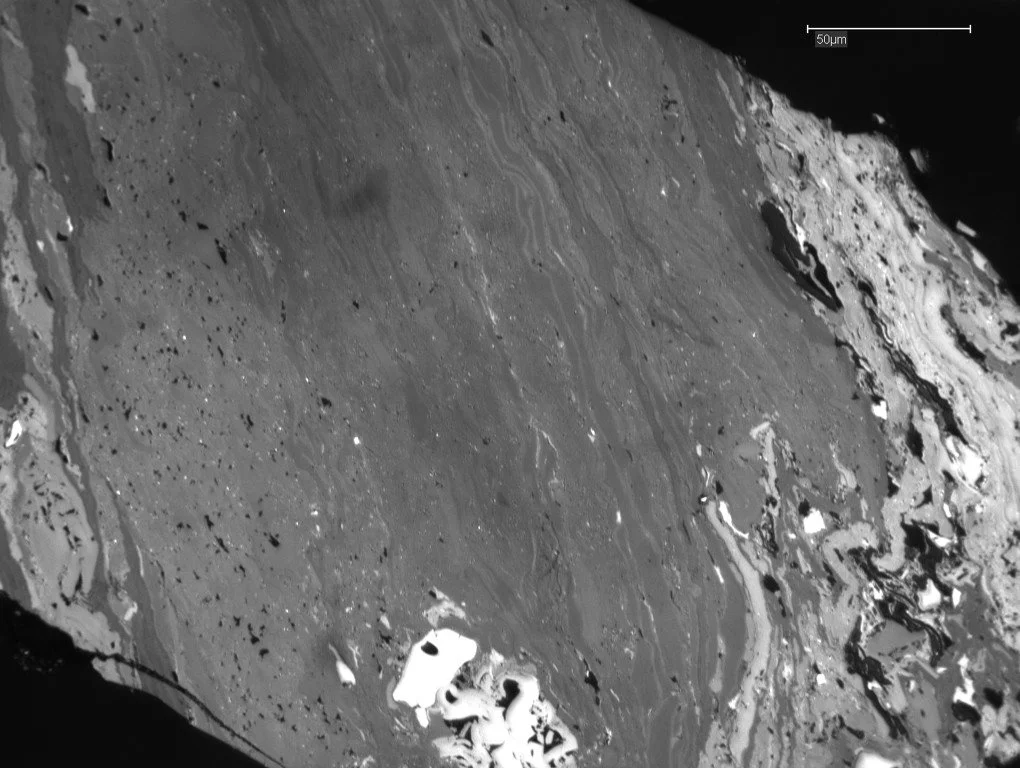
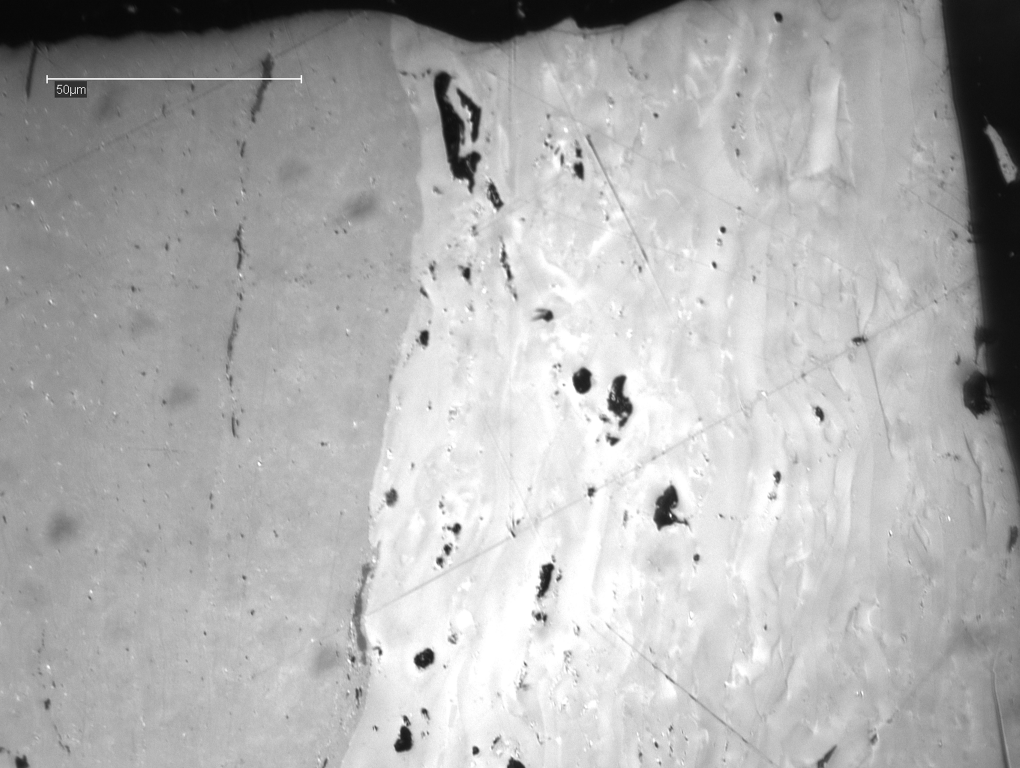
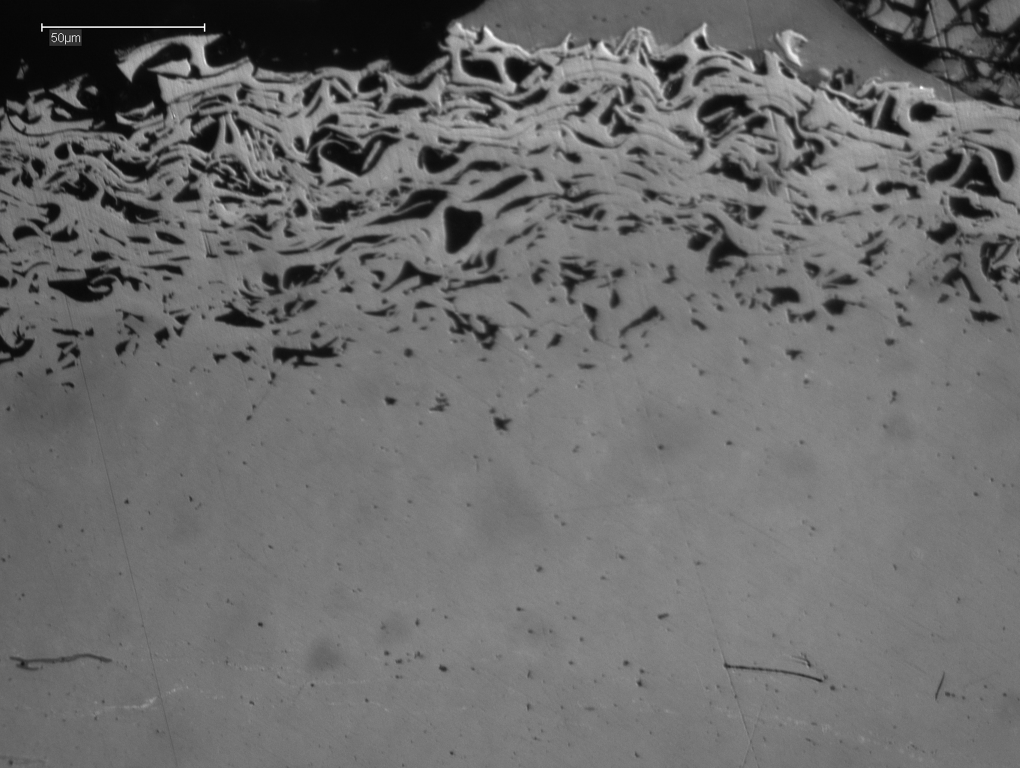
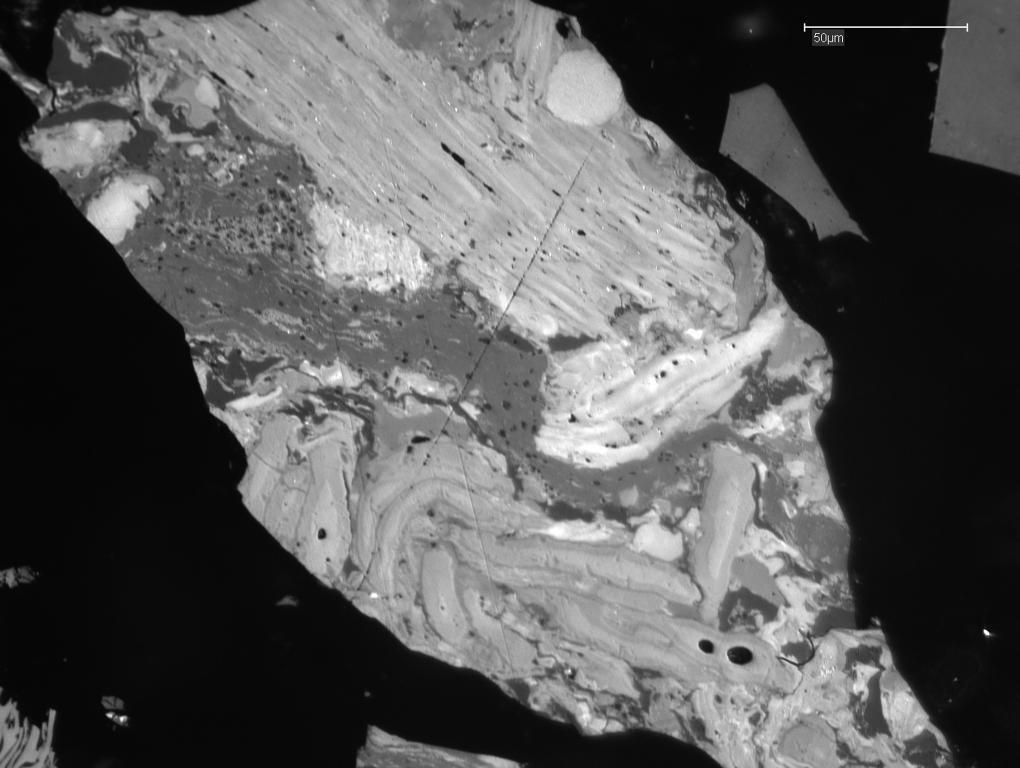
Semifusinite is a maceral of the inertinite group, defined by the ICCP as intermediate in reflectance and structure between humotelinite/vitrinite and fusinite in the same coal. Its cellular structure is often only partly preserved: lumens may be partially visible or closed, and wood-derived semifusinite generally preserves plant cells better than leaf-derived material.
Under reflected light, semifusinite ranges from grey to white, with reflectance between that of associated vitrinite and fusinite. For visual identification, material with semifusinite morphology that appears lighter grey than the associated vitrinite is recorded as semifusinite. Its reflectance increases with dehydration and oxidation of the precursor material, as well as with rank..
Its technological behaviour is equally variable. Low-reflecting, sometimes fluorescing semifusinite can be relatively reactive, whereas higher-reflecting material behaves more inertly. During coking, small fragments may strengthen coke walls, while larger fragments can develop shrinkage fractures and initiate fissures.
Semifusinite originates from parenchymatous and xylem tissues of stems, herbaceous plants, and leaves. According to the ICCP, it forms during the peat stage through weak humification, dehydration, and redox processes, while wildfires can also produce material with suitable reflectance to be classified as semifusinite.
However, the origin of semifusinite remains debated. Different authors have proposed varying contributions from peat-stage alteration, wildfire-related charring, microbial degradation, and later diagenetic heating, or all the above. These interpretations suggest that semifusinite may form through more than one pathway, contributing to the petrographic “grey zone” that characterises this maceral.
Scientist’s note based on:
ICCP, 2001. The new inertinite classification (ICCP System 1994). Fuel 80, 459-471.
Other References:
Hower, J.C., O'Keefe, J.M.K., Eble, C.F., Raymond, A., Valentim, B., Volk, T.J., Richardson, A.R., Satterwhite, A.B., Hatch, R.S., Stucker, J.D., Watt, M.A., 2011. Notes on the origin of inertinite macerals in coal: evidence for fungal and arthropod transformations of degraded macerals. International Journal of Coal Geology 86, 231–240.
Hower, J.C., O'Keefe, J.M.K., Watt, M.A., Pratt, T.J., Eble, C.F., Stucker, J.D., Richardson, A.R., Kostova, I.J., 2009. Notes on the origin of inertinite macerals in coals: observations on the importance of fungi in the origin of macrinite. International Journal of Coal Geology 80, 135–143.
Hudspith, V.A., Belcher, C.M., 2020. Some semifusinite in coal may form during diagenesis, not wildfires. International Journal of Coal Geology 218, 103360.
Moroeng, O.M., Wagner, N.J., Hall, G., Roberts, R.J., 2018. Using 15N and 13C and nitrogen functionalities to support a fire origin for certain inertinite macerals in a No. 4 Seam Upper Witbank coal, South Africa. Organic Geochemistry 126, 23-32.
O'Keefe, J.M.K., Bechtel, A., Christianis, K., Dai, S., DiMichele, W.A., Eble, C.F., Esterle, J.S., Mastalerz, M., Raymond, A.L., Valentim, B.V., Wagner, N.J., Ward, C.R., Hower, J.C., 2013. On the fundamental difference between coal rank and coal type. International Journal of Coal geology 118, 58–87.
