The Society of Reflective Personalities - Exsudatinite
The Late Bloomer
Personality:
She is different. Everyone knows she is different.
Born from others of her kin, Exsudatinite is the youngest: a product of quiet transformation. She was not formed in the beginning, like the rest. She came later, drawn out from other liptinites and gathered into the empty places around them.
A wallflower by nature, she is not often seen. She hides in cracks, fractures, voids, and cell lumina, keeping close to the margins of the Society.
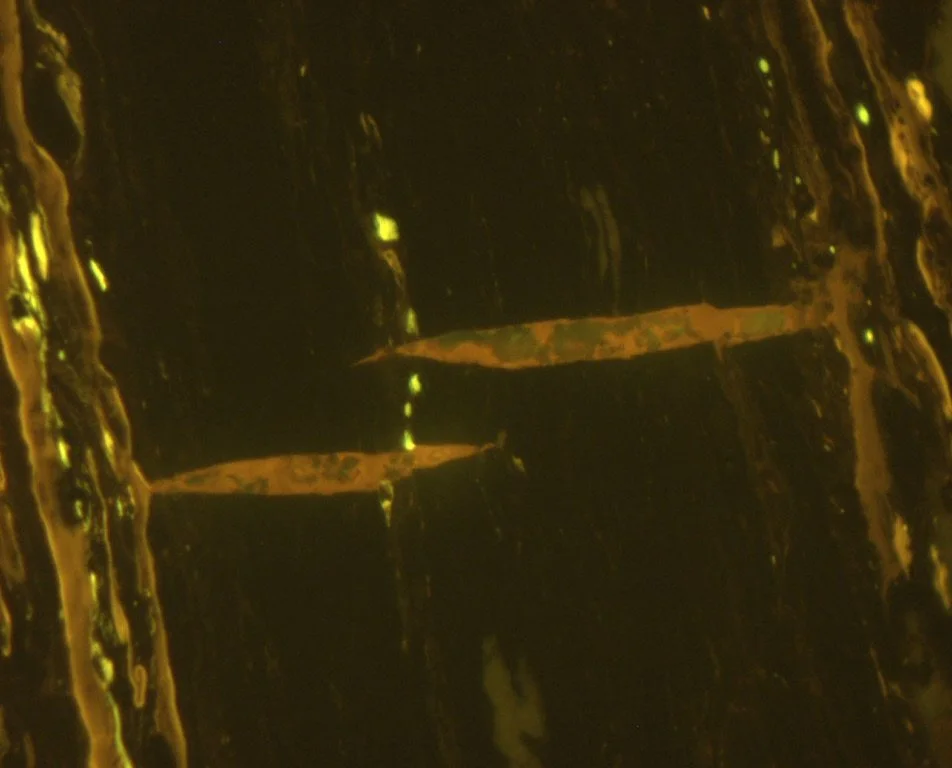
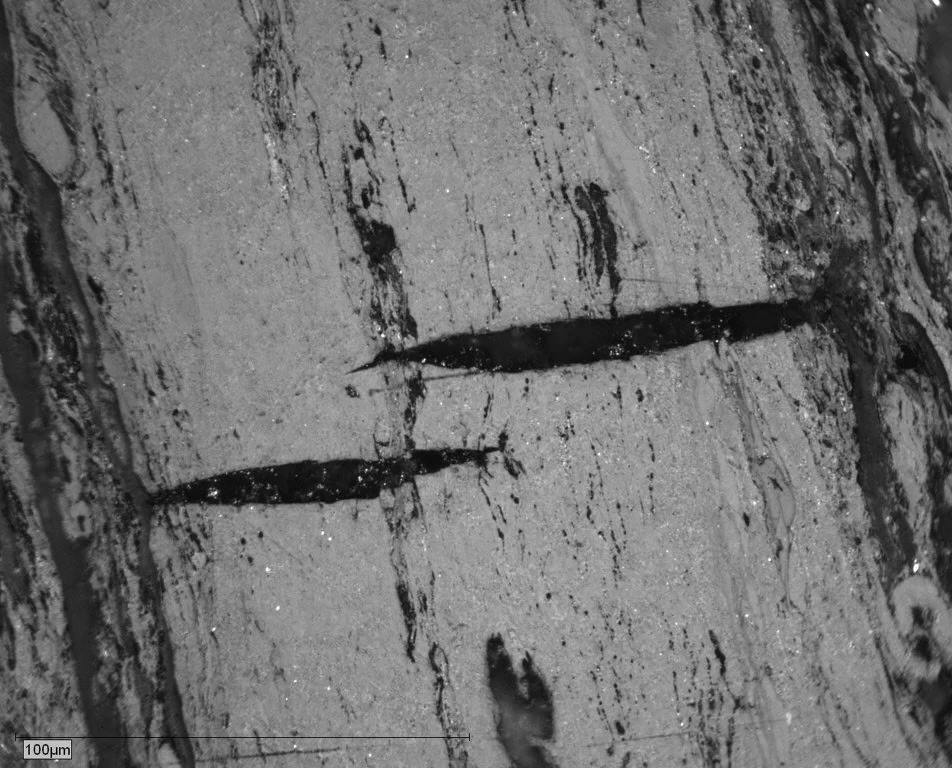
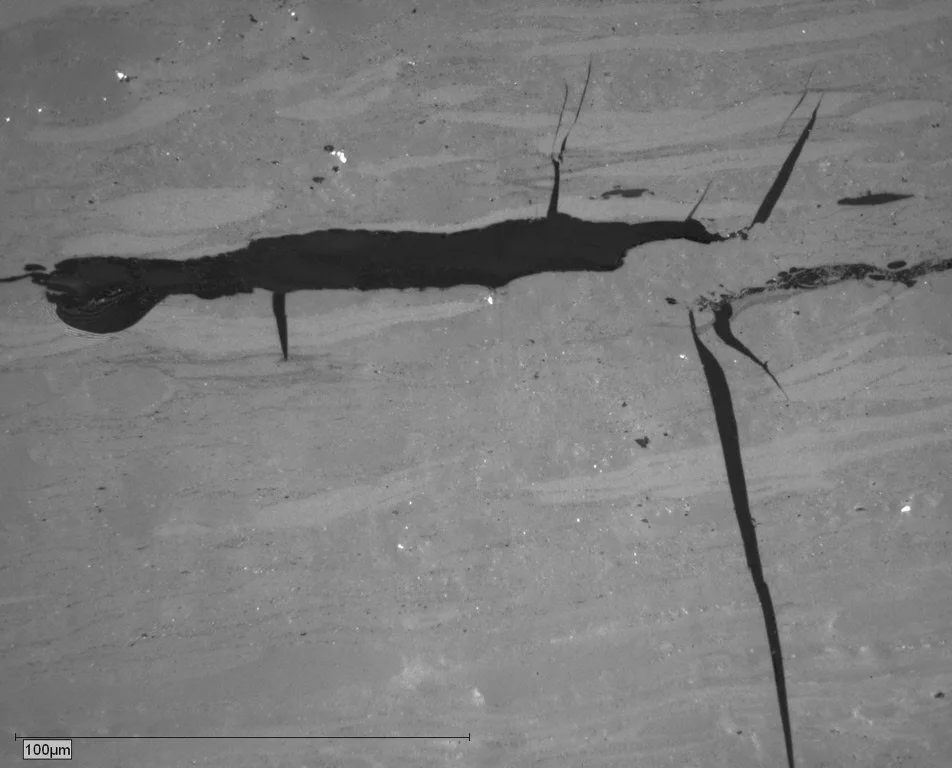
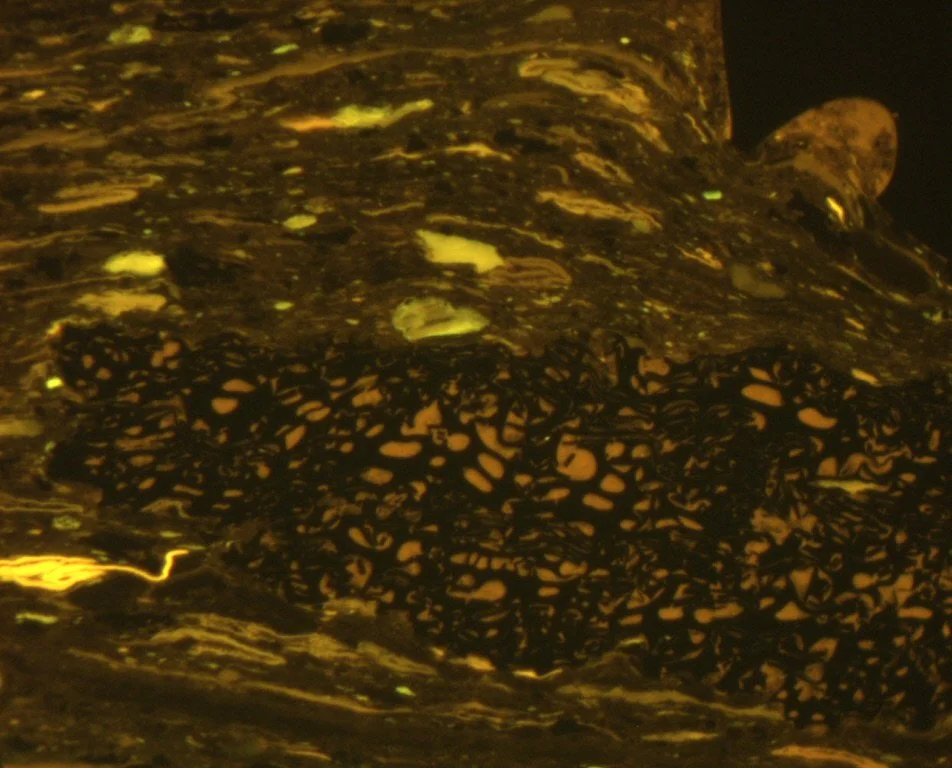
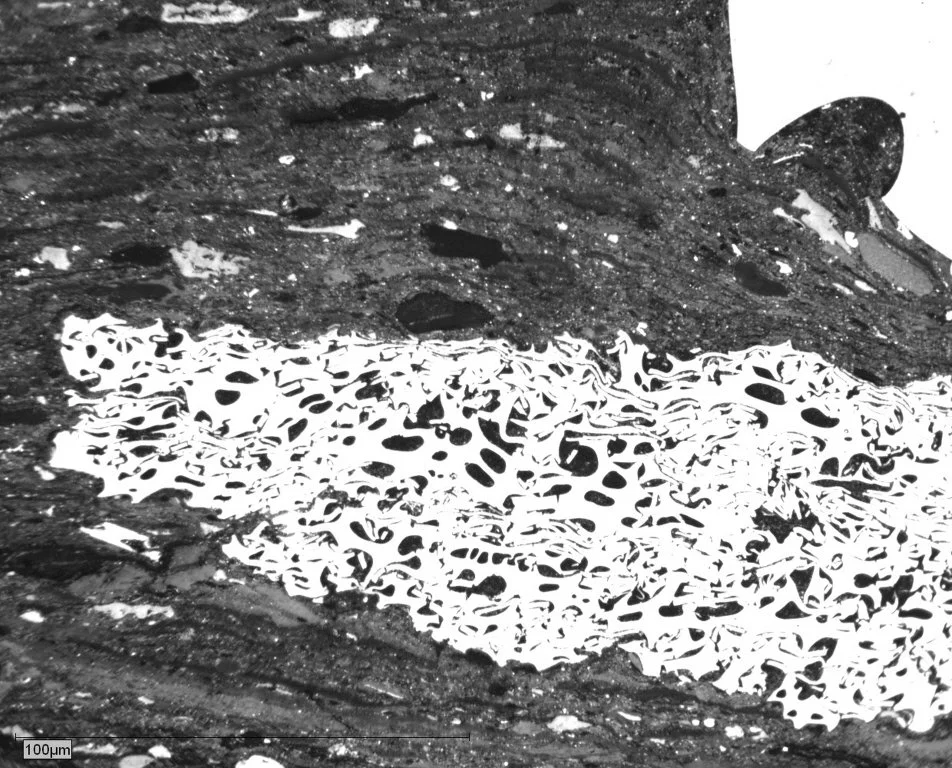
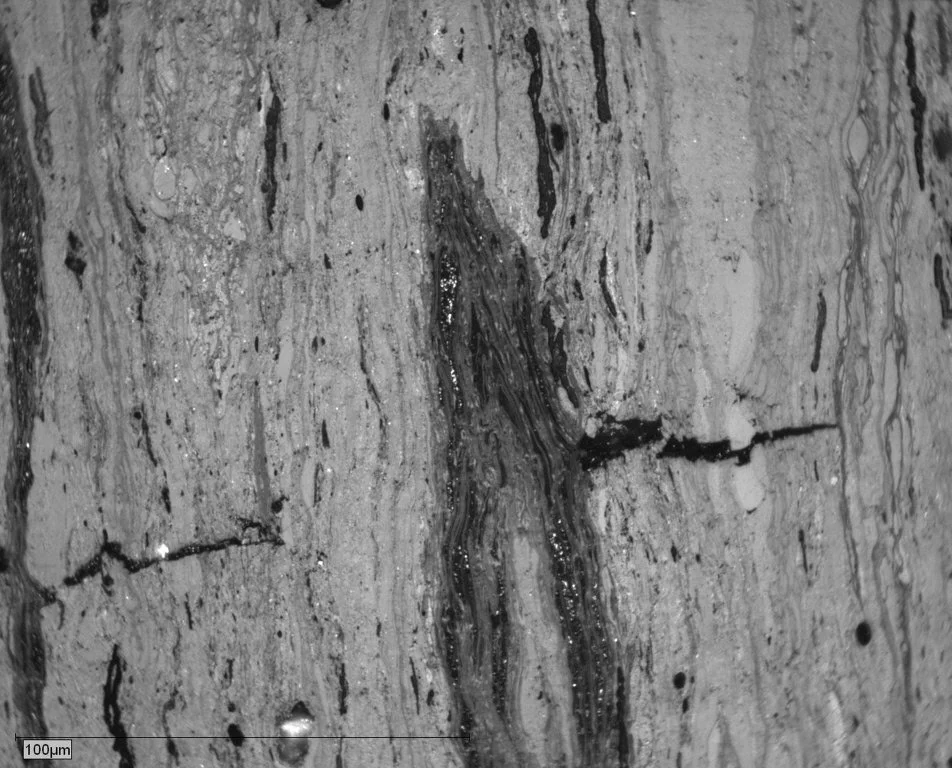
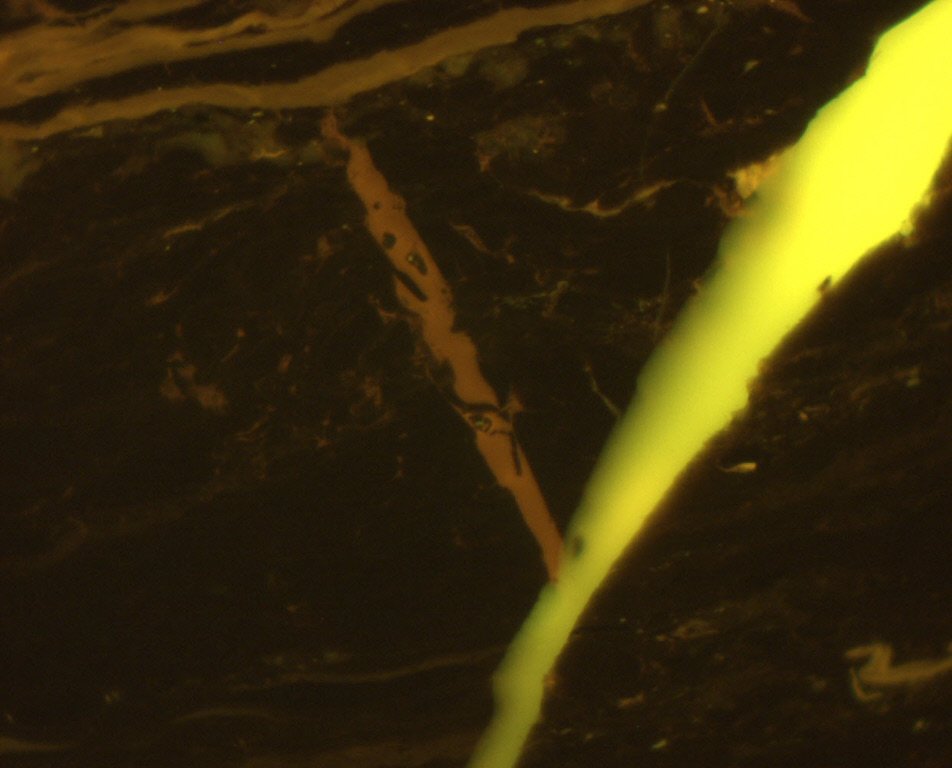
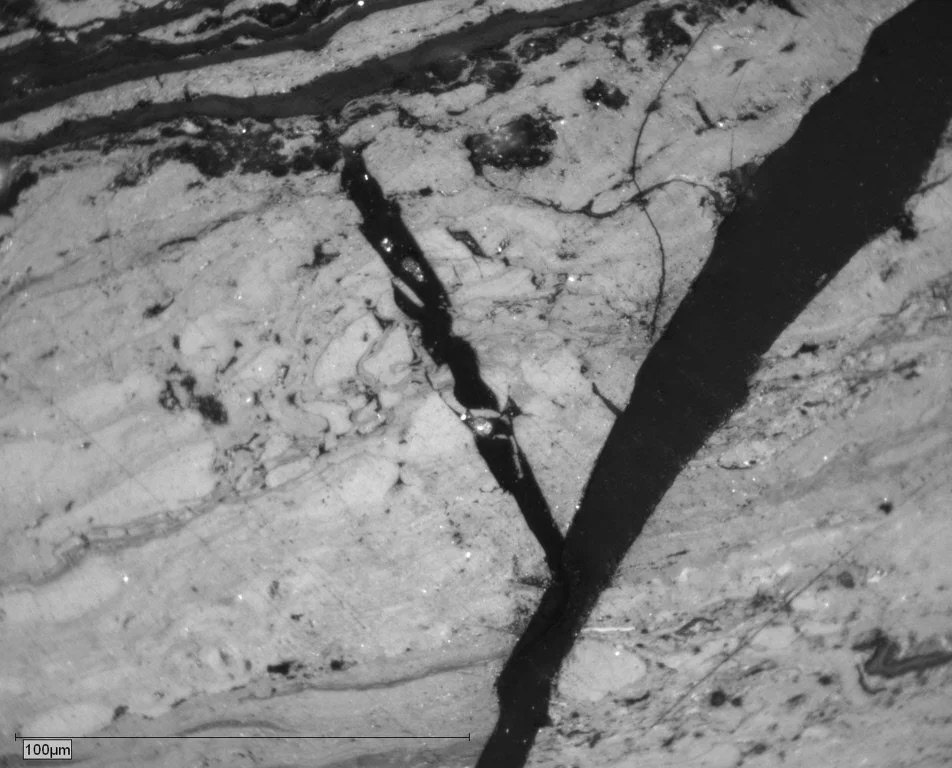
In ordinary light, she is almost black, easy to miss and easier to misunderstand. But under the right light, she changes completely.
Then she shines.
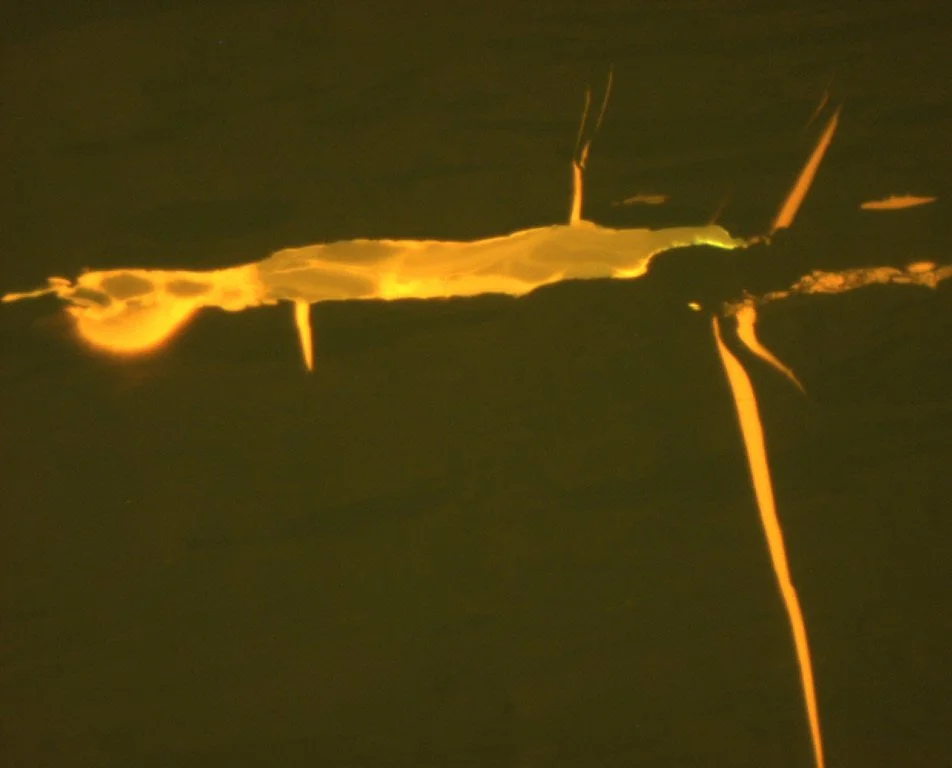
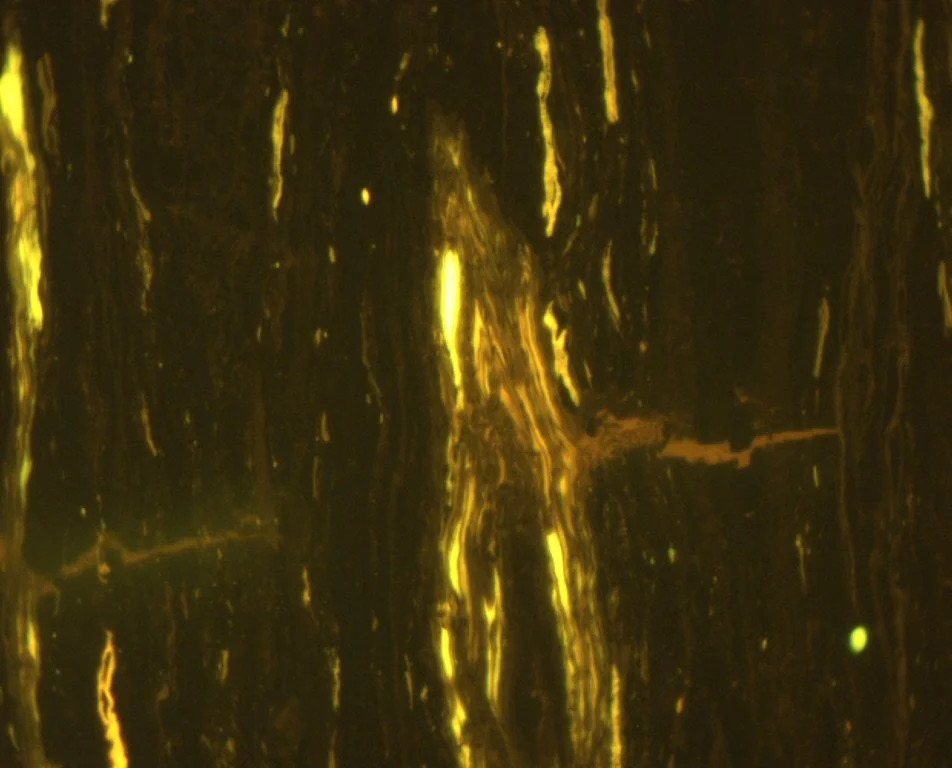
A golden glow rises from within her, bright and unexpected, revealing that what looked like darkness was never empty.

Scientist’s Note:
Exsudatinite is a secondary maceral of the liptinite group. Unlike most liptinite macerals, it is not derived directly from a preserved plant tissue or biological structure. Instead, it forms during coalification from hydrogen-rich organic matter, most commonly other liptinite macerals and possibly perhydrous vitrinite.
In polished section, exsudatinite occurs as fillings in fissures, cracks, cell lumina, and other cavities. It is identified as exsudatinite when its relationship to a source maceral is clear, or when it occupies spaces where it could not have been deposited originally, such as the cell lumina of fusinite. This secondary mode of occurrence is one of its most important diagnostic features.
Optically, exsudatinite generally has a reflectance similar to that of the associated liptinite.Under fluorescence, exsudatinite commonly resembles the associated source maceral, although its fluorescence colour and intensity may differ slightly. At maturities equivalent to the end of the oil window, its reflectance may exceed that of vitrinite, and it may show a higher degree of anisotropy than vitrinite of the same rank. Some authors would call it meta-exsudatinite.
Exsudatinite is mainly found in low- to medium-rank bituminous coals and shales at thermal maturities equivalent to the oil window. Its occurrence is relatively rare and strongly controlled by the availability of cracks, voids, and other open spaces during generation and migration. Because of this, it is not usually considered to have major practical importance, but it is petrographically significant because it records hydrocarbon generation, movement, and secondary emplacement within the organic matter.
Scientist’s note based on:
Pickel, W., Kus, J., Flores, D., Kalaizidis, S., Christanis, K., Cardott, B.J., Misz-Kennan, M., Rodrigues, S., Hentschel, A., Hamor-Vido, M., Crosdale, P., Wagner, N., ICCP, 2017. Classification of liptinite – ICCP System 1994. International Journal of Coal Geology 169, 40–61.
Some examples of descriptions of meta-liptinite:
Hower, J.C., O’Keefe, J.M.K., Valentim, B., Guedes, A., 2021. Contrasts in maceral textures in progressive metamorphism versus near-surface hydrothermal metamorphism. International Journal of Coal Geology 246, 103840.
Esmailpour, R., Alipour, S., Doulati Ardejani, F., Rodrigues, S., Esterle, J., 2022. Petrology of the Parvedah coals, Tabas Basin, Iran. International Journal of Coal Geology 258, 1040028.
